If you follow Susanna Hoffs for any length of time, the overriding impression is one of restlessness. The singer, guitarist and co-founding Bangle is someone who can never be still or do just one thing for very long. She’s constantly in motion in her wonderfully charming TikTok and Instagram videos. She shows off her dance moves. She playfully takes part in viral trends. She’s always trying new things, always asking questions or answering them herself, always buzzing on coffee. The 64-year-old is very young at heart, and her online life is more like that of a millennial or a zoomer.
Her mind is always in motion too. She’s naturally very cerebral and obsessive, and disarmingly frank about her mental health. “I have a lot of anxiety,” she told NextTribe. “If I don’t keep moving, I tend to ruminate like crazy.” In interviews she often speaks of worrying about her career and doubting herself as a songwriter. Hoffs is genuine to a fault; it’s like she’s lacking the gene that makes most other celebrities guarded or fake.
The flipside to all this exuberant, jittery activity is the depth of her artistic life. Hoffs is sustained by music, art, film and literature. “Reading fiction and looking at art are antidotes to my anxiety,” she says. She also has exquisite taste. Like her old friend Molly Ringwald, Hoffs’ image as an attractive young 80s pop icon conceals formidable intelligence and command of multiple disciplines. Check out her New York Times interview about her favorite books, or her Criterion Collection Closet Picks of her favorite films — she’s intimidatingly erudite.

But of course it’s not only consuming art that helps her cope. She’s also driven to create it in order to “escape my ruminations about my own life” as she told Consequence. As someone who writes to deal with my own anxiety, I find this deeply relatable.
Music has been the main outlet for Hoffs, of course, and with a voice as unique as hers, that’s something to be grateful for. But she’s an accomplished writer too, and a dancer, and she’s been around the film industry all her life. She could have chosen any number of fields to excel in.
So perhaps it shouldn’t seem so astonishing that Hoffs published her debut novel and dropped a new album in the same week earlier this year. Maybe this is just what it looks like when you have this much talent and this much restless need to create.
Maybe… but I’m still astonished.
I mean come on, she wrote a novel, which is quite an undertaking when it’s your first — and it’s good enough that the New York Times gave it a rave review. And then she went and banged out a covers album, and like just about all of her records it’s great. It’s like she did that just to flex.
Who else has pulled off this kind of feat? Who else even could? Nick Cave? Leonard Cohen perhaps? The point is it’s a short list, and this is the company she’s in.
I think it’s a pretty special double whammy that Hoffs has pulled off, and it deserves to be celebrated. So I’m going to review both of her new works here, one at a time. I’m going to start with her new album, The Deep End, because it was released first (by just a few days!), and because it’s more familiar territory for Hoffs and her fans. Then I’ll get into her book, This Bird Has Flown, which is arguably more exciting and worthy of a longer discussion — because it represents a major career shift, but also because of what it reveals about Hoffs and her inner life.
(Click here if you want to jump ahead to the book review now.)

Susanna Hoffs
The Deep End
Baroque Folk
2023
The Deep End is Hoffs’ fifth solo album, and the follow-up to 2021’s Bright Lights, which I reviewed here and which I love. Like that one, The Deep End is entirely made up of covers. In my review of Bright Lights, I argued that Hoffs’ longstanding practice of covering other artists’ work (in and out of the Bangles) is not as unambitious as it may seem. It was always far more inventive and distinctive than mere nostalgia.
That may be true, but there’s no doubt that Hoffs’ candid talk about struggling with her songwriting — in this Spin interview she actually calls it a “fear of songwriting” — lends poignancy to this collection of songs by other artists. (Songwriter’s block also comes into play in her novel, but I’ll get to that.)
What she lacks in authorship she makes up for in interpretation and feeling. Hoffs’ voice is so captivating and so full of character — just like it always was, but with added richness that comes with maturity — and her sincerity is so complete that she effortlessly makes each of these songs her own, at least while they’re playing.
The Deep End was produced by Peter Asher, the legend who was part of the British Invasion duo Peter and Gordon, and later helped define the California singer-songwriter movement of the 70s, helming classic albums by Linda Rondstadt, James Taylor and many others. In other words, it would be hard to find a more perfect producer to work with Susanna Hoffs.
Whereas Bright Lights had a stripped-down Americana sound that verged on outright country at times, The Deep End is much more lush and orchestrated. The result is a contemporary update on the soft rock of the 70s, with a delicate chamber-pop atmosphere, and a big helping of soul. That’s a great look for Hoffs, who’s always been a devotee of the baroque sounds of the 60s and 70s — Burt Bacharach, Laura Nyro, Dusty Springfield (Bangles fans who view the band’s pop era as a mistake or an aberration are neglecting this major pop influence).
The backing players on the album are a who’s who of great session musicians, including Waddy Wachtel, Leland Sklar and Russ Kunkel — many of the same ones who played on Asher’s 70s classics — so it’s no wonder it sounds tight as hell.
This kind of sound — the intersection of Americana, folk and pop — is big among young music fans lately; you see it in the popularity of bands like boygenius, and in Taylor Swift’s indie-folk offerings. This generation has also gone back to the source and revived Ronstadt, Joni Mitchell and Carly Simon as icons of cool. If Hoffs was aiming for a younger demographic with this album (the younger demographic she clearly feels so much in common with), I don’t think she could have picked a better strategy. It’s got that classic feel that’s always characterized her work, but with a savvy pop sophistication that sounds terrific next to music by artists half her age or younger.
The adventurous track selection would seem to verify this strategy: whereas Bright Lights was almost exclusively made up of covers of songs from the 60s and 70s, this one is the opposite: with a couple of key exceptions, most of the material dates from the 2000s or later, and Hoffs has favored predominantly younger songwriters, including Holly Humberstone, Dodie, Joy Oladokun, Ed Sheeran, and Billie Eilish. Some of the songs were suggested by Asher, whom Hoffs describes as an “explorer of new songwriters.” That shows the value of working with Asher because this is an ace collection of tunes. Some of these artists I either hadn’t heard before or hadn’t given enough of a chance. I just love that Hoffs is still curating brilliant covers and still influencing my taste in music 37 years after I first heard “If She Knew What She Wants.”

It’s a low-key album. It was recorded quickly, and nobody is going to mistake it for Hoffs’ magnum opus, especially arriving in the shadow of her debut novel — which is the main event for her right now and which clearly contains so much of her. But it’s low-key in a good way. It’s warm, mature, smart and quirky, and it chugs along in a mode that I would describe as quietly excellent if not life-changing. That said, several times over the course of its 13 tracks it rises to the occasion with something truly outstanding and memorable.
The Deep End starts out with Hoffs’ cover of the Rolling Stones’ “Under My Thumb,” the album’s first single. It’s a sassy feminist update on a song that’s either a winking satire of misogyny, or actually misogynist, depending on how much credit you’re willing to give Mick Jagger. In Hoffs’ hands it’s breezy and playful, with a funky, string-laden backing instrumental and slick neo-60s pop production by Asher to match. It’s easy to picture Hoffs performing this in her alternate identity as Brit rocker Gillian Shagwell from the Austin Powers franchise. The friction between Hoffs’ inherent sincerity and the nastiness of the lyrics is fun. I love how into it she sounds as she upends the tale of abuse and control — the way she croons He’s a squirming dog who’s just had his day, or the way she barks, “Listen!” when the beat drops out.
“Under My Thumb” is a great cover and a great single, but not a great album opener. It doesn’t really match the rest of the material either musically or thematically, and it’s a bit of a letdown when it ends abruptly and gives way to the title track, a Holly Humberstone cover that’s a slow, moody keyboard-based ballad. “Deep End” is a lovely song — the clash in mood is not its fault — and it probably should have been the opener (the truth is I often start the album here). I especially like the way it builds towards its melancholy, string-saturated climax.
By the third track, Oladokun’s excellent “If You Got a Problem,” the ship has been righted, and Hoffs has settled into the soulful midtempo groove that characterizes much of the album. The fact that she’s covering a queer Black woman songwriter here, and doing real justice to her song, says a lot about this project’s framework and where Hoffs is at now.
Next up is “Time Moves On,” a more recent selection from newly reformed indie veterans Phantom Planet. This is one of the standouts on the album, and honestly one of the best things Hoffs has done this century; it’s just an astonishingly good cover that far surpasses the original. It’s spine-tingling the way it builds from tinkling keyboards to full-blown orchestral-rock, like some fantasy cross between Sufjan Stevens, Arcade Fire and pop-era Bangles, with Hoffs turning in one of her strongest and most emotive vocals yet. When she sings, If it’s time to move on from the old way / Move on, come what may, it’s both gorgeous and positively heroic.
Phantom Planet happens to be Jason Schwartzman’s old band, and interestingly a tune by Schwartzman also appears in this set — “West Coast,” from his uber-2000s indie-hipster project Coconut Records. It’s also a fab cover, the eccentricity and insularity of the original an effective contrast with Hoffs’ warmth and sweetness.
Hoffs’ cover of Squeeze’s “Black Coffee in Bed,” one of the most beloved tunes of the early-80s British new-wave/power-pop era, is another delight. I just love how much feeling Hoffs pours into Difford and Tillbrook’s bittersweet tale of heartbreak, burnout and lust; and Asher’s production is so ace here, with its Moog-driven blue-eyed soul, its lively string section, and its wonderful backing vocals by Ledisi that remind me of the I-Threes, Bob Marley’s trio of backup singers.

The cover of Billie Eilish’s “When the Party’s Over” is the peak of the second half of the album, and the essence of its appeal for me. When The Deep End was first announced I was ecstatic that Hoffs had chosen to cover Eilish, one of my current favorite artists. Eilish (who wasn’t even born yet when the Bangles reformed in 2000) is much maligned by the gatekeepers of the older generations, and I loved Hoffs’ vote of confidence in the young star and in Gen Z more broadly.
I was right to be excited: this is a stunning version. Hoffs transforms Eilish’s haunting electro-Goth ballad into something more folksy and organic, but no less piercing. Her vulnerable vocal, and the way the band quietly builds the drama underneath it, are perfect. The strings are particularly beautiful here (the strings are so good all over this album). Hearing an older singer covering her work especially highlights what a great songwriter Eilish is, and how universal her themes are.
The fact that Eilish is, like Hoffs, from Los Angeles, also adds significance to this cover for me. I love that Hoffs is able to find a throughline between the L.A. singer-songwriter scene of the early 70s and the 21st century alt-pop movement represented by Eilish — with Hoffs, veteran of L.A.’s Paisley Underground in the 80s, as the mediator.
By contrast, the penultimate track on the album, Hoffs’ cover of Lesley Gore’s “You Don’t Own Me” is merely good. It’s nice to hear her interpreting this classic of the 60s girl-group movement, which helped pave the way for the Bangles. It’s evident the song’s feminist themes speak to her, and no wonder — they’re just as relevant as ever, as even a casual glance at the comments on any of Hoffs’ Instagram posts will confirm. But like “Under My Thumb,” it feels a bit out of place here — as if it would fit better on Hoffs’ Under the Covers series with Matthew Sweet compared to the more contemporary, more daring song selections here.
Hoffs says she wanted the title of Humberstone’s song to be the title of the album because it represents where she’s at in her life — plunging into the unknown with various creative projects, most especially her novel. That sense of taking a risk, with audacious song selections on an album that deserves to be heard by far more people than it has, is what marks the best of The Deep End. Thankfully those gutsier moments outnumber the missteps, and overall this is a fine addition to Hoffs’ discography.
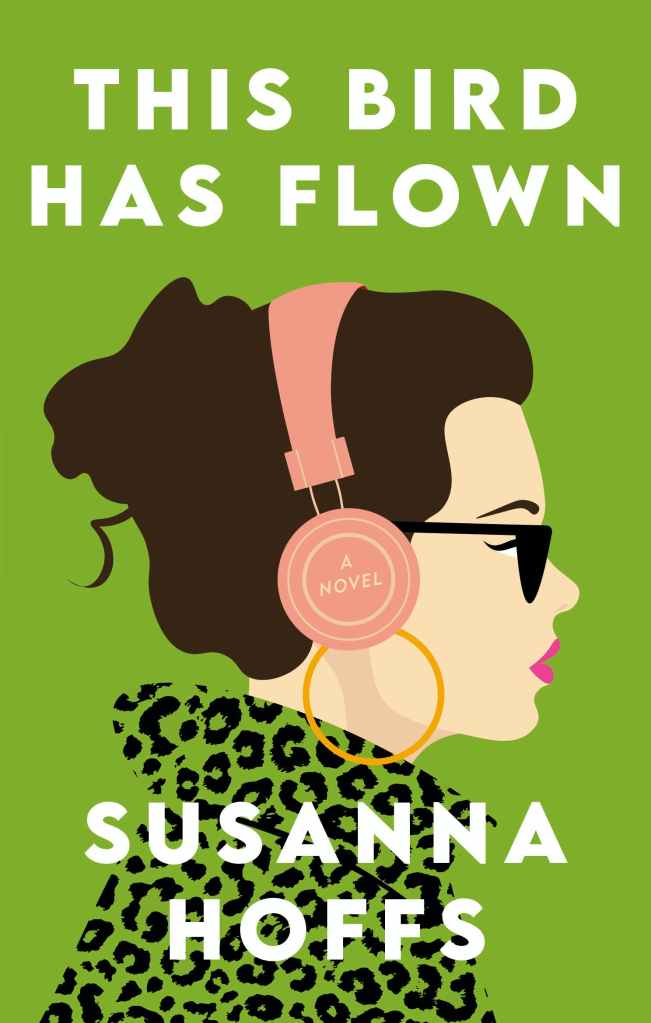
This Bird Has Flown
By Susanna Hoffs
Little, Brown and Company
2023
Hoffs’ first effort as a novelist fits squarely within the romantic comedy genre. This isn’t as off-putting for me as it might be for other 52-year-old dads; chick-lit and chick flicks are one of my great joys in life. I’m a massive Jane Austen fan; and films like Four Weddings and a Funeral, Clueless, The Lake House and Greta Gerwig’s adaptation of Little Women count among my favorites.
Hoffs, the prolific reader, has said that Jane Eyre and Rebecca by Daphne du Maurier were big influences on This Bird. Austen is an obvious influence too. It also owes a clear debt to more modern fare like Bridget Jones’s Diary (whose author Helen Fielding contributes a front-cover blurb) and movies like Four Weddings and Notting Hill. Taylor Jenkins Reid’s Daisy Jones and the Six is often mentioned as a forerunner among rock and roll novels written by women. It also reminds me quite a bit of Nick Hornby’s High Fidelity. Meanwhile, the title, from the Beatles’ “Norwegian Wood,” can’t help but evoke Haruki Murakami.
Hoffs is a great writer — should it be surprising what a great writer she is? Somehow it isn’t — and she weaves these highbrow and populist strands together on the page skillfully and confidently.

This Bird is the story of a struggling L.A. musician with the wonderfully comic-booky name of Jane Start. Jane is languishing in obscurity at the age of 33, ten years after becoming a one-hit wonder with a smash cover of a song by a British superstar named Jonesy. The eccentric, arrogant, aloof Jonesy, who seems to be a cross between Prince, David Bowie and perhaps also Nick Cave, looms over the story as a distant, shadowy, manipulative figure almost akin to a villain.
As the novel opens, Jane is reeling from a bad breakup. She spent the past four years sequestered in a relationship with a Hollywood filmmaker, perhaps as compensation for her stalled music career. Having been dumped by the guy, who cheated on her with one of his stars, and now living with her parents again, she is determined to rekindle her career. But it’s rough going: the first chapter finds her playing a humiliating private gig at a Las Vegas bachelor party, contractually obligated to sing her one hit karaoke-style while wearing the skimpy outfit made famous in the video.
After several plot twists — and a brief nonstarter of a tryst with a young Australian pop superstar — a hungover Jane ends up on a flight to London the next day, courtesy of her British manager and confidant Pippa. Pippa has arranged a UK sabbatical for Jane to clear her head and finally write some songs. Sipping champagne in the first-class cabin, Jane has the fateful encounter that is the crux of the plot: the man sitting next to her is a tall, handsome, thoughtful and kind Oxford professor named Tom Hardy. There is an instant connection as Jane and Tom talk (and, eventually, make out) all the way across the Atlantic. Jane is smitten, and soon she’s decided to stay in the UK and let herself be caught up in this whirlwind romance — while the sudden and intimidating offer of a high-profile gig in London with Jonesy promises the resurrection of her music career.
Hoffs handles all this exposition like a much more experienced novelist. Jane is an instantly lovable, fully realized protagonist who feels like a real person. She’s funny, she’s smart, she’s moody, she suffers from anxiety and low self-esteem. Her failures, her hopes and dreams, her petty resentments all connect with the reader. The situations Jane gets herself into are fanciful, satirical, occasionally verging on slapstick, but the character herself grounds the narrative, keeping the reader invested and turning the pages. The meet-cute on the plane hits with a perfect combination of flighty fantasy and down-to-earth believability — if this scene didn’t work, nothing else about the book would, but you actually feel the attraction between Jane and Tom.
The writing is smart, zippy and frequently laugh-out-loud funny:
Tom cleared his throat, filled our glasses from a bottle of sparkling water. We both took sips, our eyes locked, and there was only him and me, the perfection of this serene pastoral setting.
“FASTER, YOU FUCKING CUNTS!”
Suddenly crew boats were upon us, speeding past from out of nowhere. FUCKING CUNTS lingered painfully over our heads long after they’d vanished.
I love this scene because it completely upends the romantic conceptions of Oxford that are typical in this kind of fiction. Though the story sticks to the tropes of the genre for the most part, those kinds of subversions pop up throughout, leavening things nicely.
Hoffs’ love affair with language is infectious: she delights in toying with homonyms like rapt and wrapped, or breaking out arcane words like featherlightly, or dropping gloom and gloam in the same sentence. She employs cockney rhyming slang and emojis, and makes confident use of millennial buzzwords like bro and gaslighting and weed via her millennial protagonist. The dialogue has the whirring intelligence of a Noah Baumbach screenplay.
The supporting characters are a mixed bag. Like Jane, Pippa and Jane’s brother Will are well-drawn, likeable people, with enough exaggeration for comic relief. Jane’s old backing band, Alastair and James, round out her support unit (I’m especially pleased that Alastair and Jane are a gay couple with a child). Friendship is an important theme in the book and these characters anchor things amidst the zanier developments.
By contrast, the romantic lead Tom is a fantasy paramour — he’s a nerdy academic hunk who’s both classy and down to earth and has great taste in everything. He’s a bit stiff, but that actually works for the story (Jane finds him puzzlingly inscrutable, and worries constantly that she’s projecting her own needs onto him), and it’s par for the course in the genre. Like Austen’s male romantic objects, he’s both seemingly perfect and enigmatic.
Despite that fantasy quality, Hoffs is good at crafting scenarios that feel disarmingly real — a singalong in a pub, a tense encounter in a museum lobby, a mishap with a cat and burned carpet. She nicely builds suspense and atmosphere, even working in Gothic elements, such as the interesting business involving Tom’s ex-girlfriend Amelia, who comes across a little bit like a horror villain.

This Bird is a book plainly written by a music fan for music fans. Many of the chapters are titled after songs (“Friday I’m in Love,” “Once in a Lifetime,” “Sexual Healing”), but this is only the beginning: the narrative is chock-a-block with knowingly satirical detail about music and the music industry. This is unsurprising considering Hoffs’ insider status, but she’s especially successful at integrating it into the story instead of it being a distraction. The talk of touring, rehearsals, recording, and songwriting is all far more authentic than if a non-musician had written this, and that adds weight to the satire.
In particular I really appreciate the refreshing cynicism or even bitterness about the industry — the egos, the abuse, the dank depressing dressing rooms, the shallow schmoozy parties, what it’s like when the phone stops ringing. This acerbic realism only makes sense considering the good and bad times Hoffs has been through in her career (more on that in a bit).
Then there are the numerous and eclectic tributes to real-life musicians. Jane travels under the name “Maggie May.” Her go-to track to quell her fear of flying is Isaac Hayes’s “Shaft.” When she’s agonizing over Tom’s feelings for her she listens to the Cure. On a road trip, “I cued up the romantic theme from the 1960 French film Un Homme et Une Femme as we drove through Devon.” She calls her favorite sweater Kurt Cobain (because it looks like the cardigan that Cobain wore on MTV Unplugged). This garment is important to Jane’s mental health, it comes up in the story a lot, and therefore so does Cobain’s name — a great bit of texture.
Jane has a habit of judging men by their taste in music — in an early chapter she’s suddenly more impressed with the hot young Aussie pop star, Alfie, whom she’d assumed to be vacuous and dumb, when she learns he’s into the Velvet Underground. The same goes with Tom: she has an epiphany while salivating over his record collection: “Yes, alphabetized. Loads of Beatles, but also Big Star, Blondie, James Brown, Kate Bush, the Byrds. Unexpected.” They make out while listening to the Zombies (whom Hoffs inducted into the Rock & Roll Hall of Fame in real life).
Later Jane and Tom exchange texts in the same room with song selections to communicate their feelings (“Miracle of Miracles” from Fiddler on the Roof, “To Be Alone with You” by Bob Dylan). Like many things in the book, it’s both charming and weird enough to feel like it really happened.
In writing these scenes it’s as if Hoffs, the perennial hipster, is imagining the perfect scenario of bonding over music — the kind of scenario we all dream of when we make someone we dig a mixtape. I can easily see the film adaptation (which is already in the works) echoing Wes Anderson with the extremely specific musical aesthetic (indeed, Jane refers to Anderson in one bit of dialogue).
Along with all the musical savvy, literary and pop-culture references leap off every page: Fear of Flying. J. R. R. Tolkien. Klute. Sofia Coppola. This Is Spinal Tap. The Brontës. The Handmaid’s Tale. The infamous video for Jane’s one hit “was meant to be an homage to Bob Fosse’s choreography in Cabaret mashed up with Sharon Stone’s controversial ‘moment’ in Basic Instinct.” I giggled out loud at the self-referential mention of Austin Powers (all three films were directed by Hoffs’ partner Jay Roach and feature cameos from Hoffs). Appropriately, Four Weddings and a Funeral comes up too (Jane tries to impress Tom by quoting W. H. Auden, while concealing that she only knows his poetry because of that film). So many of the characters’ names refer to things — the romantic lead Hardy; the pop star Alfie, (after the classic film starring Michael Caine); Jane’s ex is named Alex Altman (no doubt a nod to film director Robert). Jane’s own name must refer both to Jane Eyre and Jane Austen, but also to “Sweet Jane” (the song is directly mentioned in the dialogue).
Sometimes the references pile on each other in a meta way, like Beastie Boys lyrics: the dialogue in the airplane scene first acknowledges the literary reference in Tom Hardy’s name, then pivots to riffing on the actor, complete with Jane’s/Hoffs’ spot-on capsule review of Locke (“[it] played out like a great short story, brutally naturalistic, poignant in its lack of resolution”).
You can’t talk about This Bird without talking about the sex: it’s a horny book, to put it mildly. Jane and Tom have a lot of sex, and the language gets pretty raunchy at times. Jane muses on her desire for the older Tom to “fuck me gently and expertly.” Without getting too pornographic, Hoffs drops lots of playfully steamy detail about sexual fantasies and positions and bodily fluids.
There’s something wholesome about all the sex too. Importantly, This Bird is horny from a woman’s perspective. It’s about what women think about sex, and about men: “…there they were, the forearms, in all their glory. Men never seem to grasp the exquisite power of this part of their anatomy; they seem to fixate entirely on another. What dummies.”
There’s a lot of girl talk between Jane and Pippa, and they get graphic, but they also encourage and support each other. It includes the things about sexual relationships that are hot and romantic, but also the parts that are embarrassing or ridiculous — like when Jane frets over her frumpy “Laura Ingalls Wilder” underwear. Here, sex is fun and complex and empowering, not shallow or demeaning or objectifying. That the story is so sweet and romantic enhances the sexiness and vice versa — it works because it’s all of those things.
What doesn’t work as well? Hoffs tends to falter with the scenes set at Oxford University, or involving the more posh characters. These people have names like Professor Tobias Thornbury and Honora Strutt-Swinton and say things like like “Alack and alas” and “He’s in his cups” in all seriousness. Compared to the more sharply observed satire of the music business, or the engaging romance and friendship, these bits feel like a parody of England in young adult fiction, like we’ve switched from Notting Hill to Harry Potter. It’s all entertaining enough — especially when Jane escapes a stuffy official dinner to smoke a joint in the toilet — but I often felt impatient for these scenes to end.
I’m less inclined to criticize how contrived some of the story elements and plot twists are. Romance is supposed to be contrived, that’s part of the fun. To be fair, Hoffs sells the various twists and turns and intrigues most of the time, but not all the time.

A question that will occur to fans of Hoffs’ music over and over while reading This Bird is how much Jane is meant to represent her creator. Hoffs has denied that Jane is meant to be her. But if she didn’t want us to at least ponder a few connections, she probably wouldn’t have made her first-person protagonist a slight, dark-haired Jewish rock singer from Los Angeles. True, Jane is 30 years younger than Hoffs, and she’s a one-hit wonder whose career has tanked, whereas Hoffs is an icon.
But the parallels are often striking. This is how Jane describes her musical style to Tom: “Melodic alternative sixties-influenced pop. With folk, folk rock, and country influences sprinkled in for good measure.” That’s about as good and pithy a description of Hoffs’ and the Bangles’ music as you’re going to find.
At times it feels like Hoffs took details from her own life and remixed them — Jane’s middle-class Angeleno parents are an architect and a designer, not a psychiatrist and a filmmaker; and she majored in art and dance at Columbia, not Berkeley. Some of the superficial correlations are amusing — Jane’s lecherous ex is a movie director… just like Hoffs’ husband?
But if you pored over each page hunting for these kinds of Easter eggs and concocting intricate fan theories about how This Bird is really a crypto-autobiography, it would get boring, and deprive the story of its joy and spark.
Instead of seeing Jane as Hoffs’s alter ego, it’s much more interesting to give Hoffs credit as a fiction writer and accept that Jane is a made-up character — albeit one who happens to reflect the author’s experiences and attitudes in a fascinating way. Hoffs writes about what she knows, which is what you’re supposed to do.
For example, Hoffs isn’t a one-hit wonder, but perhaps Jane reflects her insecurities about the breakup of the Bangles, and the many ups and downs of her career since. “The truth is,” Jane tells Pippa early on, “I’m honestly only capable of being good in small venues anymore. I don’t have the gravitas, the swagger for a big fancy stage. I never really did, even in the ‘heyday.'”
The fictional Jonesy probably isn’t meant to be Prince as such — for one thing, he’s white and blonde. But it seems reasonable to suspect that Jonesy channels some of Hoffs’ complicated feelings about being forever associated with Prince, thanks to hitting it big with a song he wrote, and the unfounded yet persistent tabloid rumors of something between them.
Jane also offers clues about what it’s like to be objectified as a female pop singer. The opening scene in Vegas plays out like a bad dream of pop stardom, with Jane mortified by the crowd of men perving on her. Later she meets someone at a party who says her boyfriend has always been in love with Jane, and she thinks to herself, “There is literally no good rejoinder to this sort of statement.” There’s also some edgier stuff with Jane vexed by flirtatious advances from Jonesy, which especially resonates post-Me Too.
One of the more interesting differences between the two is that Jane is a lot more down and out than Hoffs at a similar age. At the start of the novel she’s living at her parents’ house, with all her possessions packed into four trash bags. She frets over her thrift-store fashions (“desperate aging woman attempts early Courtney Love”) and self-medicates with Benadryl (“the poor woman’s Ambien”). In the midst of a historic cost-of-living crisis, many younger working-class readers will be able to relate to Jane’s misfortunes and precarity, and it’s great that Hoffs is tuned into that.
Class tensions also animate Jane’s misadventures rubbing elbows with the upper crust at Oxford. Tom has aristocratic friends, but he doesn’t quite fit in with them either. And it’s telling that neither Jane nor Tom belong in first class on their flight to London (Jane is given a ticket by Pippa, and Tom is bumped up at the last minute).
Certainly Jane reflects Hoffs’ avowed fear of songwriting — Jane’s struggle to write is an key subplot.
I picked up the guitar but found I had nothing to say, to sing. It was as if all of the tender yearnings, all of the epiphanic moments I’d collected, dissected, protected in the hard drive of my brain for this very purpose, had been erased in some cataclysmic user error…
I missed it. I missed how I’d felt composing my second record—getting lost in the story, puzzling out the right rhymes, reproducing the pictures that bloomed in my mind. A madwoman sprawled on the floor surrounded by Post-its, scribbled with lines. Music was the beginning, the middle, the end of each day. It was oxygen. It was hope and comfort and love and lust.
It’s these descriptions of the joy and pain of making music that feel more than any other like Hoffs pulling aside the curtain and communicating her own thoughts to us.
The writers’ block ties in with Jane’s (and Hoffs’) anxiety. In many ways This Bird is a story about anxiety. Jane is anxious about her career, about writing songs, about appearing onstage, about flying, about Tom. She ruminates, she catastrophizes, she dissociates. She has full-blown anxiety attacks, and as an anxiety sufferer myself I can confirm that these scenes are very true to life. They often bring out the best in Hoffs’ writing. One of the loveliest scenes in the book is when Jane, mid-panic attack in Oxford, calls her parents in L.A. and awakens them so she can be comforted by the sound of their voices.
While the phone rang, I pictured the old family home, the Eichler-inspired creation my parents had designed, nestled in a canyon close to the Pacific, now battered by sea air and leaks, with its faint, persistent, mildewy scent…
I explained my symptoms. My dad asked how much coffee I’d had, and I said, “Don’t ask.” He prescribed listening to “Ripple” by the Grateful Dead, three times, stat. “You know what else works, kid? Pick up your guitar.”
It’s all so heartfelt and plausible I’m convinced Hoffs has really done this before.
Pouring so much of herself into what was already a delicious work of romantic fiction — it’s these moments that take This Bird Has Flown to another level and make it such a fun, delightful and worthwhile read.
Like what you read and want to support? Consider buying me a coffee! You can also subscribe below, and be sure to share this article!
Feature image photo via Susanna Hoffs on Facebook
 Under the Paving Stones
One thought on “With a new covers LP and a delightful debut novel out at the same time, Susanna Hoffs is thriving”