I have to preface this by admitting that among Jenny Nicholson fans, demographically speaking I’m an outlier. I’m in my 50s, significantly older than the younger millennials and older zoomers who make up most of the audience of her Youtube channel. I was older than Nicholson is now (33) when Youtube was launched in 2005. It took many years for me to accept that it could even be a thing you would sit and watch, as opposed to a utilitarian repository of music, movie clips, and funny esoterica, which is how I used to approach it.
Before Nicholson’s channel became one of my primary forms of entertainment as well as an autistic obsession, I only watched Youtube essays and commentary intermittently. The number of channels I followed could practically be counted on one hand (Folding Ideas, Pop Culture Detective, and not many more). The vast bulk of the Youtube I watched was with my kid, so I was more up on Polygon Donut and Siren Head than most content for grownups. I was aware there was some good stuff out there, but I never made much time for it. Before Nicholson I never imagined I would actually call myself a fan of a Youtuber, much less that I would write about one.
So if I fail to contextualize Nicholson’s work within that of her peers, or if you detect a note of golly-gee-wiz about her tremendous talents as a culture critic, that’s one reason.
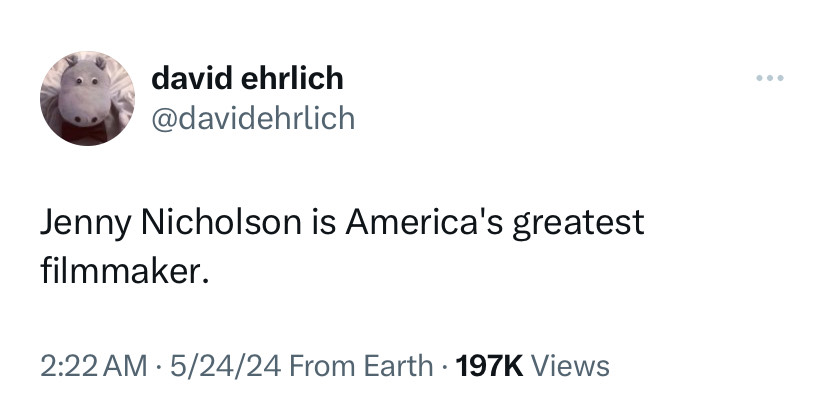
At the same time, there’s no question that Nicholson is objectively worth making a fuss over. I may be late to the party on Youtube, but it’s not just me who considers her a genius. I felt so vindicated when her four-hour magnum opus, “The Spectacular Failure of the Star Wars Hotel,” went viral last year, was actually covered in the mainstream news, and was even taken seriously by some critics as an artistic and intellectual work. IndieWire editor David Ehrlich posted that “Jenny Nicholson is America’s greatest filmmaker,” leftist academic Steven Thrasher compared her to Slavoj Žižek (while adding “of course she’s much smarter”), and the video essay made Vanity Fair’s list of the best TV of 2024. Friends of mine who’d previously never heard of her were suddenly huge fans.
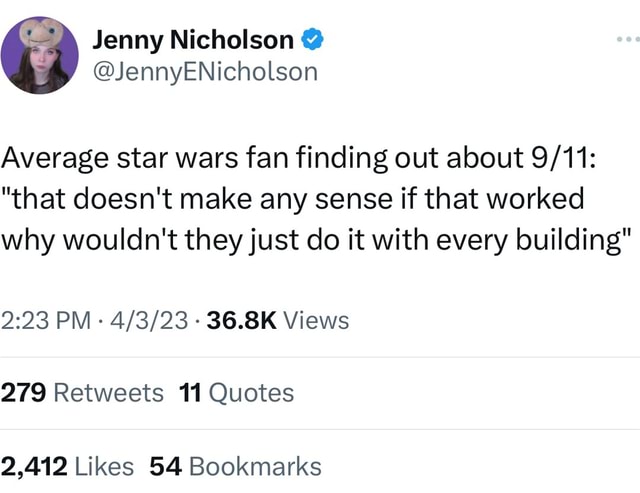
I discovered Nicholson two years ago when one of her tweets, a hilarious jab at The Last Jedi’s haters, was shared in a Facebook group for progressive Star Wars fans. Defending The Last Jedi — a major flashpoint in the culture war, an obsessive object of hate for the racists and incels who’ve ruined the Star Wars fanbase — is an instant way to win me over.
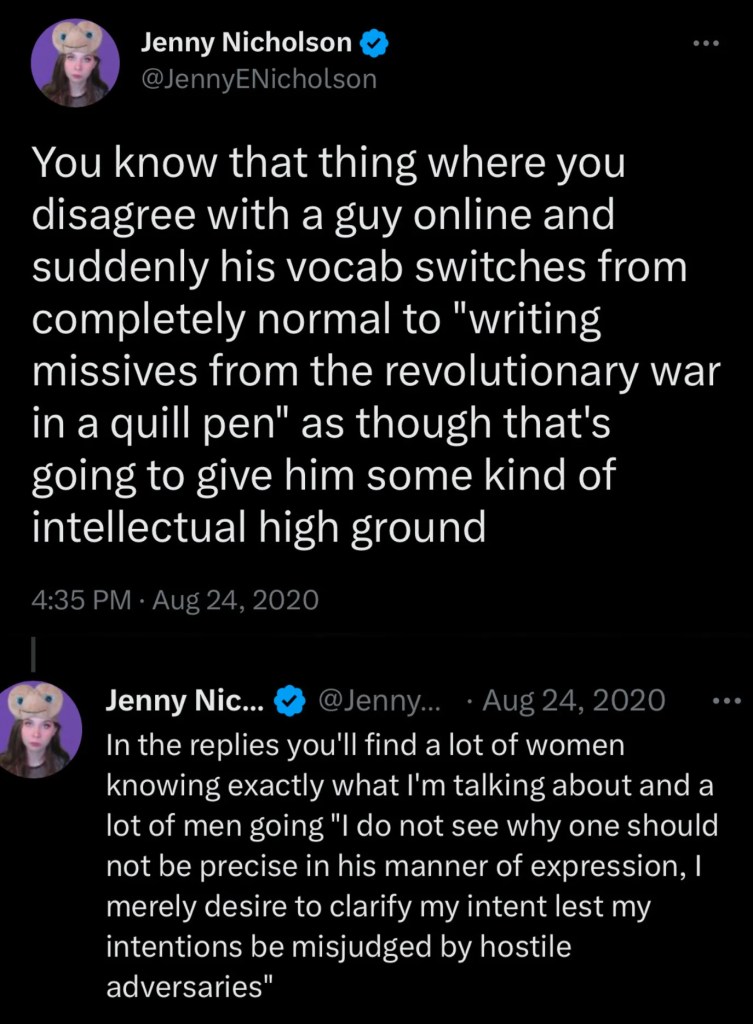
I realized I’d seen one of her tweets before, a devastatingly accurate takedown of the language men use to argue with women online that went viral in the mainstream a few years ago.
At the time I was looking for more women Youtubers for my son to follow so he isn’t just inundated with bro stuff. I went to her channel and started watching one of her more recent videos, “A needlessly thorough roast of Dear Evan Hansen.”
I quickly realized that her commentary was too advanced for an eight-year-old, and just as quickly realized I’d found something special. Honestly she had me from her trademark “So…”
After I watched one more of her videos, “An excruciatingly deep dive into the Avatar theme park,” I was completely hooked and raving about her to anyone who would listen. Several of my more Youtube-savvy friends told me she’d been a fave for some time, so I knew I had some catching up to do.
I started combing through her channel at night after my kid was in bed and mainlining all her stuff, captivated by her intelligence, wit, and singular ability to make topics I have no interest in (I don’t care about Avatar or theme parks, or My Little Pony or The Vampire Diaries for that matter) so fascinating and fun and worth exploring in depth.
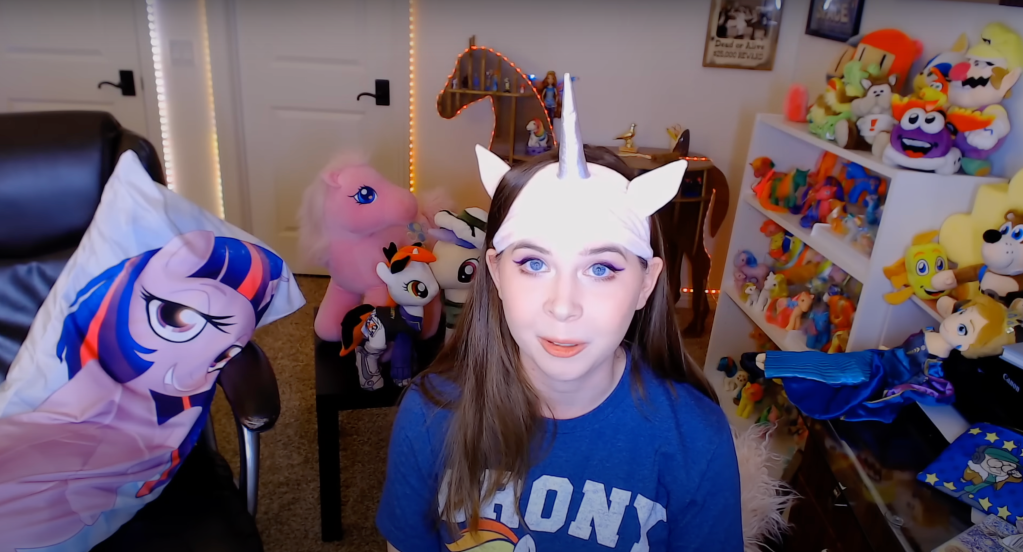
After a while, Nicholson’s commentary — rambling, laugh-out-loud funny, yet refreshingly clear-eyed and rational takes on pop culture, delivered from her bedroom, addressing the viewer in a casual way like a longtime friend, charmingly always featuring her in a costume that reflects her topic — became a kind of comfort food for me, a way to blow off steam in dystopian times.
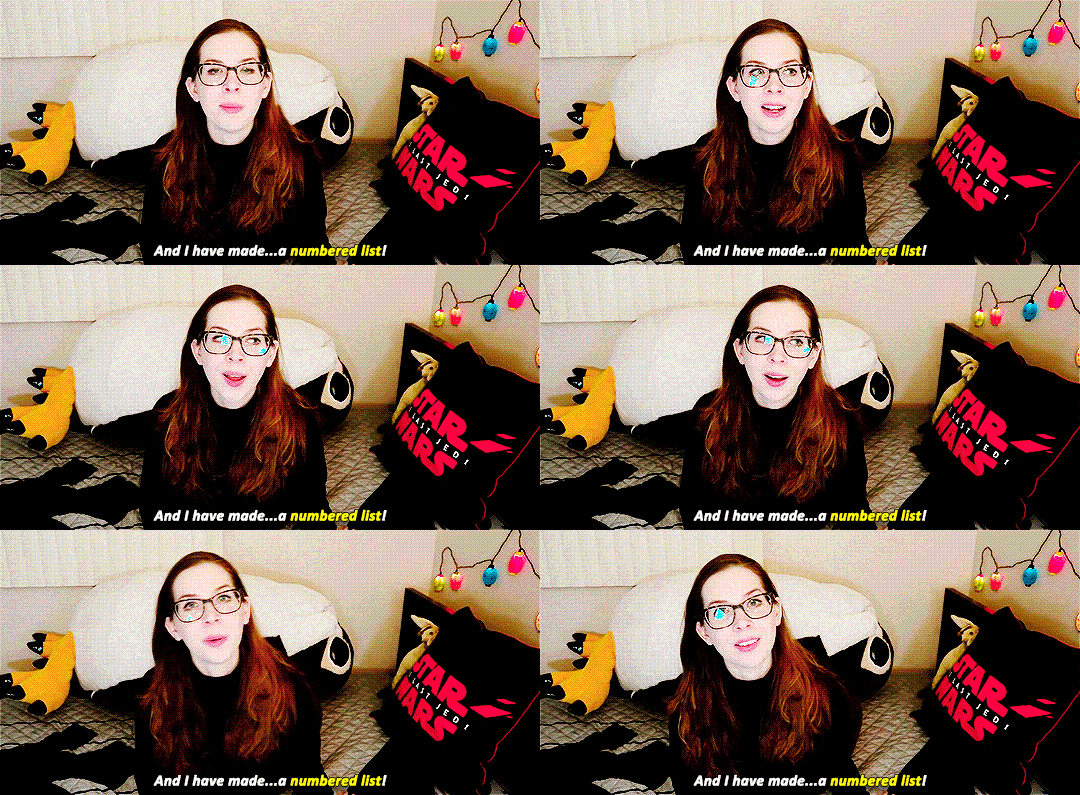
I want to break down some of the reasons Nicholson’s videos are so uniquely compelling, and why she’s become so significant to me — how she’s influenced me as a writer and thinker in the relatively short time I’ve been a fan. So I’ve made a convenient, internet-friendly numbered list.
Note: The list and the headline are the extent of my overt nods to Nicholson’s style. It would be too weird if I dressed up as her!
So here we go:
1. Her style of videomaking works so well because it’s so casual and inviting. If you’ve never watched one of Nicholson’s videos, it’s hard to explain how inviting and even soothing they are. Whereas the trend among other Youtubers is to make their studios look as much as possible like broadcast TV, Nicholson is just sitting in her bedroom. That creates a sense of intimacy right away. Her room (she’s had more than one during her Youtube career) is always very colorful and cozy, filled with her collectibles, especially her beloved plushies, which she arranges to suit each video’s theme.
The effect is to make the viewer feel like a high schooler just hanging out in your friend’s room, lazily passing the time and shooting the shit about important things like Star Wars and My Little Pony with someone you like, trust, and respect. Nicholson leans into this with her gentle, conversational, playful tone. At the same time, because she’s so sharp and witty, she never loses your interest.
It’s a wonderfully satisfying experience; this is why we can watch her go on about a cult TV show or a defunct theme park for hours.
In all ways, Nicholson avoids seeming too “professional” or slick. The casual setting, the jokey titles and graphics, her low-key demeanor, the way she makes sure to edit in bloopers and outtakes (griping about an uncomfortable costume or bad lighting) — it’s such a relief compared to the loud, overweening, pretentious style that’s the run of the mill on Youtube and across all media, and which feels like being yelled at all day.
Importantly these stylistic traits also foreground the process of it all — breaking the fourth wall, so to speak — in contrast to the smarminess of other influencers (whom she regularly mocks). This further contributes to that sense of trust.
2. But, as casual as she makes herself out to be, she is a truly expert presenter. Nicholson’s schtick is to make everything seem offhand, but this belies her skill as a host and speaker. She alludes to being a theater kid; I’m not entirely sure of her background or training, but either way she knows her way around theater as a form, as she demonstrates in her Dear Evan Hansen video and several others. This may explain in part why she’s such a great speaker, as well as her gift for comedy, her delightfully improvised costumes, and her immaculate, often striking makeup.
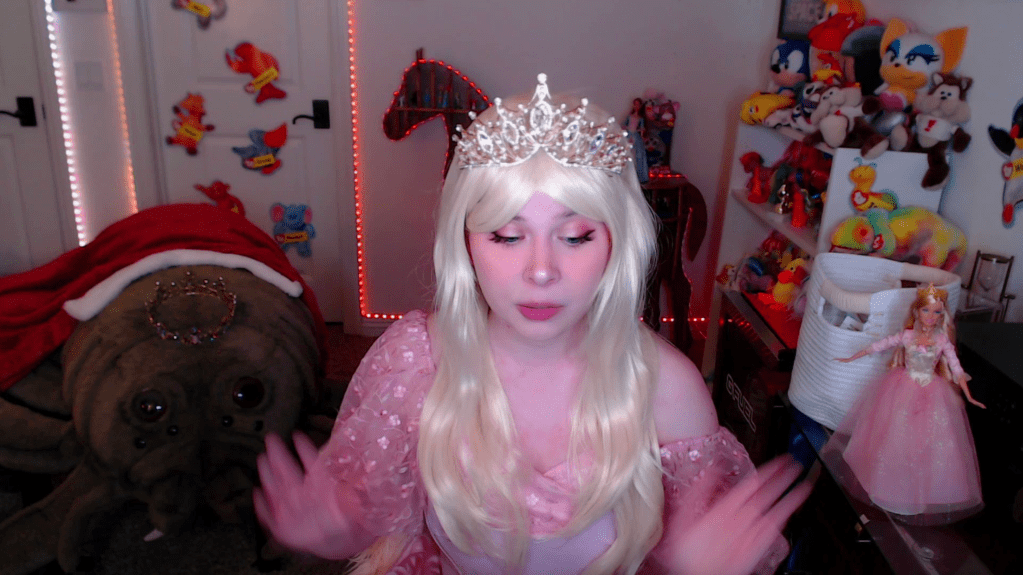
She’s also a great writer. She has a way of pulling the viewer in with self-deprecating jokes and rambly asides, which tend to downplay the seriousness of her analysis. But then she starts cooking, becoming more impassioned and forceful, reeling out insightful observations one after the other. None of this — the balance in tone, the way she builds up to a compelling conclusion — is easy to do as a writer or speaker. She makes it seem natural but that’s probably in itself a sign of the work that goes into it.
That said, the more ambitious Nicholson’s videos have become in recent years, evolving from 20-minute bedside monologues about new movies to hours-long epics tackling niche topics in exhaustive detail, the more obvious it is how much meticulous craft is involved. Just imagining the endless hours it would take to edit a beast like “Star Wars Hotel” — and yes she’s an ace editor too — makes me vicariously tired thinking about it.
3. She is genuinely hilarious. Nicholson regularly makes me wheeze with laughter, fearful of waking up my kid. Her arch-millennial snark and the deadpan she delivers it in are the stuff of legend. Every Nicholson fan has their favorite lines, but I’m partial to the amazing string of quips about Ben Platt’s costume and makeup at the start of the Dear Evan Hansen video (maybe because it was my first):
And then you see him in the film looking like some kind of sweaty 90s sitcom dad made of melting wax.
In shambles this big, hunching, mop-headed man, eyes sunken into his artificially puffy face, warbling high notes like an anxious Jiminy Cricket.
He hunches his shoulders and slinks around, probably to try to make himself look physically smaller, but it lends a menacing quality to his movement, as he skulks around these halls full of actual children.
His styling in the film carries him straight into the uncanny valley. Intellectually you know what Ben Platt looks like and that he is a normal-looking man. But in this film there is something twisted and unnatural about him, like you’re looking at a Mission Impossible-style mask of his face.
It makes my animal brain shake in fear, trying to flee from the presence of a predator.
But her humor also has a more gentle, almost childlike whimsy, such as the delight she takes in hanging out with her enormous stuffed spider in an Old West theme park in her “SPIDERQUEST” video. Her costumes are a wonderful component of her comedy too, of course.
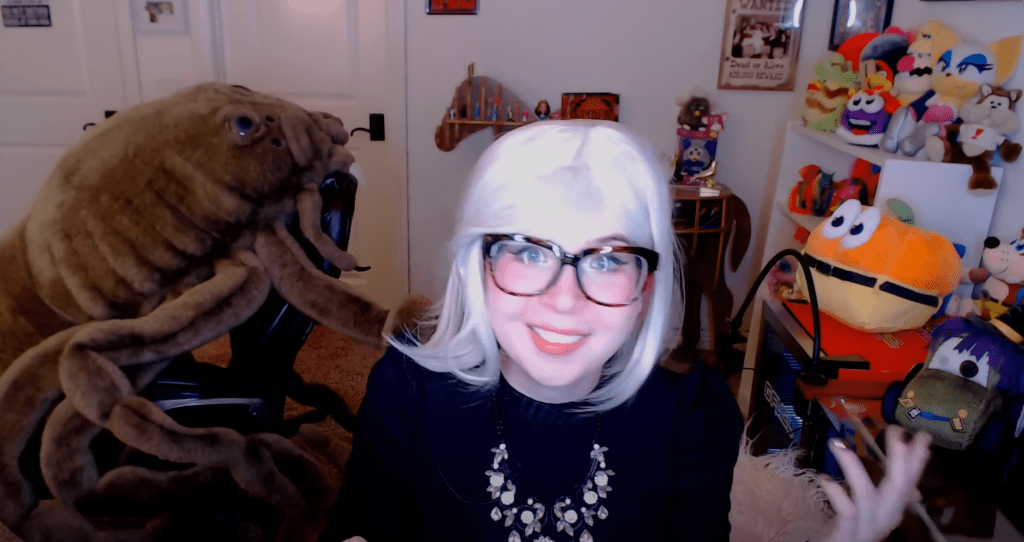
4. She’s a truly brilliant and incisive critic. Nicholson may be famous for her quirky costumes and running jokes, but her approach to criticism is what really sets her apart. As she herself often points out, the mediascape is so overloaded with unserious critics: influencers farming engagement when they’re not actually paid off; low-effort lists and hot takes in place of actual analysis. Worse still are the fandoms, which are increasingly siloed off and marked by cinema illiteracy (“I feel like some of these people have never watched a movie before,” as she says about Last Jedi haters).
Nicholson towers above these dismal trends, but she also outdoes many “serious” critics in legacy media, who avoid controversy with studios or advertisers, and often just seem bored. By contrast Nicholson is fearlessly, often scathingly honest. Though she’s an unabashed fangirl of Star Wars, Disney, and other franchises, she never lets that influence her criticism.
For example, she was deeply disappointed by The Rise of Skywalker and detailed all the reasons why in her video about it. This was admirable because the toxic backlash against the Star Wars sequels meant that many progressive fans felt the need to circle the wagons and defend it. That was me when I first saw it, posting about how much I loved it while privately crushed by what a mess it was. I was ashamed to recall that when I watched Nicholson comprehensively dismantle its incoherent, insulting screenplay and slapdash filmmaking. “It doesn’t make any sense that Palpatine is alive,” she says. “I mean I guess I can’t pretend I would rather have an explanation, because any explanation they did, like any of the other explanations in this movie, would be inadequate and stupid.”
Nicholson doesn’t just review a film based on its contribution to “canon” (a concept I loathe), nor its value as spectacle. Instead she approaches it on its own terms as a piece of cinema, and focuses on those old-fashioned yardsticks of good storytelling: character, theme, and narrative coherence. She’s always asking questions like, “What is this character supposed to represent?” “What is this movie supposed to be about?”
“Half my videos are me harping on theme,” she says at the start of her review of Incredibles 2, before going on to dissect the subtle tendency of Brad Bird’s films to take on the worldview of the villains.
In her reviews of films like Joker and Toy Story 4, she shows how to diagnose the problems of a flawed screenplay, or find the throughline of a narrative amid all the franchise bells and whistles, pointing out what a writer or director is really communicating. She argues that Joker fails as a character study, the main thing it purports to do, because writer-director Todd Phillips dishonestly hedges his bets with Arthur’s mental illness and seems to invent new motivations for him with every scene:
I get that the Joker is some kind of crazy supervillain so he doesn’t have to do things that make sense to us or that we approve of, but they have to at least make some kind of internal sense, and if they don’t, then he’s not a good character to base a movie around.
She singles out the heavyhanded climactic speech that suspiciously echoes Phillips’s real-life complaints about “wokeness”:
You can’t have it both ways. You can’t make a movie about a mentally ill man’s tragic descent into further madness, and then also have an ending where he gives a big coherent speech where he’s a mouthpiece for you, the writer-director, about how nobody wanted a fourth Hangover movie.
When she tears into just plain bad movies like Fifty Shades Freed or Escape from Tomorrow, deconstructing all the things that have gone so horribly wrong, she gives you a better sense of what cinema should actually do.
And then Ana is embarrassed because the film wants us to know that Christian is right to treat her like a child. And then they go ride a jetski while a pop song plays. Their fight didn’t matter. Welcome to Fifty Shades of Grey, this is how it goes.
She’s particularly good at identifying screenwriting tropes: for example in her video about the Land Before Time movies, she calls out the common trope of child characters whose only role is to be annoying. That was something that had bugged me for years, especially as a dad watching things with my kid (it’s a prominent trope in Bluey), but I was never able to consciously name it.
In her comical preview of Rogue One, she gives the best and clearest explanation of the function of sidekicks in movies I’ve ever heard: “In movies, we can’t hear characters’ internal monologues, so we have to give them a fun sidekick to say things to.” It’s a trope so universal you don’t think about it — the cinematic water we’re swimming in, as it were — until someone points it out to you.
And the thing is, not only is Nicholson smarter than most other critics, she’s more fun too.
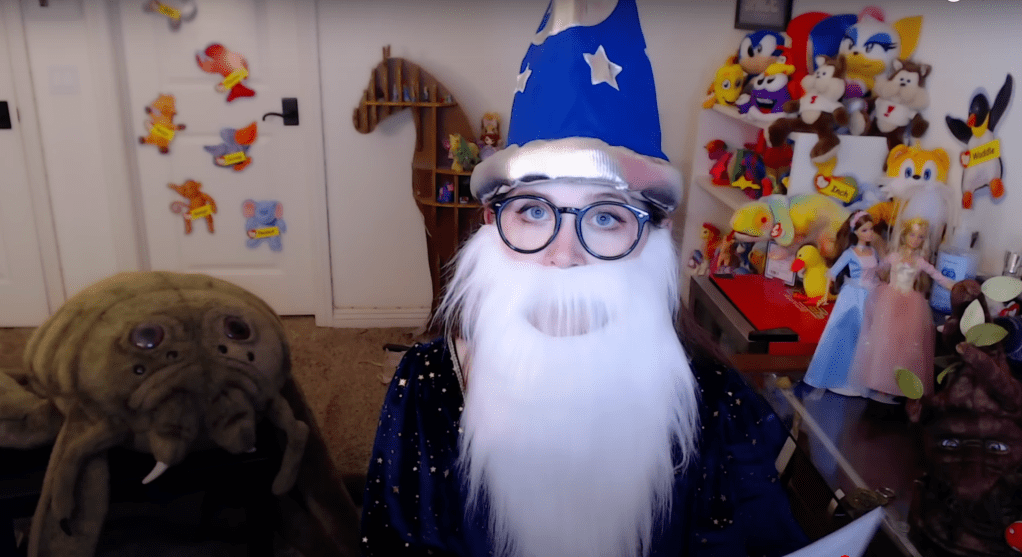
5. Her sincerity makes all the difference. There’s something Nicholson does that I find both wholesome and profound: she will talk in depth about all the things that are dumb or silly about a given thing, while at the same time making it clear how much she loves it. I first noticed it with her Avatar theme park video. Most of the hour-long piece is a rundown of all the things in the park that are cheesy, make no sense, or simply don’t work, while openly acknowledging what an awkward franchise Avatar is in the first place. “You had this weird phenomenon where the movie that had been the biggest movie in the world two years prior now held less cultural relevance than, like, Sonic the Hedgehog.”
But at the end she’s going on about how much she enjoyed it and what a wonderful time it was, and it becomes clear that her unapologetic love of Avatar, and her love of having fun in an artificial world, however chaotic, override all the problems for her.
This approach is the opposite of “cool,” and while a certain irony may be a component, it really transcends the typical irony that pervades pop culture. Nicholson’s overall aesthetic is to find great joy in things that are unabashedly goofy, fun, colorful, childlike, detailed in their construction and worldbuilding, enchanting, and, especially, kitschy. Examples include the E.T. ride at Universal Studios (which she tellingly says she loves more than the film), the abandoned Flintstones theme park she stumbles onto in “SPIDERQUEST,” and the 90s Goosebumps TV series.
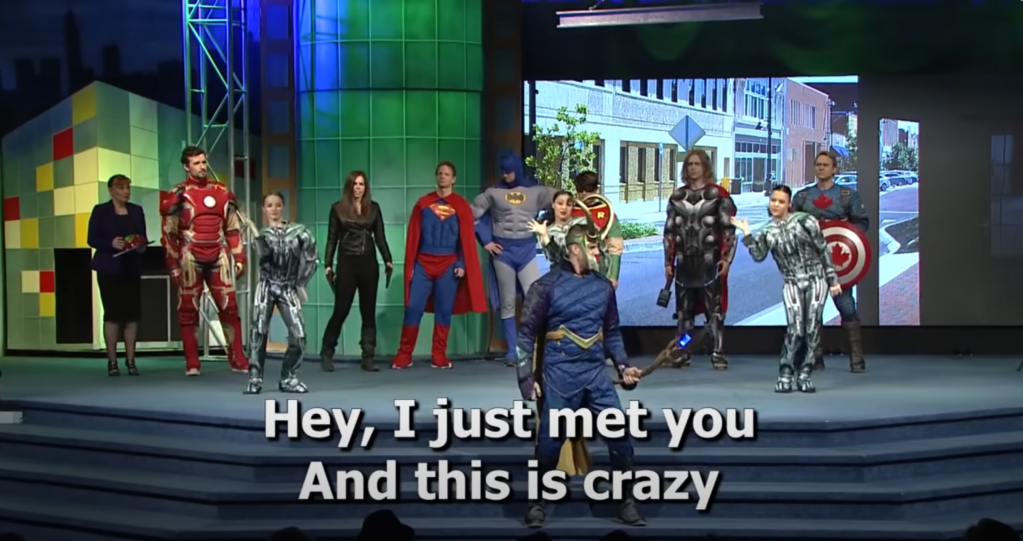
Perhaps the best example of this is “The Church Play Cinematic Universe,” about the amazingly corny yet lavishly produced Easter plays that are streamed annually by a church in Canada. Nicholson is so obsessed with these almost unwatchably bad churchy-theater-kid tributes to franchises like the Avengers and Star Trek — always featuring cringy renditions of pop songs, always ending with a character representing Jesus (Iron Man, Buzz Lightyear, Indiana Jones) being crucified and rising again.
After a point, the cliché “so bad it’s good” doesn’t do it justice. There’s something so deeply sincere about how much she enjoys this stuff. It’s sublime.
A friend told me they think Nicholson’s work embodies the essence of camp as defined by Susan Sontag, and I haven’t stopped thinking about that. In her classic 1964 essay “Notes on Camp,” Sontag wrote:
High Camp always has an underlying seriousness. You can’t camp about something you don’t take seriously. You’re not making fun of it, you’re making fun out of it. You’re expressing what’s basically serious to you in terms of fun and artifice and elegance.
Though Sontag was writing about specific forms of midcentury gay camp, I agree that this really nails what makes Nicholson great. I especially admire it because like many cishet guys of my generation I’m perennially trapped in notions of “cool.”
6. She’s an expert in many areas of pop culture. This is so refreshing compared to the hyperfocus that makes fandoms boring. Nicholson knows her way around Star Wars, Disney, My Little Pony, Pokémon, Harry Potter, and many other nerd fandoms, but she’s more than capable of critiquing “serious” cinema and theater too. She explores esoterica like long-forgotten TV shows, creepypasta, books about magic, and even reviews of spider products on Amazon (possibly her funniest video!). She scours the internet for kitschy fan fiction. She’s an accomplished gamer too.
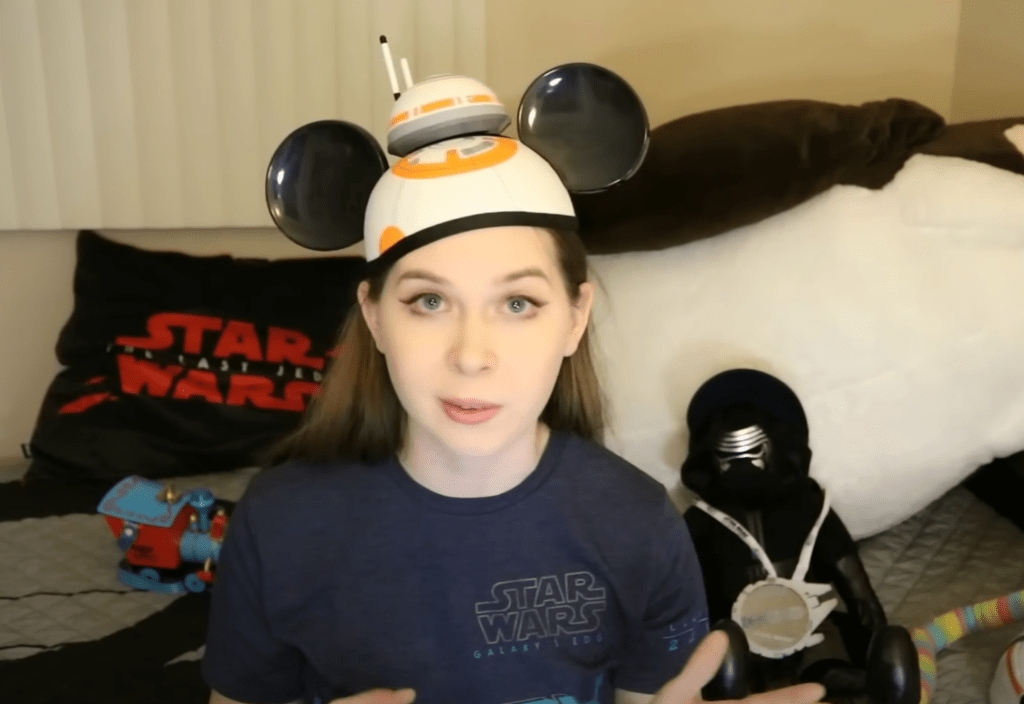
Nicholson’s obsessiveness is contagious but she never loses sight of the fact that all this is supposed to be fun, which is increasingly forgotten amid the soul-draining culture wars. As a lifelong Star Wars fan, this is especially significant to me. In all her many Star Wars videos it’s obvious she knows what the hell she’s talking about; her knowledge of the lore is as formidable as anyone’s (it dwarfs my own). Yet through the sheer delight she takes in the franchise, from her palpable excitement over the lightsaber battle in The Last Jedi to her well-known affection for the cuddly porgs, she continually reminds us that these are, after all, space-opera stories for families, and shouldn’t be taken with such unpleasant seriousness. “Sorry, everybody wanted me to do this big takedown of the movie and I liked it instead,” she deadpans in “Top 10 Worst Reasons You Hated The Last Jedi.” “Whoops.”
For this reason she’s a powerful countervailing voice against the toxic fanboys, easily dismantling all their stupid talking points — never more clear than when she goes up against a Last Jedi hater in this live-streamed debate and absolutely demolishes him.
Like what you’re reading and want to support? Consider buying me a coffee!
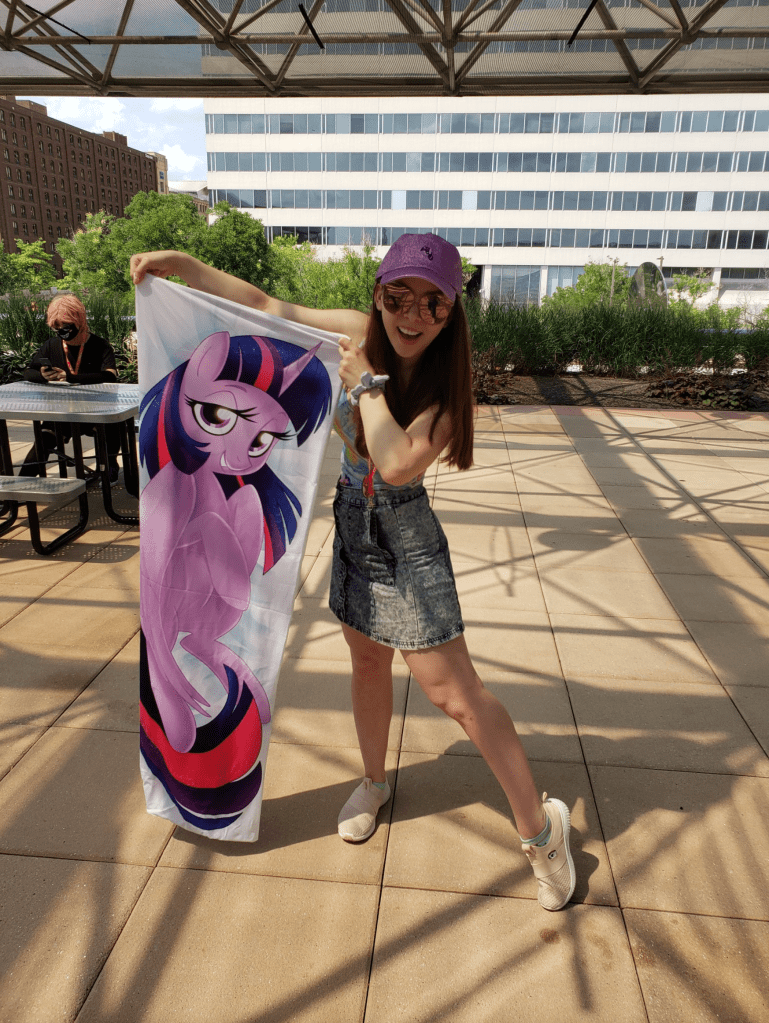
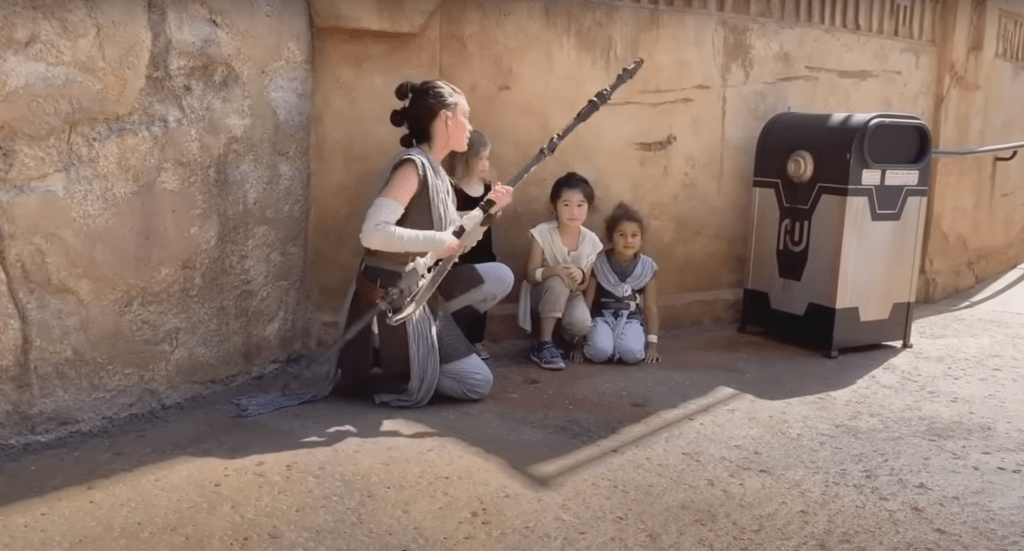
7. She’s also good at analyzing systems, events, and organizations. Her breakdowns of what works or doesn’t work about theme parks, conventions, interactive games and so on, from event planning to landscaping to the customer experience, are consistently so lucid and smart. For example, in her video about the Star Wars Galaxy’s Edge park, she calls out Disney’s hostile architecture — the fact that there is nowhere to sit and no shade in much of the park, which is implicitly intended to funnel guests into restaurants and other spaces where they have to pay to stay.
This tendency toward analyzing systems and logistics has grown in Nicholson’s commentary over time, and indeed becomes the main thrust of her most popular and acclaimed works, her long-form video essays about failed theme parks. Here they take on a more political dimension, as she addresses the impact of systems on consumers and workers (more about this in the point about “Star Wars Hotel” below).
In general Nicholson is just a very observant, very curious, and very sharp person who can look at seemingly anything and say something interesting about it.
8. She’s especially good at understanding what kids like. Nicholson is not a parent herself, but possibly because of the way she retains her childlike wonder (see the above embedded video!), she has a strong grasp of how children engage with movies, toys, shows, games, theme parks, and so on. As a dad, I love this and I think it’s an underrated aspect of her game. So many cultural critics consider children a distraction or a problem, but Nicholson is so sympathetic to what families want and need from entertainment. She manages this without being smarmy, condescending, or overly romantic about childhood.
Her video about Forces of Destiny, the line of Star Wars dolls for girls, peaks with a brilliant discourse that ties together her empathy for children, her critiques of corporate entertainment and toxic fandoms, and her feminism:
I feel like these dolls were designed without thinking of children as their own human beings with their own psychology and very specific ways that they tend to play with specific kinds of toys. I feel like I’m in that scene in Big where he can’t get the guys in the boardroom to understand that kids don’t want to play with the Transformer that turns into a skyscraper.
I don’t know how many of you watching have been little girls, but I have been a little girl, and when was a little girl I played with many other little girls, and I can remember that. And when little girls play with Barbies, their games are very focused on talking and interpersonal relationships…
There’s no shame in entertainment skewing young or even being boring for adults, and I do feel really secondhand embarrassed when I see all these adult fans who are super angry when a new Star Wars kids’ show is greenlit because, “Oh my god, it’s not for me.”…
I do feel strongly about kids being offered good content that respects them and the complexities of their interests. And I think that programming for little girls especially suffers from laziness and bad storytelling.
There’s a bit in the Galaxy’s Edge video when she talks about the lovely way the Rey actors interact with kids. Others would have missed this while focusing on their own experiences as grownup fans, but the way Nicholson brings it out is so nice and wholesome, and says so much about how Star Wars is really for kids, that it nearly brought me to tears.
9. There’s a subtle but strong political undercurrent in Nicholson’s work. Nicholson’s feminism isn’t polemical for the most part, but it’s reliable. She’s brilliant at torching sexist fanboys, but more often she will ignore or dismiss them with brutal casualness — “your concern not worth acknowledging” as she puts it in the caption of her Last Jedi video. This works so well because these chuds feed on controversy and concern-trolling.
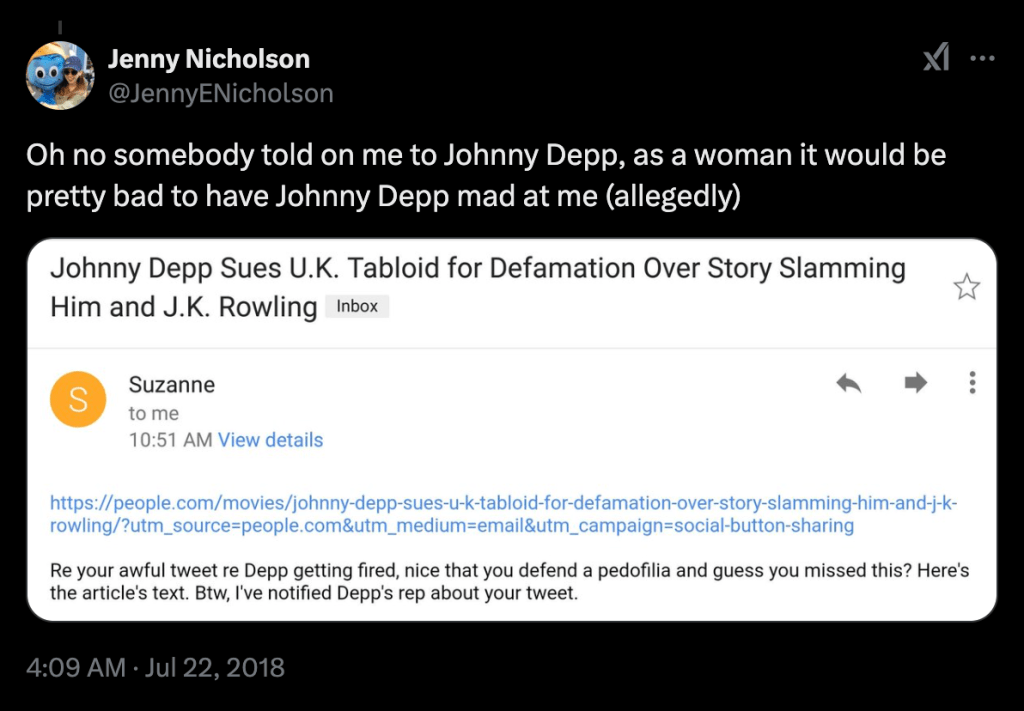
But Nicholson can be polemical when she sets her mind to it. In her video about Escape from Tomorrow she’s quite scathing about the chuckleheaded misogyny of director Randy Moore (“By Randy’s logic, any public setting where there are beautiful women and you’re not allowed to grope them is a place of great sexual repression.”). She called out Johnny Depp as an abuser long before the Amber Heard trial, and takes pleasure in jeering him whenever she gets the chance. “I have to say that I think it’s morally reprehensible to have Johnny Depp in this movie,” she says in her review of Fantastic Beasts 2. “I mean, it’s bad enough to dig up a corpse, but to slather makeup on it so it looks vaguely human, and then poke it with a stick so that it shambles around attempting to deliver dialogue, it’s just inhumane.”
Her political views pop up in other contexts too: she foregrounds class in Netflix’s cheesy Christmas Prince franchise; she riffs on the colonialist implications of the Avatar theme park and the uncomfortable legacy of the Confederacy in The Vampire Diaries; and across her media she’s a vocal trans ally.
In Nicholson’s takedown of Dear Evan Hansen it becomes clear not only that she thinks the film is embarrassingly bad, but also that it aroused her anger because of its shitty attitudes about mental health. That’s why she went to the trouble to roast it. Similarly, her Evermore video gradually transforms from a travelogue of a hopelessly incompetent theme park to a disturbing account of how poorly the park’s management treat their workers, and by the end she tells us that this was the point all along.
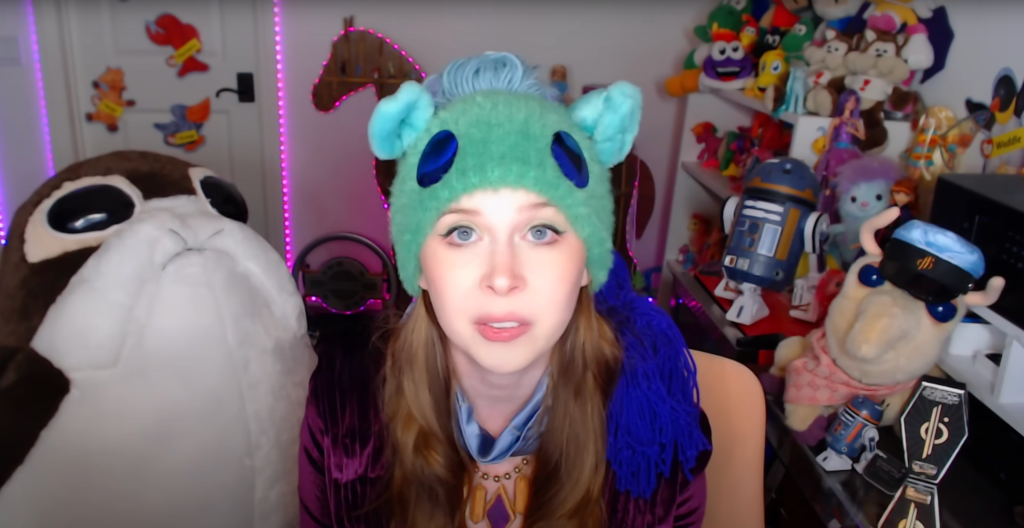
10. “The Spectacular Failure of the Star Wars Hotel” is a true masterpiece. The more ambitious Nicholson gets, the better she is. As she gets more thorough with her research (or her journalism, as we should rightfully call it) and more skilled at finding the through-lines of narrative and social relevance in her topics, her videos grow in length and they become more like documentaries — though honestly, I’d rather watch Nicholson than most docs. She’s correctly identified that people will watch despite the length because they’re so good. She’s in her imperial phase.
All of Nicholson’s strengths come together in her review of Disney’s Galactic Starcruiser hotel — but still it surprised me how much it blew up. I’ve spent a year thinking about why this video became so wildly popular and such a breakthrough for Nicholson in the mainstream.
First of all, it’s the way she so comprehensively dismantles the franchise IP of a corporate behemoth, and that she’s so honest about what a shitty experience it was. She refused to use her profile as an influencer to win special treatment from Disney, and in the video she even exposes how other influencers operate. This cuts against everything about how the media works these days. Online influencers basically just work for brands, presenting idealized experiences, even if they’re not being paid — because the algorithm rewards shallowness. Everything is marketing now.
This goes beyond the silliness of influencer culture, and extends to all media — think about how Pitchfork reviews basically read like marketing copy, and every 7.1 rating feels calculated for the number of clicks it will bring the site’s advertisers.
Nicholson is the antithesis of this smarmy, disingenuous, exploitive culture and it’s so refreshing. It feels like sweet revenge to see someone operate so independently and go right at a hated corporate giant, actually landing some shots against them. You know she pissed off the suits in Disney’s boardroom, and her video is now a permanent part of the Starcruiser’s legacy.
But paradoxically Nicholson is a massive Disney fan and a Star Wars fan and has been all her life; she’s also worked at Disneyland and mentions it often with pride. Anyone could sit and rant about something they hate for hours (and plenty do), but she has a love and granular knowledge of her chosen subject that makes her disappointment in the experience so vivid and relatable. She’s not just being a hater — she wanted to love this thing. She was so ready to get amongst it with her own roleplaying character Amethia Tope (a rich young influencer from Coruscant who seeks to “signal complicity with a fascist government”), her elaborate cosplay, and her infectious enthusiasm as a fan. It’s shocking and inexcusable how she was let down in almost every way across the entire stay.
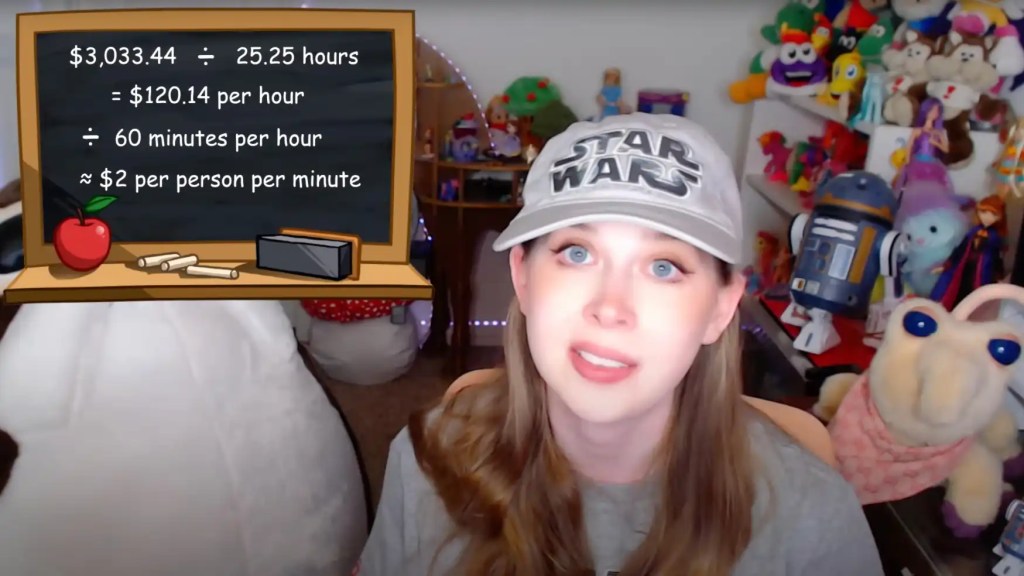
She also very wisely makes the focus a material one: she sets out to show in detail what the value of the hotel stay is actually worth versus the unbelievably inflated price of $6000 for a room. This may sound crass, breaking down the dollar value of each service, but of course the money matters. The tendency in the influencer media is to rationalize or sublimate the cost but she parks it front and center like Marx talking about yards of linen.
As Nicholson points out, families might save up for months or years in order to manage a trip to a Disney park for their kids, all just to create some core memories. Taking it back to that empathy for kids and parents, Nicholson poignantly shows how the company has made those family experiences much more prohibitive and uncomfortable with extortionate pricing. (She says she felt justified dropping six grand on the hotel stay because the ad revenue from the video would pay for it.)
The final act of the video is a brilliant, angry rant about how Disney systematically monetizes every last thing in their parks, even nice little services that used to be free, calculating that people will pay anyway even if they’re frustrated.
This has become the new philosophy of the Disney theme parks. More and more amenities that used to be free are now being put behind paywalls… You used to get a MagicBand free with a hotel booking to use as your room key, but now they make you buy them. The FastPass system used to be free, now it costs extra, and it doesn’t include every ride anymore. The good rides are à la carte; you have to buy those separately.
Meanwhile, lines keep getting longer and longer because now that Disney can monetize long lines, corporate actually wants them to be long. The FastPasses actually have variable pricing, which is updated live in the app, so the longer the lines are, the more they can charge. And of course, they oversell the FastPasses, because now they have an incentive to do so, so those lines aren’t even actually short anymore.
They fired all the atmosphere entertainment and closed all the little diversions because they’d rather everybody just pile into those lines — because the longer the lines, the more they can charge. Why build new rides? Why increase capacity? It’s actually better for your bottom line if you don’t anymore. Why do anything above the bare minimum?
Ride photos used to be free for passholders, now they cost extra. Buses from the airport used to be free for Disney hotel guests, now they cost extra. Even the baskets of free bread they used to bring out at the expensive restaurants — now you have to buy those as an appetizer.
This is how everything works under neoliberal capitalism lately, from airlines to privatized healthcare. So the Starcruiser hotel becomes a symbol of the enshittification of everything. Of course that’s going to resonate with lots of people now.
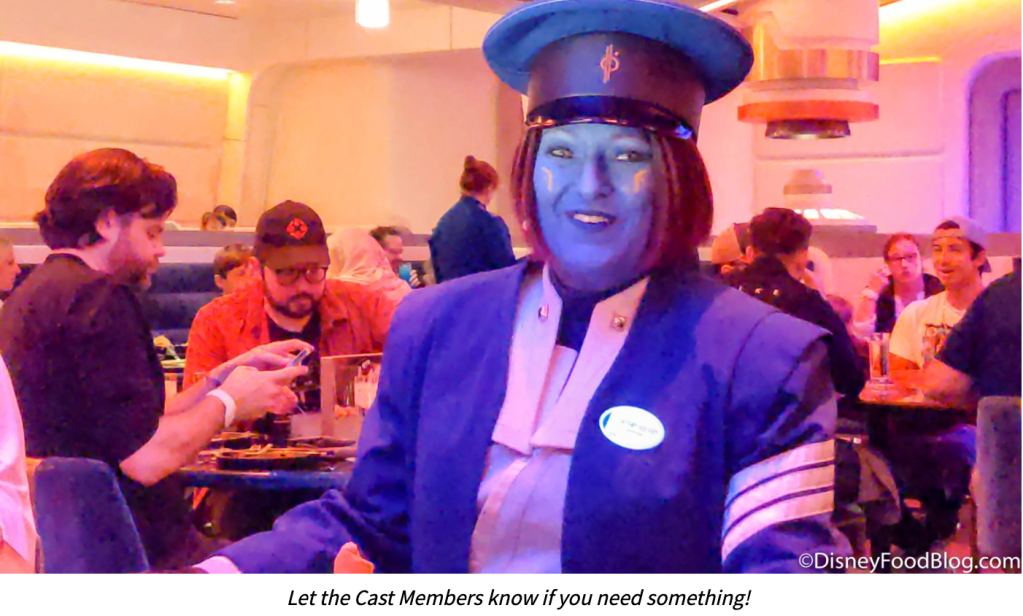
Nicholson also ties in Disney’s exploitation of labor, making it clear her sympathies lie with the workers. “Anytime the Starcruiser felt deluxe to me, anytime I felt they had gone above and beyond to give a good experience, it was entirely through the efforts of individual cast members,” she says.
She goes on to reveal that Disney staffed the Starcruiser with a large number of part-time, low-paid cast members from their college program as a cost-cutting measure. These students were hyperexploited in roaming positions, expected to do more for less while bearing the brunt of customer service for a very expensive themed experience. Likewise, the main cast members did long, gruelling shifts in character while balancing customer service and being paid the same middling rate as other park entertainers.
I get so miffed at people insisting that, yes, the Starcruiser price is fair because it’s exactly like a bunch of Broadway shows in a row. It’s not — but also, do you think your money is going directly to Captain Keevan? Do you think she’s getting paid as much per day as a Broadway lead makes for several performances? Because I don’t. And after all this, these actors were the first to be punished when the Starcruiser underperformed.
By thus demonstrating that Disney reaped even more profit from the Starcruiser’s insanely inflated price thanks to this reliance on underpaid labor, again she approaches Marxism. “Some of the best labor analysis I have ever seen,” Thrasher gushed while live-tweeting the video.
Nicholson is so methodical and patient in describing the good and (mostly) bad things about the hotel that the sheer outrage of what a ripoff it is dawns on you only slowly as you make your way through the four-hour runtime, and thus hits even harder. This culminates in the now-famous bit when Nicholson is denied a view of the dinner entertainment on the pivotal first night thanks to a badly placed column.
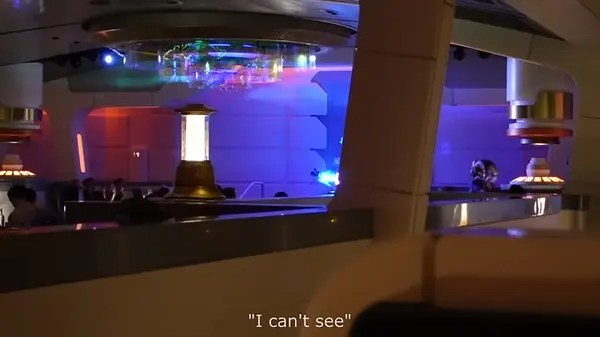
She mines it for humor to great effect, but it’s awful the more you think about it. To empty out your life savings on a once-in-a-lifetime fan experience, only to be stuck in a cramped, crowded “spaceship” over an exhaustingly overplanned two-night stay, to be completely locked out of the gameplay thanks to a glitchy app, and not even be able to enjoy your dinner — it would be a nightmare.
Despite that nightmarish quality, there’s something about the video that really pulls you into the experience. Early on, she hilariously skewers the overuse of the word “immersive” in marketing, but the thing is, the video itself is nothing if not immersive. You spend four hours inhabiting this expensive disaster of a theme park, but there’s something so oddly enjoyable about it that it becomes like its own version of the experience it never was in real life (the same is true of her Evermore video). It’s like a world you don’t want to leave — even though it sucks, which is weird!
Meanwhile, in her typical fashion, aside from her scathing commentary she makes it all so fascinating with her breakdowns of the theatrical techniques of the actors, the puppetry, the practical effects, the colorful themed food (which looks delicious and fun, arguably the best thing about the experience), and many other aspects of the hotel’s operation.
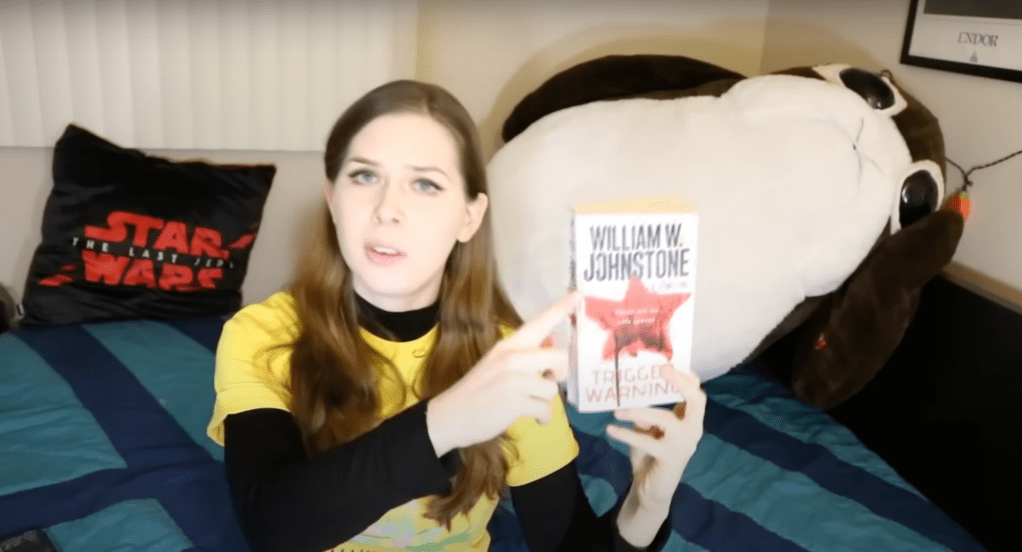
11. She’s not infallible. I don’t love everything Nicholson does; I especially dislike it when she reads books aloud. Something about the overdose of irony and quipping about every other line in place of a broader critique bugs me, especially when it stretches to an hour or more. She has a bunch of these kinds of videos and I take it they’re popular; her reading of the maniac right-wing novel Trigger Warning has 7 million views. I do admit the book sounds hilarious and I laughed a lot before the cringe factor got to me and I had to tap out after 20 minutes.
When she digs into fanfic written by teenagers, it can even seem a bit mean. The camp I love so much elsewhere in her work doesn’t really click when the object is the silly musings of some kid somewhere. In the comments on her Jeff the Killer fanfic reading, Nicholson says some of her viewers tracked down the young person who wrote the story and harassed her — a predictable result if you ask me. I wrote embarrassing fanfiction and horror stories when I was a kid too, and I don’t think I could have survived my work being made fun of on the internet (which thankfully didn’t exist back then!).
12. In a short period of time she’s become an influence on my writing. I don’t mean this in a surface way — like she’s not inspiring me to write about My Little Pony or theme parks, and it would be pretty hopeless if a 54-year-old dad tried to copy her style or her snark.
It’s more that she reminds me that I should just be myself as a writer, and embrace my quirks and weirdo fandoms (the Bangles, or Hey Duggee) instead of trying to be cool. To explore my passions and have fun instead of trying to be “serious” or “professional,” while at the same time approaching my topics sincerely and rationally. To find my niche instead of trying to be like everyone else.
She also inspires me to be more honest about what doesn’t work in the things I’m reviewing, instead of sounding like a basic fanboy or a marketing writer (a tendency I have to fight because I’ve worked in film marketing). For example, in my review of Don’t Look Up, I didn’t say one bad thing about it. There was a reason for this: I wanted to defend it against the centrist idiots who dishonestly attacked it on political grounds. I did get a lot of compliments on that review and it was shared widely, but when I look at it now I can’t help but judge myself for the slightly breathless tone.
I’m much happier with my piece on Barbie, which was even more widely shared: I teased out all the good and bad politics and cringe moments of the film while owning up to how much I really enjoyed it. That one was directly influenced by Nicholson.
I don’t mean to be too self-deprecating; of course I was capable of honest criticism before I discovered Nicholson (see my needlessly thorough roast of Thor: Blood & Thunder, which doubles as an autopsy of my own MCU fandom). She just reminds me to be true to myself.
She also makes me feel validated for being long-winded and resisting the attention economy, in which everything is supposed to be a five-minute read with bullet points, or a one-minute reel. She makes me feel it’s okay to take time to develop a point and go in depth if you feel you have something to say. Longform work is where I find the most value, whether as a viewer, a reader, or as a listener. I don’t want the quick fix of playlists or series; I want the long journeys of full-length albums, feature films, and deep dives by journalists and creators as smart as Nicholson. Maybe that just makes me old, but if so I love that I’ve lived long enough that the internet has finally produced content that I can really sink into like this. That inspires me as a writer.
At the same time I’m self-concious about mentioning my own work in reference to hers, because I know I will never be Jenny Nicholson…
Like what you read and want to support? Consider buying me a coffee! You can also subscribe below, and be sure to share this article!
 Under the Paving Stones
2 thoughts on “A painfully sincere tribute to the genius of Jenny Nicholson”