If you’ve been around both a young child and a TV at any point in the past nine years, you probably know that Hey Duggee is one of the best, most intelligent, and most consistently delightful shows out there for the little ones — and us parents too.
Produced by the BBC’s kids’ channel, CBeebies (and a staple on ABC Kids here in Australia, where my family and I live), Hey Duggee follows the adventures of five endearingly cute preschool-aged anthropomorphic animals and their carer, a big, brown, and also very cute dog named Duggee. Duggee runs the Squirrel Club, a combination daycare/activity group located in a bucolic woodland setting in a charmingly surreal fantasy world. He speaks only in barks (“A-woof woof woof!”) which are amusingly articulate and perfectly understood by the Squirrels, the narrator, and all the other characters if not by us. Each episode of the show is centered on and titled after the badge that the Squirrels earn by learning about something new — thus, the episodes are referred to as “badges” (at least by me!).
Despite this focus on learning and growth, which is typical of the content screened on CBeebies and ABC Kids, what makes Hey Duggee great is that it doesn’t pedantically stick to education. Some kids’ shows are so heavy-handedly focused on daily lessons about STEM or ecology they feel like smarmy school textbooks. But with Hey Duggee, a mood of tumultuous fun prevails. Many of the badges are hilariously weird and have little to do with things that real-world children would learn — for example “The River Badge” isn’t about actual boating or water safety, it’s just an excuse to satirize Apocalypse Now. The show’s creator, Grant Orchard, told the Guardian, “Our show is very silly. And it’s strange. And it’s slightly surreal. I think kids are fine about that.”
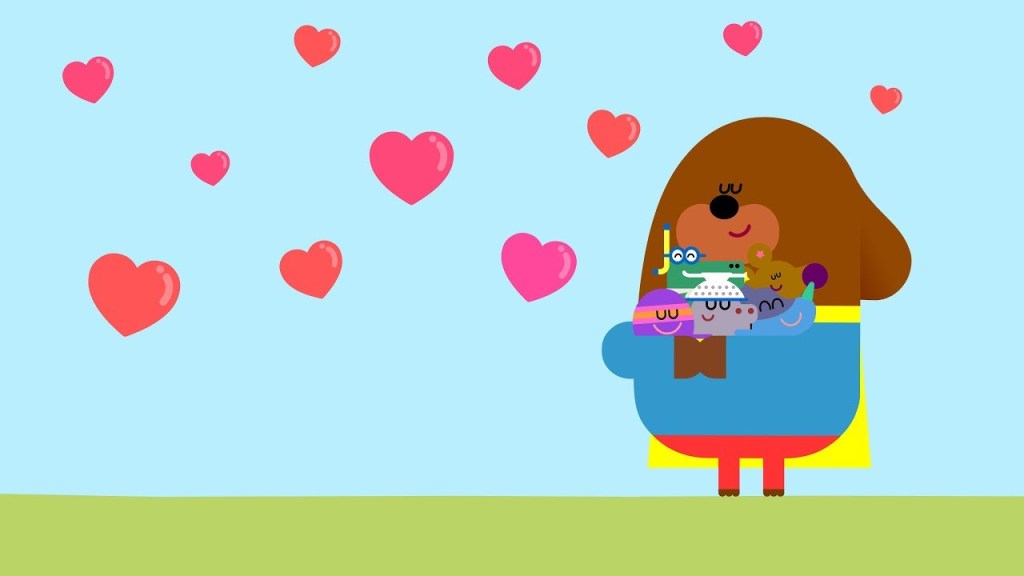
Silly, strange and surreal it may be, but Hey Duggee is also a lovely vision of young kids being nurtured and valued by their carer and by their community. Like Sesame Street it’s a blast of intergenerational wholesomeness. My son has picked up on this: “Duggee is a good carer,” he often says.
Each Hey Duggee badge follows a fairly strict formula over its seven minutes, especially in its intro and closing bits. Each one starts with the narrator addressing one Squirrel at home (“Betty! Isn’t it time for…” “…Duggee!”); and each one ends with the ritualistic badge distribution, arrival of the parents, and climactic “Duggee hug” (followed by another hug for the parents — there’s lots of hugging).
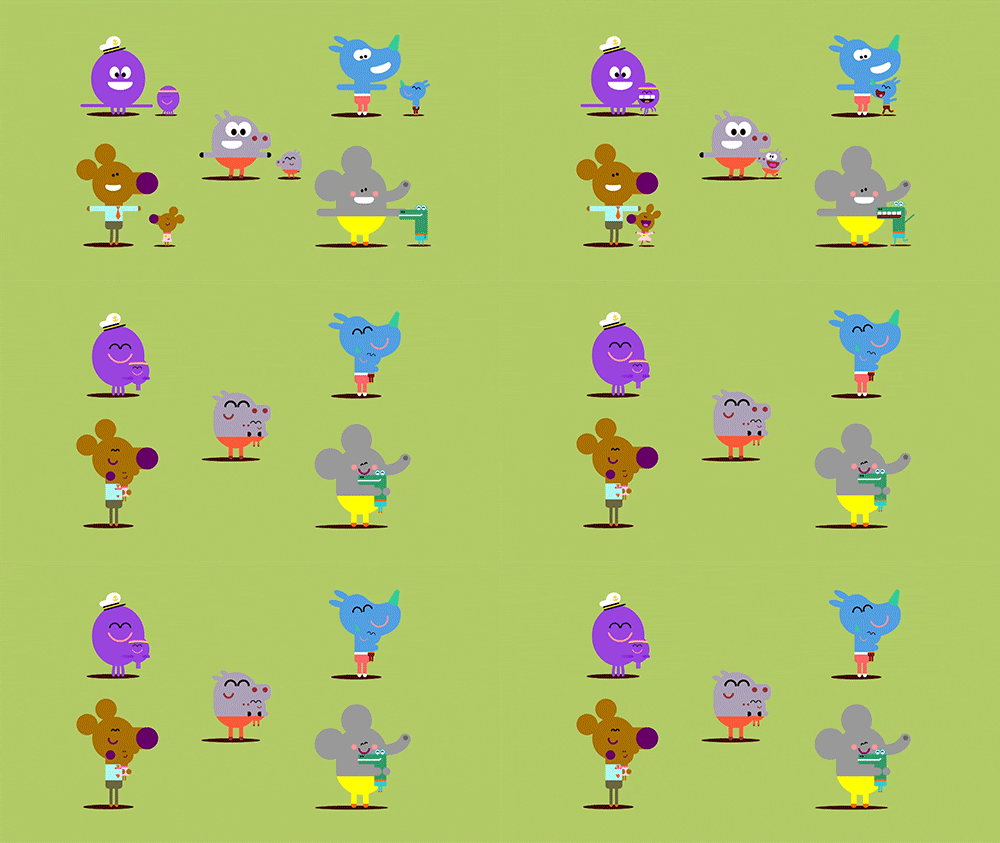
This formulaic nature is characteristic of many shows for young kids. Whether repetition is considered by expert consultants to be good for learning, or it’s a cost-saving measure, or both, I’m not sure. But with Hey Duggee, the repetitive formula is not grating like it is in other shows. Think of Peppa Pig — a show I happen to enjoy but which is so plodding and formula-bound it becomes unpleasant or downright painful if you watch more than two episodes at a time. In Hey Duggee, the repetition is funny, even compelling. Like The Simpsons’ title sequence and couch gag, the basic formula deviates in clever and subtle ways that are fun to spot if you’re watching with a kid.
Then again, some badges set aside the standard template and change things up more dramatically. As we shall see, those are some of the best ones.

Overall the writing is great, with engaging stories and a steady supply of jokes and slapstick that are laugh-out-loud funny for parents watching along. Most importantly the show trusts in kids’ intelligence, aiming the humor a little higher than the preschool level, with relatively sophisticated satire and a delight in the absurd that’s outright psychedelic at times.
Hey Duggee’s art and animation is a continual delight, with a clean, uncluttered, highly graphic style and blocky primary colors and pastels that really pop. I never get tired of watching it; it’s so different from most other animated kids’ shows, and there’s something very soothing about the geometric shapes and colors and the cleverly minimalist ways the characters and objects move.
I especially love the scenes in which the screen is split into multiple squares to show different things the Squirrels are doing or different objects they’ve collected. These are so satisfying to me, in the way a collection of stickers is satisfying.
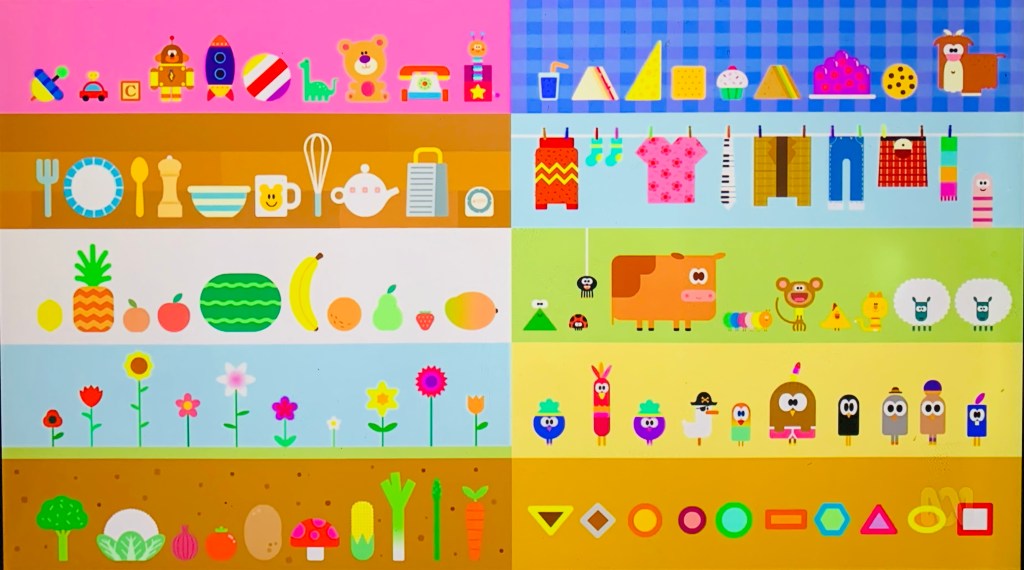
In a 2017 interview, Orchard said that his team deliberately limited themselves to what Adobe Flash could do. At the time, Duggee was the only character rendered with gradients.
The animation has gotten richer and more sophisticated in the years since. In more recent badges there’s great use of light and shadow, and quite a few more gradients, without betraying those minimalist principles.
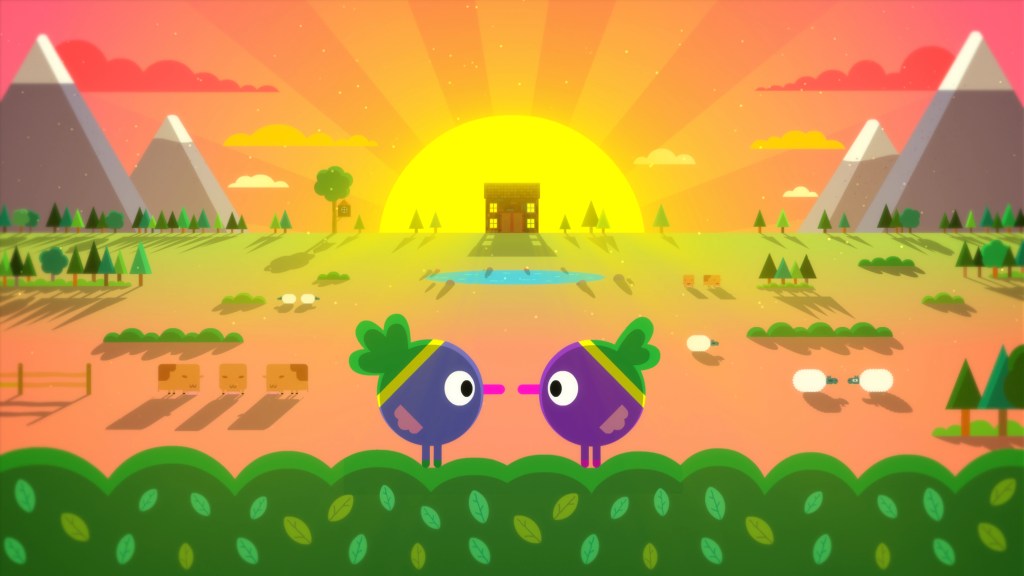
That said, some of the best badges are the ones that break out of the established animation style to incorporate mixed media such as animated paper drawings and even some live-action video of puppets, pottery, and other art objects created by the Squirrels.
In fact, watching Hey Duggee gave me an opportunity to teach my son the term “mixed media,” and now he can identify its use in other movies and TV shows.
The music elevates Hey Duggee too. There’s an eclectic range and a vintage cool to the music cues that’s such a pleasant contrast to the music on other kids’ shows, which are usually confined to a narrow band of kid-friendly takes on pop and showtunes, with the same cues repeated over and over. Hey Duggee’s music supervisors favor quirky and atmospheric jazz, country, lounge, funk, and electronica (some of it sourced in the BBC archives), lending texture and emotional resonance to these animated adventures, as if they were Wes Anderson movies for kids. The jaunty bluegrass theme song ices the cake.
Another wholesome thing about Hey Duggee is its lowkey progressive politics. The Squirrels are presented as multicultural in several layered ways: not only are they five different species of animal, but Roly the hippo’s dad has a West Indian accent, and the other Squirrels’ families feature Scottish, Japanese, and Swedish characters. Happy the crocodile’s mum is an elephant — a positive depiction of adoption. Tag the rhino lives in an apartment building and is taken by his mum to the clubhouse via public transport (a big pink bus driven by a big pink bear); while Roly and his dad commute on a bike. There are at least two openly gay characters (John and Nigel, a married couple who happen to be crabs), and others coded as gay (including Tino the Artistic Mouse, one of my favorites).

I love what Orchard says in that 2017 interview about Hey Duggee and gender:
You know, it wasn’t a conscious decision to make it a gender-neutral show. For us there wasn’t a decision to be made at all. The series’ setting is supposed to be like a class or club full of kids. They all have different personalities, like with any real group of kids. Kids’ personalities are not allocated by their sex.
Only when we started talking to distribution and marketing people about the show, and they were discussing what kind of show it was and whether it would be placed in a boys’ or girls’ aisle in supermarkets, we became determined to keep the show gender neutral as much as possible. There were some distributors who genuinely wanted to make it either a boys’ or girls’ show. I just wanted to make a show for kids.
I can’t forget to mention Alexander Armstrong’s hilariously stentorian narration, which functions as a parent-audience surrogate.
“Every episode is a tiny masterpiece,” as voice actor Lucy Montgomery (who does Chew Chew the Panda, Henny the Ostrich and other characters) told the Guardian. That nails what’s so great about Hey Duggee: the care and detail and imagination put into each badge.
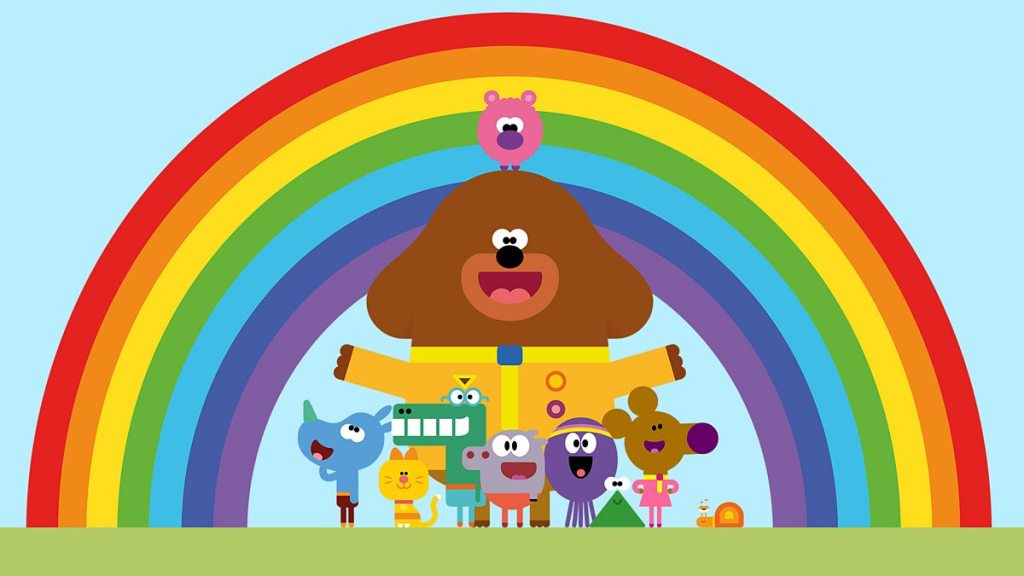
My son, who’s now nine, has loved Hey Duggee since he was one, and despite being somewhat older than the target market he still watches it almost every day. Now that he’s older he enjoys identifying and discussing the various tropes and running jokes in a show he’s been watching most of his life. He even “writes” (recites to me) his own Hey Duggee “fan fiction” (his own made-up badges). I’m biased but I find his “work” so clever and creative that it’s worthy of Orchard and company. He helped me pick several of the badges here.
And now for the list:
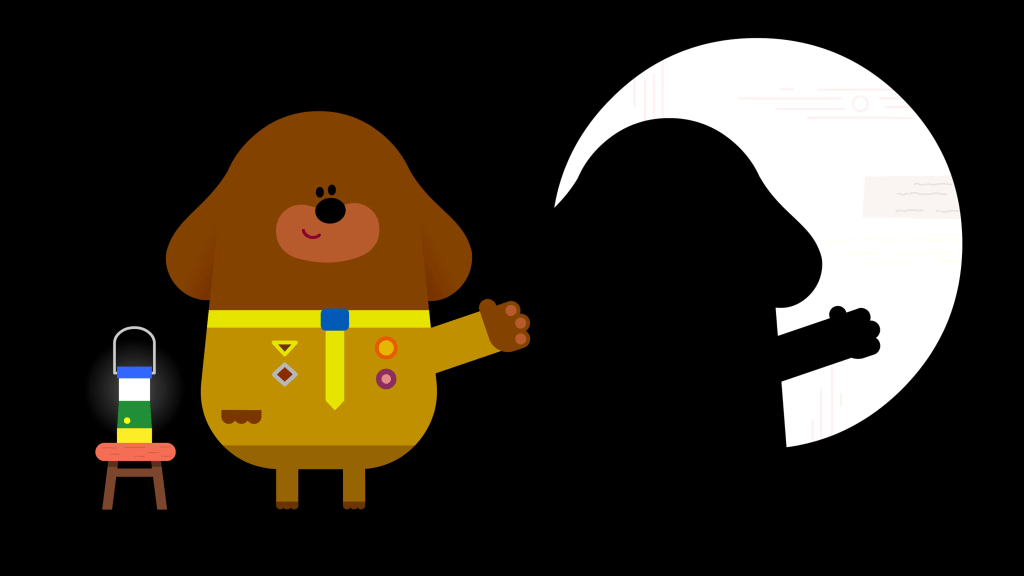
1. The Shadow Badge — This is the one that makes my jaw drop with its invention and its bold artistic departure every time I watch it. The Squirrels are stuck at the Club late one evening, there’s a blackout, and Duggee encourages them to play with flashlights and make shadow puppets. From this simple idea, the writers and artists keep piling on the inspiration, and things keep getting weirder and more delightful as the shadow puppets get more complex. The bit when the shadows are suddenly rendered in negative, so that we seem to enter the shadow world, is just brilliant. The twist ending ices the cake. There are lots of mini-masterpieces in the series — especially in season 2, when the creators reeled off one great badge after another — but this is the masterpiece as far as I’m concerned.
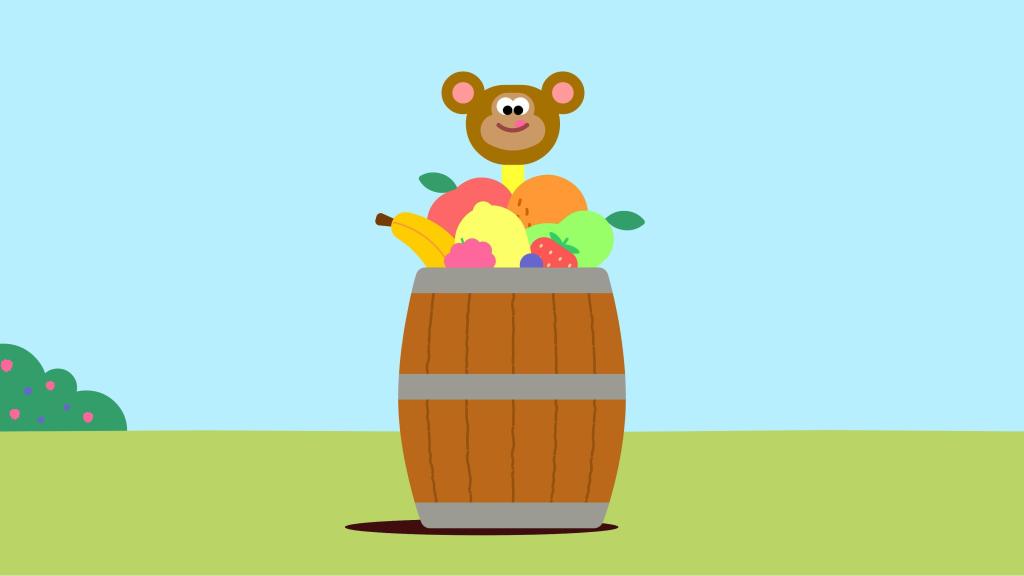
2. The Jam Badge — This is the first-season badge that made me realize how much fun this show could be, and made me a fan once and for all. Part satire of cooking shows, part tribute to Donkey Kong, it still makes me laugh out loud every time I see it, from the Narrator earnestly quizzing Duggee on his jam recipe to the way Naughty Monkey (one of the best and funniest supporting characters, in his debut here) sneaks up in the background to steal the fruit.
When the narrative suddenly transforms into a video game — the Squirrels making their way up a hill as Naughty Monkey hurls the fruit down at them, complete with 8-bit sound effects — you can almost feel the show’s creators realizing all the things that can be done with the format. As the first of many pastiches of video games in Hey Duggee, it’s a milestone.
My only qualm is the weird way the mixed-fruit jam separates into its different constituent fruits even after being mashed up and cooked. Surrealism is one thing but that’s just too much cognitive dissonance for me; my son gets tired of me pointing it out every time we watch it.
3. The River Badge — Even as I type this I still can’t believe they got away with this one. It’s not just the fact that the entire seven-minute episode is a tribute to a classic film from the 70s, filled with jokes that only the grownups will understand — it’s the thought of how incredibly violent and disturbing that film is. Several of the most famous shots from Apocalypse Now are recreated here — Duggee framed dramatically in the shadows cast by window blinds (with a clever homage to the Doors’ “The End” playing on the soundtrack); a wide-eyed Duggee lifting his head out of a tropical river in slow motion; Chew Chew the Panda, the stand-in for Marlon Brando’s Colonel Kurtz, lit threateningly from underneath and intoning “The biscuits! The biscuits!” Amazingly there’s even a visual nod to the heads on stakes outside Kurtz’s jungle lair — in this case it’s frogs sitting on poles outside Chew Chew’s cave. When I laughed in amazement at that one and my son asked me what was so funny, I had no idea what to say. As the hippie rabbit who is meant to be Dennis Hopper (complete with a camera around his neck) might put it: pop culture in the 21st century is a trip, man.
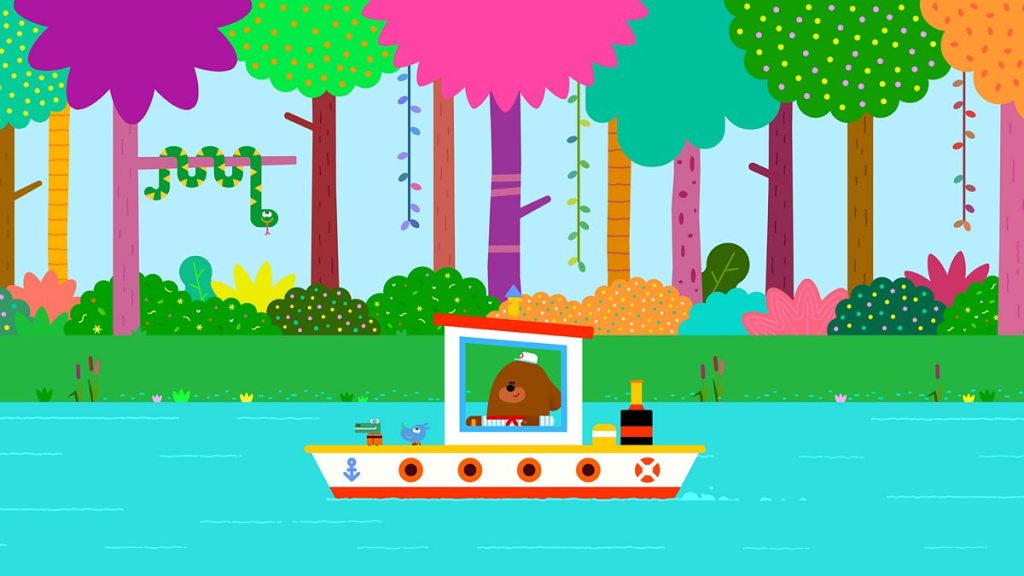
4. The Story Badge
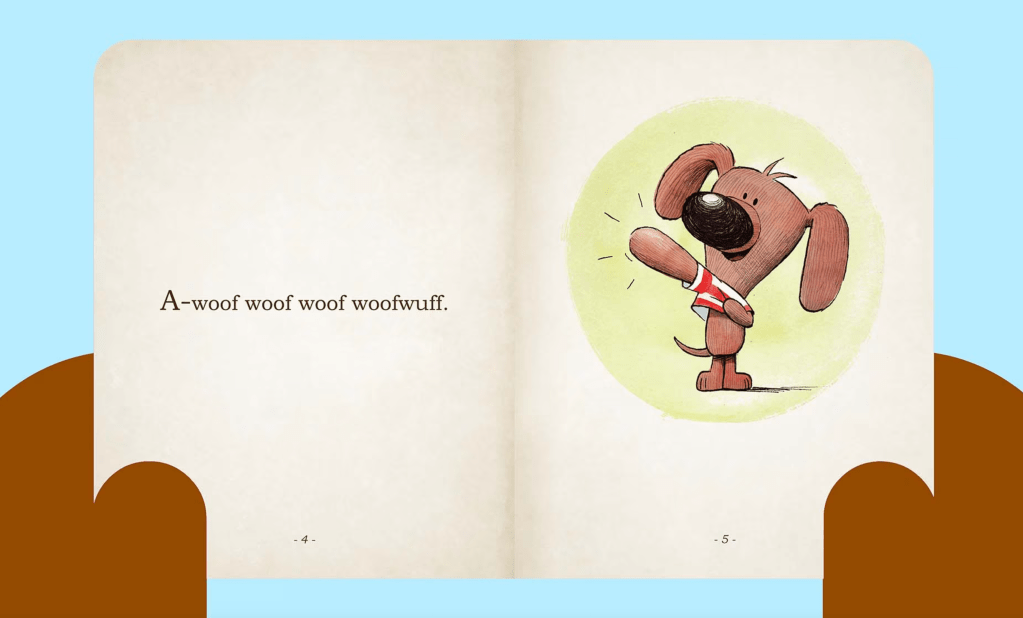
The last badge in season 1, this one starts out as a season wrap-up, with a montage of shots from most of the previous badges showing the Squirrels engaged in endless activities. It’s almost like the kind of thing they used to do on 80s TV as a cost-saver, taking bits from other episodes to make a flashback episode. My favorite thing about this montage is the bluegrass instrumental that’s playing over it — I never get tired of this song and honestly wish it would go on longer.
Then things shift completely and it becomes one of the most imaginative entries in the series. The Squirrels take a break from all their activities and sit under a tree eating cookies while Duggee reads them a story about Cookie the dog. Norrie: “We’re eating cookies… and the story is about a dog named Cookie?” — exactly as if she was a real child; I love this line so much. We get a close-up of the book, and it’s painted in a completely different style than the show’s usual animation, like a cross between Curious George and The Powerpuff Girls. The words on the page are all transliterated Duggee-speak (“A-woof woof woof woofwuff”). The Squirrels become bored with how little happens in the story, as Cookie takes forever to put her shoes and socks on, so they start suggesting changes — robots! dinosaurs! a popcorn monster! — and behold, their exciting and silly story ideas magically appear on the page, in that same pastiche style, to Duggee’s disbelief. Wonderful stuff.
5. The Key Badge — One of the more visually and conceptually brilliant badges, this one features a video-game style adventure in which the Squirrels are on a treasure hunt for a series of keys — one key unlocking clues to find another key and then another one, with the object of the mystery unknown to them and ever-elusive. The way Duggee, the Squirrels, and the clubhouse are rendered in 3D while the game is under way is so unexpectedly dazzling, and marked a big leap forward for the show’s animation at the end of season 2. It’s really funny too: especially the business with the goldfish and his constantly resetting short-term memory.
For more great video-game satire in Hey Duggee, see “The Building Block Badge,” a tribute to Minecraft.

6. The Pizza Badge — Unlike some of the other badges on this list, “The Pizza Badge” isn’t a striking artistic departure, nor is it a culture jam aimed at the grownups (though it does have a sneaky reference to Jaws). It’s just quietly Hey Duggee at its best. A simple concept (the Squirrels making pizza for the other animals) turns into a festive free-for-all as they find themselves turning out all manner of pies customized for every taste. It’s beautifully executed, and has enough ickiness (honey pizza? licorice pizza? puddly pea-soup pizza?) to make young kids laugh with delight. I love the art in this one: the different pizzas are so colorful and work so well with the show’s geometric style; and it’s great how the table is rendered with no perspective, like a pre-Renaissance painting.

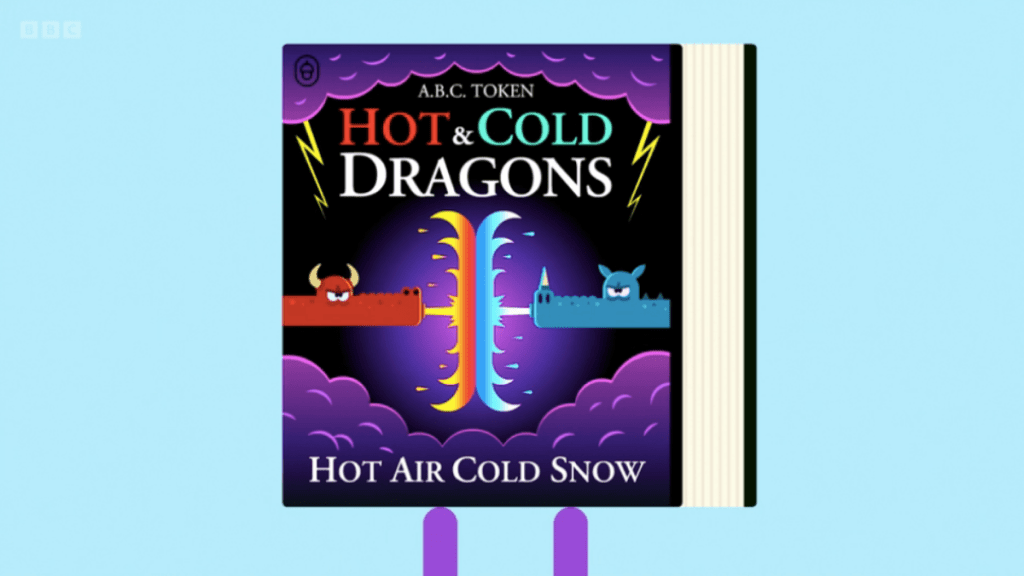
7. The Library Badge — Some of the best badges are the ones that let the creators pay tribute to grownup media, whether comic books, pop music, or cinema. “The Library Badge” is one of the best of these, with the plot device of the Squirrels’ mobile library just an excuse to spoof famous books, from The Very Hungry Caterpillar to A Game of Thrones. The book covers are adorable; like many satirical bits in the series, they’re rendered in a slightly different, more complex style, with lots of great detail (fonts, publisher’s logos, funny author’s names).
I picked this one over other nerd-targeted badges like “The Cinema Badge,” “The Mixtape Badge,” or “The Comic Badge,” as much as I love them all, for a specific reason: I’m studying to be a librarian.
8. The Cheese Badge — One of the best examples of how well-written Hey Duggee is, this one starts out as a funny badge about trying different kinds of cheese, as you expect from the title, then unexpectedly transforms into a spoof of horror shows like The X-Files and Stranger Things. The way it all evolves is brilliant, especially when you consider they only have about six minutes to work with; like many other badges, it’s a model of storytelling economy. Roly has made away with some rare blue cheese reputed to be the stinkiest on earth, and it’s up to Duggee and the Squirrels to track him. Everything from their bright yellow PPE to the puffs of blue mold are so cute and funny.
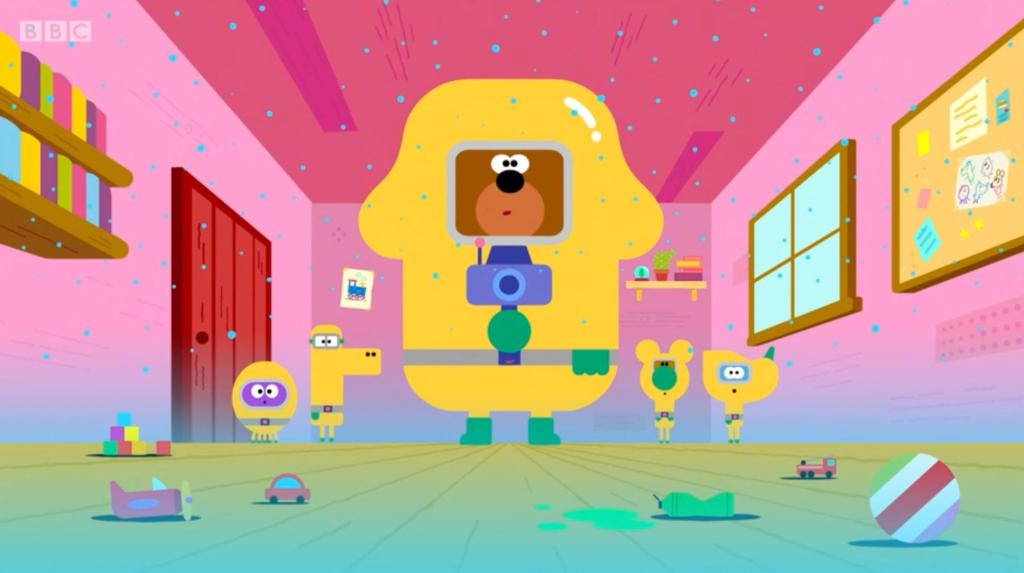
I included this badge for another reason: I wanted to talk about what I consider the unfair treatment of Roly in the series.
Roly is the most hyperactive Squirrel, and also the loudest one. He seems to have some other challenges too: he’s often presented as being a bit slow on the uptake, and more messy or even sloppy in his arts and crafts. Whether these are developmental delays is never stated, but from the very first season, Roly has always reminded me of my son, who is autistic and has ADHD. Like Roly, my son is hyperactive, he stims, he has fine and gross motor delays, and is not very confident with drawing or other crafts. It was after my son’s diagnosis that I started questioning this aspect of the series.
Is Roly supposed to have ADHD? On the one hand that would be great. Like I said the show is very good overall about disability and diversity; one of the kids in the Hummingbird Club, another group of kids that the Squirrels sometimes play with, has a wheelchair, and that’s lovely.
But what bothers me about the portrayal of Roly is that his hyperactivity and developmental delays are frequently the subject of jokes. He’s involved in a lot of slapstick that would be considered demeaning if he does have a disabilty. He does tasks over and over again, and he runs in circles — in other words, he stims — but it’s written in a way that suggests he’s dimwitted. The other Squirrels are often impatient with him.
I’ve wondered about this for years — am I overreacting? Are they trying to portray an ADHD kid in a positive way and it’s okay if gentle humor is involved? Sure… but in every other episode Roly falls over or breaks something and it just feels like he’s the comic relief.
It’s not relentlessly demeaning: Duggee is always gentle and patient with Roly; and even if they get a bit exasperated with him, the Squirrels always include him in their adventures. So it’s this weird mix of a lowkey, unstated, positive image of ADHD along with some outdated stereotypes about special-needs kids.
I haven’t talked about it explicitly with my son, but I know the way they treat Roly bothers him. “They’re being unfair to Roly again!” he often says. My son doesn’t have the language for this yet, but by “they” he means the creators of the show. In other words he doesn’t think it’s an in-universe problem, but a writing problem.
All of this comes into play in “The Cheese Badge,” because Roly becomes the object rather than the subject of the adventure. The blue cheese goes to his head and he runs off into the woods, apparently posing a danger to everyone as the “patient zero” infected with a toxic substance, while Duggee and the Squirrels track him like he’s a movie monster. His silliness and hyperactivity are here portrayed as threatening and monstrous. In the end they even trap him like an animal (well, he is an animal, but you know what I mean).
Like I said, it’s a brilliant and funny satire. But given Roly’s portrayal in the rest of the series, it doesn’t sit quite well with me.
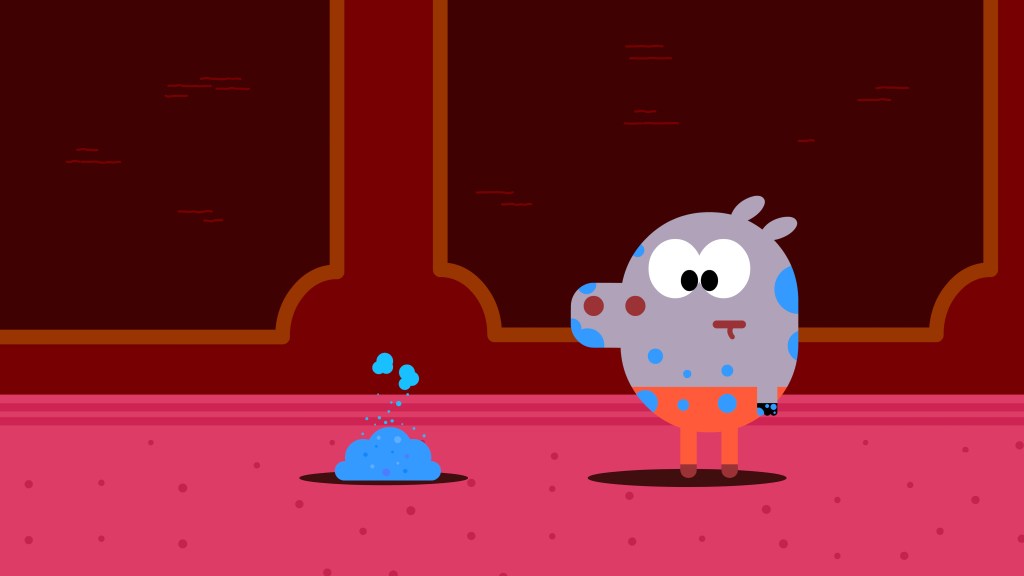
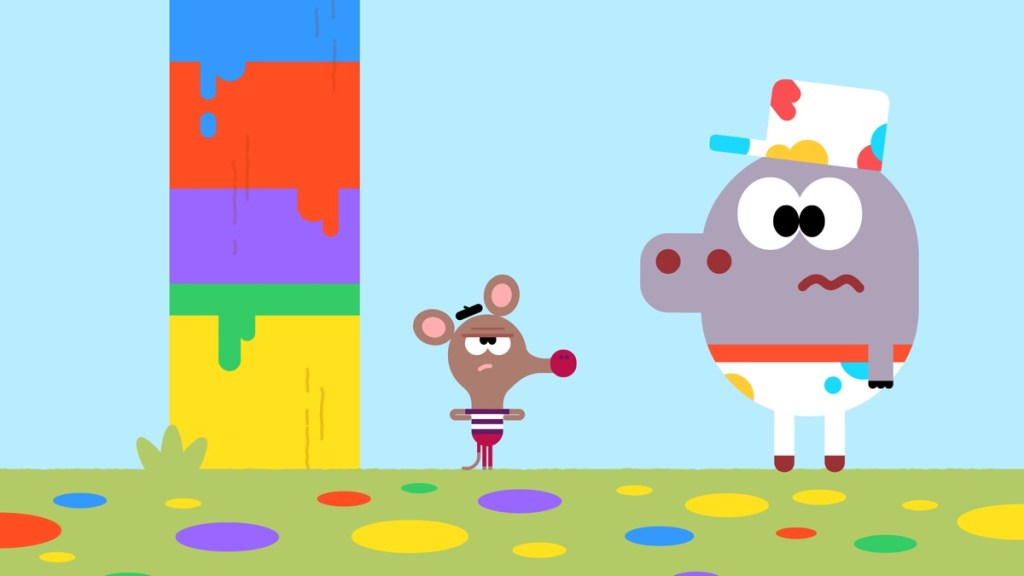
9. The Decorating Badge — This first-season badge features Tino the Artistic Mouse, the comically pretentious artiste who pronounces big words with a put-on French accent and says things like “The lush foliage! The total celebration of life!”
I’m not the first to point this out, but one great thing about Hey Duggee is that the writers don’t shy away from using advanced vocabulary or making jokes about more challenging concepts like abstract art or philosophy (see also “The Philosophy Badge”). Kids are smart enough to figure a lot of these things out, and even if they don’t, it stimulates them to think and grow. Tino embodies that tendency in the show. One of the best gags here is the way he gives basic colors upmarket names to make them sound like Pantone colors (“It’s not green, it’s Early Spring!”). He encourages the Squirrels to repaint the clubhouse in a riot of colors and artistic styles (“Collage! Stencil!”). The resulting psychedelic pop-art is fab, and the idea of children being encouraged in their creativity by a professional artist is wonderful, even in a comedic context.
My one issue is the way Duggee disapproves of the results — he wants the clubhouse to be painted brown like it was before, and is seen undoing the Squirrels’ work during the closing credits. A bit mean!
It’s not the only time Duggee is baffled by the Squirrels’ unbounded creativity. In “The Music Badge,” the Squirrels form a band and play the most amazing experimental noise. A rule of kids’ TV: if the characters play music that’s supposed to be intolerable noise, it’s always going to sound great — because it gives the composers a chance to experiment. But Duggee stops the noise, and teaches them how to play trad jazz. The Narrator joins in, saying, “You see Squirrels, music can be loud or it can be… good.” Boo to that, Narrator!
I’m half-joking, I actually like this about the show. Duggee is incredibly warm and caring, and he’s very hip with a lot of things like dance music or comic books. But at the same time he’s older, with some of the typical attitudes of an older person — and for him to complain about noisy music or wildstyle art is just one of the little ways the show adds a bit more depth to its otherwise surreal or silly stories.
10. The Future Badge — This one came along midway through season 3, and when I saw the title and logline, having watched Hey Duggee for years at that point, I knew it was going to be great, as the more ambitious badges always are. It exceeded all my expectations. The Squirrels learn about the future, and their lesson is illustrated by an imaginary trip to a futuristic Squirrel Club — and it’s just so cool and weird and amazing. It serves as a satire of utopian sci-fi from Star Trek to Back to the Future II, as well as a satire of Hey Duggee itself, since all the Squirrels’ usual routines are translated in futuristic terms. The art is off the chain: everything is gorgeous muted pastels, in contrast to the bright colors of the usual style, and the depiction of the future technology is so clever. There’s so much detail in every frame — the artists must have had so much fun with this one. The electronic soundtrack is dope too, of course. I like that it’s kind of disturbing: Duggee is a robot (is it AI? or Duggee’s consciousness captured by a machine?), and apparently people don’t sleep in the future (instead they’re rejuvenated by some kind of energy beam). So depending on how you look at things it could be commentary on future dystopias too.

11. The Collecting Badge — One of the more heartwarming badges, this one has Duggee sending the Squirrels off one by one to start collections. Whereas the others bring back things found in nature, Tag collects objects that remind him of the other Squirrels, and it becomes a lovely tribute to friendship. It’s one of the few badges that cuts a little deeper than the usual lighthearted tone and might bring a tear to your eye. The indie-pop tune with the whistling that plays over this scene is so great too — again, with that Wes Anderson feel.
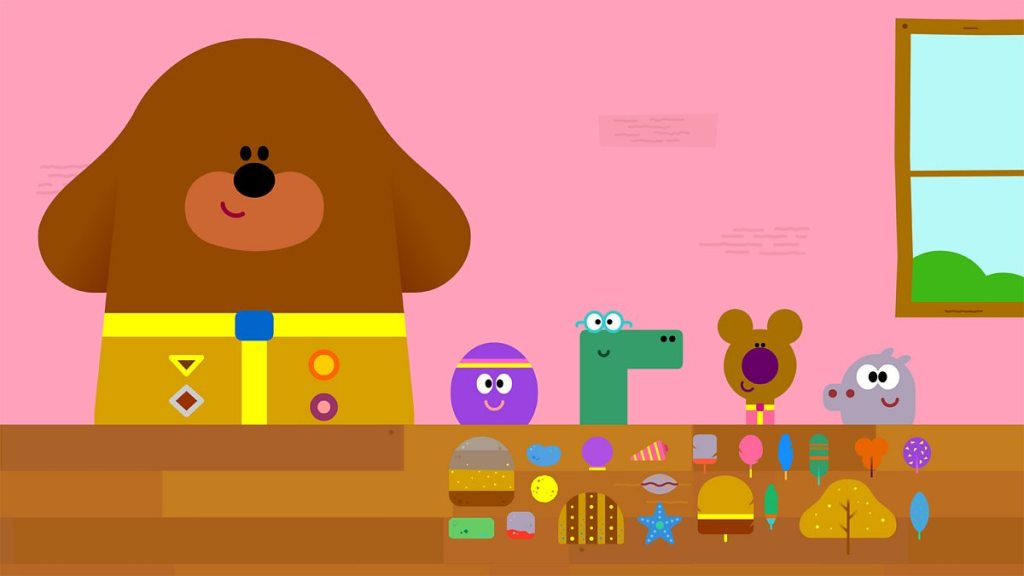
But the real reason I chose this badge is an insane detail in the Squirrels’ collections that I never noticed until just the other day, when my son pointed out to me. If you look carefully at each collection of leaves, rocks, feathers, and shells, you see a subtle tribute to Duggee and the Squirrels themselves. Each collection features a big brown object representing Duggee, and four smaller ones representing the other four (a blue, bean-shaped rock for Tag; a long green feather for Happy, etc.). I especially love that they don’t mention this — they leave it for the viewer to figure it out. I missed it for years (my son doesn’t miss anything).
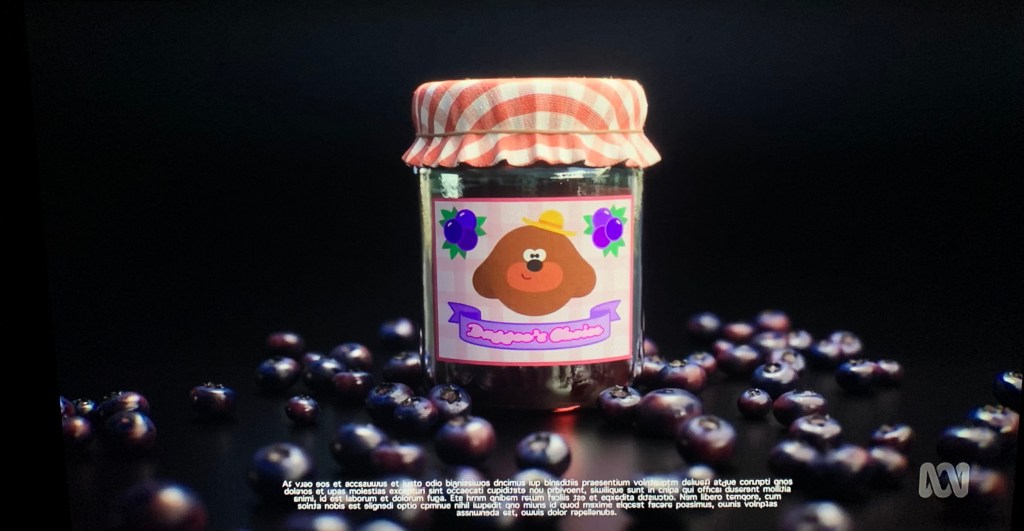
12. The News Badge — Coming as it did midway through season 4, this one renewed my faith in the show’s ability to keep kicking goals within a constrained format. Things start out out pretty straightforwardly: it’s about teaching kids what news is and how to watch it critically. I was expecting a playful satire of the dumbing down of news and the manufacturing of consent, and so it is — but what kills me is the way they take it to another level with the mixed media. The ad for Duggee’s blueberry jam that interrupts the proceedings features a live-action jar of jam. It feels like a real TV ad; it’s hilarious, and as sophisticated as anything SNL or John Oliver would do. There are plenty of other great bits too.
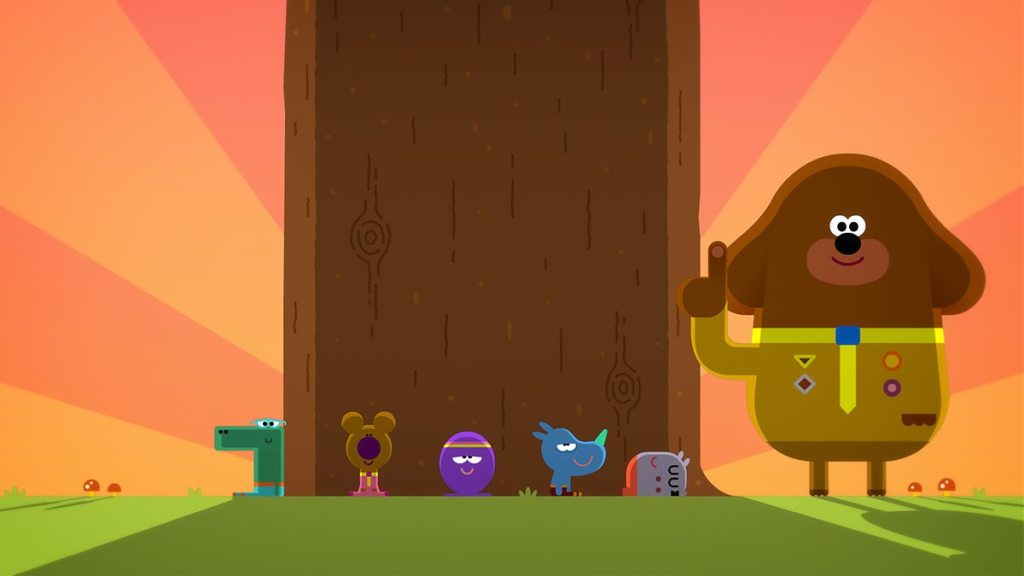
13. The Tree Badge — An artistic triumph, this third-season badge shows just how far the animators have come, while still keeping to the minimalist spirit of the show. It has the feel of a nature documentary, with the Squirrels learning about the different parts of a tree and the animals that live in it. The entire episode is made up of a journey down into the roots and then back up the trunk into the branches, so that it’s a bit like one of Wes Anderson’s “cross-section” tableaux (surely Anderson was an influence here). The “camera” never stops moving — the fluid motion is so satisfying — and there’s lots of great detail and visual gags along the way.
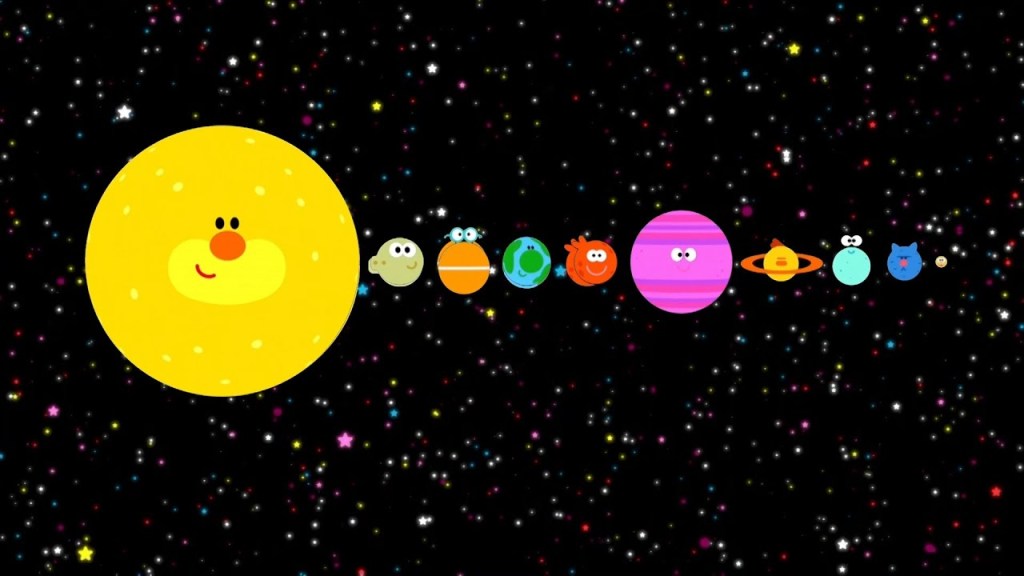
14. The Space Badge — My son insisted I include this one, so here it is. We both love astronomy (my son had all the planets memorized at the age of three, and in fact he taught me the names of the dwarf planets), so this was an easy sell for us. I imagine the same is true for a lot of families. Credit to the animators for taking a really standard topic in kids’ educational content and making it so visually inspired — the bit with the Squirrels as the planets is great, as is the journey to and from Earth, with the cool perspective on the clubhouse and the surrounds. Best of all is the synthy retro-futurist disco-techno score.
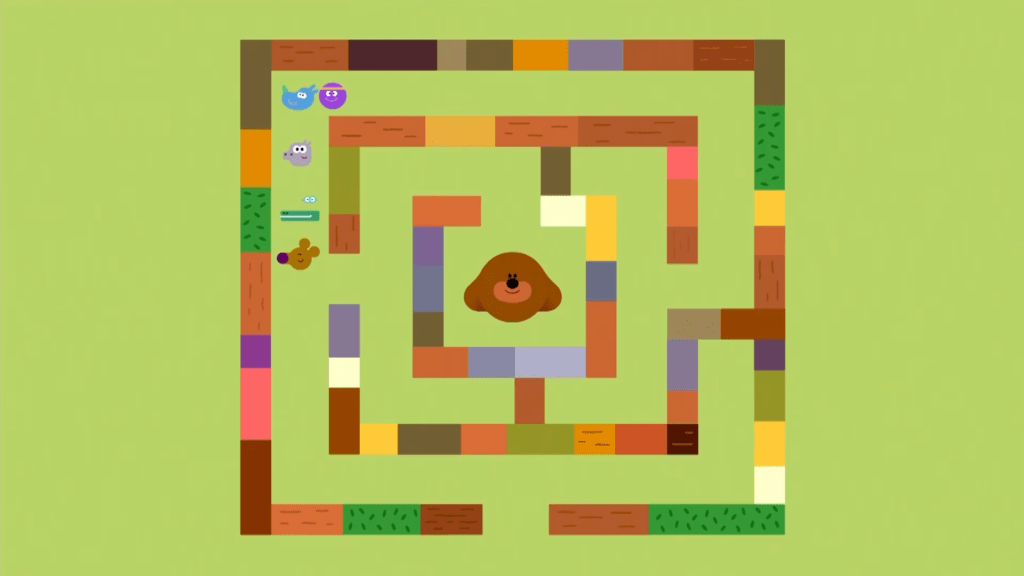
15. The Maze Badge — There are so many more badges I could have chosen for this list, but I’m including “The Maze Badge” for one big reason: it includes my family’s favorite line of dialogue in the entire series: “It’s not rubbish, Tag!” It’s become a private running joke for us (if you know, you know), and it makes me smile every time I think about it — as does almost everything about this wonderful series.
Like what you read and want to support? Consider buying me a coffee! You can also subscribe below, and be sure to share this article!
 Under the Paving Stones
2 thoughts on “The 15 best Hey Duggee badges”