I was a fan of Toy Story long before I became a dad. In 1996, at the age of 25, I rented the original on VHS one night and watched it by myself over a six-pack of blackberry porter. I loved it! In 1999 my sister and I went to see the sequel on the big screen (she also wasn’t a mom yet at that time, but like me was an unabashed lover of fine kids’ entertainment). Eleven years later I watched Toy Story 3 on a flight, and was absolutely stunned; it became one of my favorite films of this century.
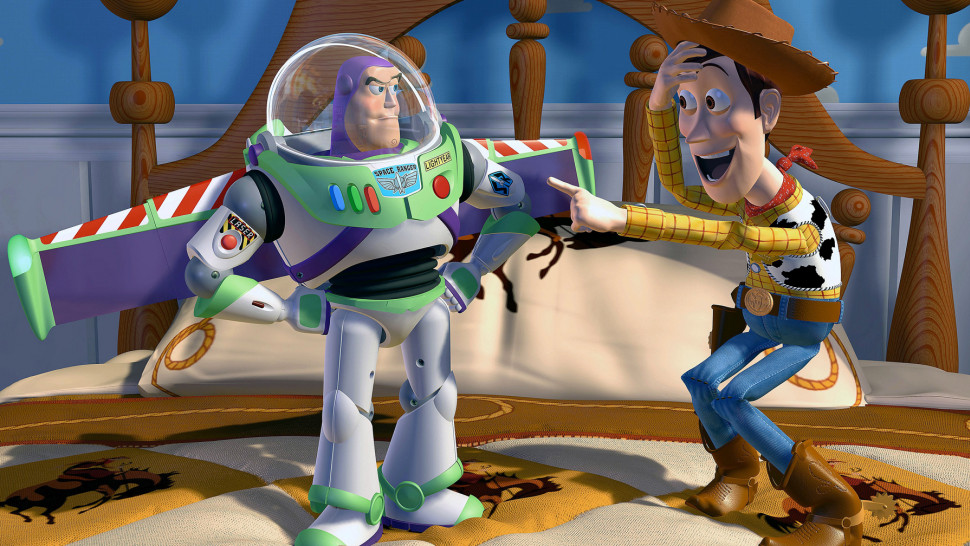
When the fourth one came out in 2019, I was finally a dad. My son was four then, and my partner and I took him to see it — the first movie we saw together as a family in the cinema. That was a special day, and consequently I will always love Toy Story 4, no matter what the haters think.
Core memories aside, I think it’s a strong if flawed film, and I don’t care even slightly that it supposedly ruins the conclusion of 3. Of course I want them to keep making Toy Story movies!
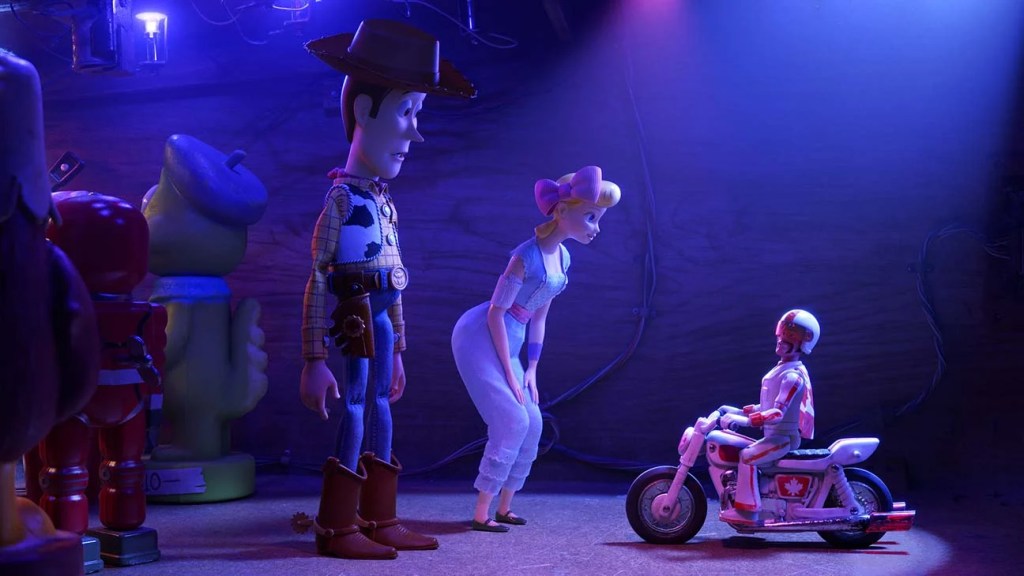
Among other things, 4 is for me the apex of Pixar’s animation craft; the lifelike textures and motion and lighting effects are so sick my brain could hardly process it all. And the fact that it’s about a little girl who’s starting kindergarten, which happened to come out right when my kid was set to do the same, made it almost unbearably emotional for me and my partner (I was wiping away tears for most of the film, and it still does that to me).

My son has grown up with the Toy Story franchise, like most kids for the past 31 years. It’s pretty much mandatory. He loves them all (note: we haven’t seen the fifth one yet), and we watch them often. This isn’t a hardship. I never get tired of them and when he suggests rewatching one it’s hard to contain my delight. Thanks to the brilliant writing and acting and the way they mix wholesomeness with more melancholy and disturbing themes, even horror, they’re ideal movies for families to share.
That Pixar has released the sequels in these long cycles, like an astronomical object that’s only seen once a decade, only increases their appeal – every new generation has had a Toy Story movie to see in cinemas, and they’re all quality (every generation has been inundated with Toy Story toys and merch too, which is a separate issue).

This is how I would rank the first four Toy Story features (I’m not ranking Lightyear here, though I think it’s quite a good film — again, despite the haters — nor am I ranking the shorts, though I think they’re great and my son loves them too):
- Toy Story 3
- Toy Story
- Toy Story 4
- Toy Story 2
Toy Story 3 is ranked highest for probably obvious reasons; it’s simply one of the greatest animated films ever made. Toy Story 2 is last, but not at all out of any lack of love. Like all the rest it’s a great film, but one of them had to be last and it ended up being 2.
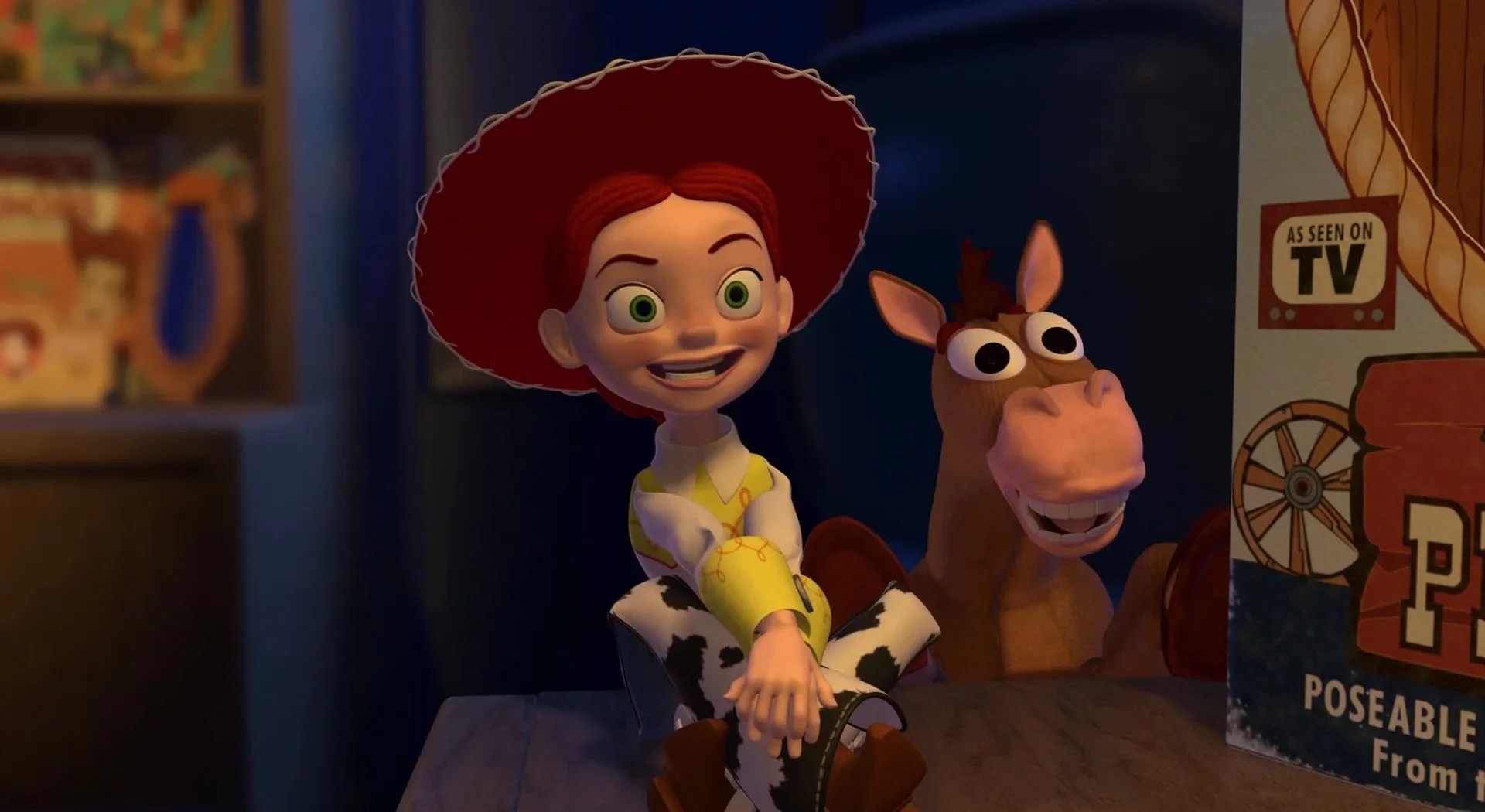
I put 4 higher for all the above-mentioned reasons; but also — to be brutally honest — 2 has a scene that really grosses me out: the bit with the Cheeto dust all over the human villain Al’s face and fingers. Ew! I can hardly watch it, it turns my stomach that much; and I usually either shut my eyes or excuse myself to go to the bathroom whenever it’s on (my kid teases me about this). Arbitrary perhaps, but enough to knock it down a slot for me, though I do realize it’s perfect for tween kids who love gross things (in case you’ve ever wondered why every other Scholastic book is about farts).

Let me be clear that the first Toy Story is a masterpiece nearly as much as 3 is. The first time I rewatched it with my son I was astonished by how well it had held up. Sure, the CGI animation is primitive by modern standards, but once you settle into it and your eyes adjust to the difference after the first scene or so, you see that what Pixar’s animators lacked in technology in the mid-90s they made up for in artistic vision. It’s a truly beautiful film — just check out the lighting effects during the sunset scenes, or the brilliant use of shadow and fluorescent “light” in Sid’s bedroom. The wonderfully clever animation of the toys was already in place (the toys actually look more real than the human characters in the first one — maybe that was intended as subtle commentary?). For example I’ve always loved the floppy way Woody moves when he runs, just like the movement a real doll would make if a kid was holding it and making it “run.” It’s so funny and relatably tactile. So much of the animation has that tactility, which many CGI animators still can’t match 31 years later even with modern advancements.

The screenplay is a masterpiece in its own right. Based on a treatment by director John Lasseter, the great Pete Docter (who would go on to direct Up, Inside Out, and Soul), Andrew Stanton, and Joe Ranft; and written by Joss Whedon, Stanton, Joel Cohen (not the famed Cohen brother, to save you having to look it up like I did), and Alex Sokolow, it’s nearly flawless except for one important thing which I’ll get to shortly. This kind of screenwriting by committee really works for Pixar, I think; the studio’s visual-storytelling perfectionism really demands an exquisitely polished screenplay, and the studio imposes an extremely rigorous, years-long process on their writers. Toy Story’s screenplay is the primal example of this, a clinic in screenwriting excellence.

I think this is one reason I can watch it over and over: the dialogue never ceases to crackle, while the exposition, plot twists, and character development never cease to feel organic and yet as perfectly formed as a great symphony, even if you know it all by heart. Of course the stellar voice performances only enhance things. Before it became standard to hire A-listers to voice animated films (Lindsay Ellis talks about how fatiguing this trend has become in her great video about Robin Williams’s long battle with Disney), having talent like Tom Hanks and Annie Potts on board was a big deal. And I’m so happy my socialist comrade Wallace Shawn gets that Disney money!
The first-ever CGI-animated feature would have been a historic film anyway, even if it were mediocre. As it happens it was Toy Story — a masterpiece — and that’s pretty cool. It turned the industry on its head for a reason.
But there’s that one thing that dampens my enthusiasm for this classic and makes it less than perfect for me. It was enough to knock it out of the top spot on my list, and it troubles me every time I watch it. Unfortunately it’s hard to ignore or downplay because it’s a pivotal part of the film’s climactic scenes. I’m talking, of course, about the toys’ treatment of Sid Phillips (voiced by Erik von Detten), the child “villain” of the story.
This is my Toy Story hot take: Sid is not actually a villain at all, and what Woody and the other toys do to him is wrong. In fact his fate — his toys springing to life to terrorize him — is a cruel and horrible thing to happen to a child of 11 (as it happens, the same age my son is now, which is probably one reason I feel strongly enough to finally write about it after all this time).
It’s actually kind of weird that this treatment of a child features so prominently in such a beloved family film.
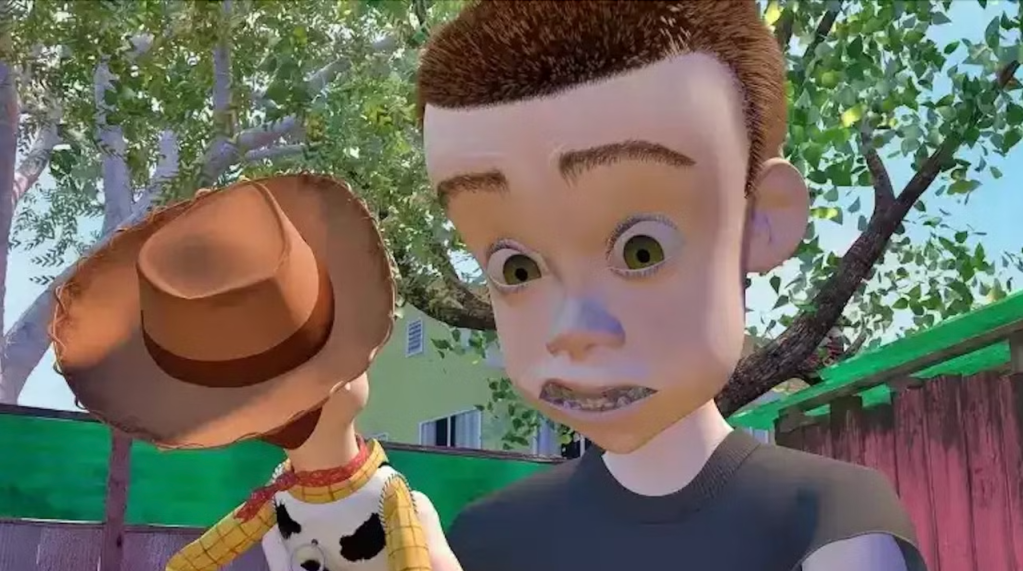
Audience acceptance of the toys’ harsh vengeance against Sid hinges on the perception that he’s a “bad kid.” For now let’s set aside the fact that punishing kids for being “bad” is questionable in the first place. That’s a much longer conversation.
The only reason to think Sid is bad is if you’re a sentient toy in the world of the story. It’s perfectly understandable that the toys fear and loathe him. What Sid does to them, disassembling them and putting them back together in hideous new forms, causes them anguish and, apparently, pain (as awful as that is to contemplate). I would not want any of this to happen to me if I were a plastic spaceman.
Sid represents horror to the toys, and the scenes in his bedroom take on the feel of a horror flick. These are some of the best scenes in the franchise; my son was so fascinated with them when he was a kid and sometimes he would put the movie on just to fast-forward to the “Scary Things,” as he called Sid’s mutant toys.
By the way I love that the Toy Story films always explore horror; it’s a great and healthy thing for young viewers if you ask me, and it adds so much depth to the narrative.
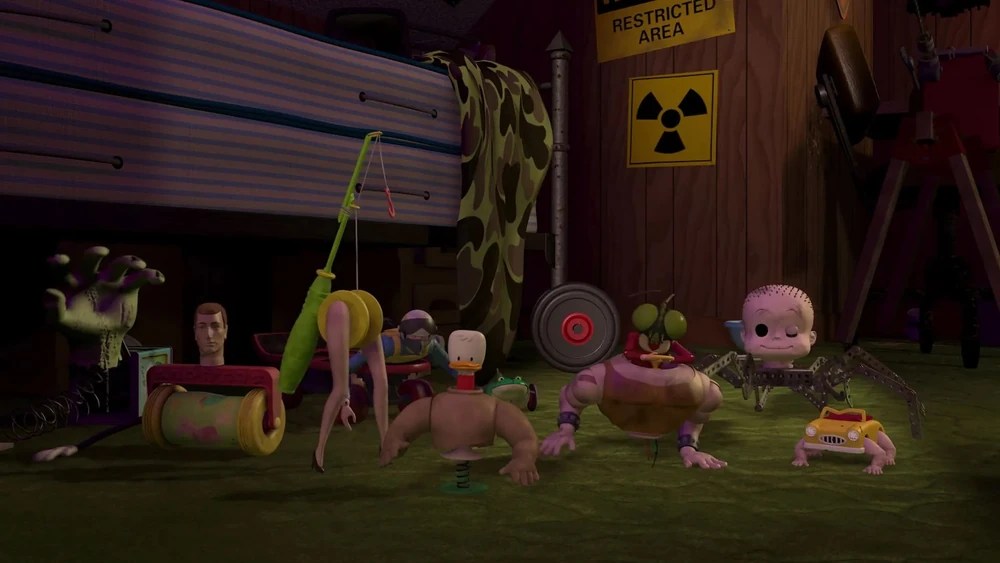
So yes, as far as the toys are concerned, Sid is their villain. And the screenplay has Sid talk and act like a villain — the allusions to Darth Vader, Bond villains, and other classic screen baddies are overt, which I think is great. But let’s put a pin in that, because I’m not sure the toys’ experience of him should be considered reliable narration.
Here’s the thing: there’s no real reason that we should think Sid is a bad kid. We’re meant to think his punishment fits his crimes, but what are his crimes? Torturing toys, even killing them (think of the terrible fate of the Combat Carl figure, blown up by Sid when we first see him from from a distance) — but remember, to him they’re inanimate objects, and they belong to him (Woody and Buzz don’t belong to him but he doesn’t know that; as far as he knows he won them in the prize machine at Pizza Planet).
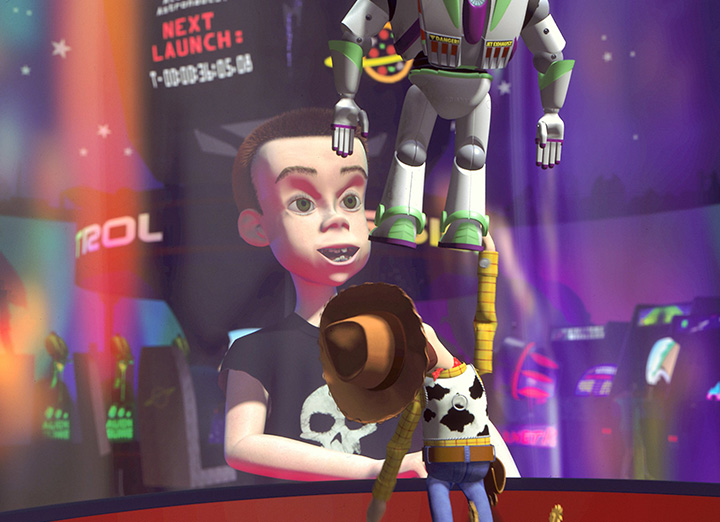
In fact, Sid’s “hideous” “mutant” creations are wonderful! If you have no idea the toys are suffering (and the humans in-universe including Sid have no reason at all to know this) they’re really terrific on an artistic level — Baby Face is an amazing work of art.
Clearly Sid is very artistic and intelligent and that should be encouraged by his parents and teachers.

Sid is strongly coded as a violent bully. I have to admit he looks, dresses, and talks just like the boys who bullied me in middle school in Oregon in the 80s (it makes me shudder when he calls Woody “wimpy”). He’s pushy, he’s rough, he talks in a gruff manner, and he’s into explosives. But, importantly, we don’t see any evidence of him bullying anyone (besides the toys that is). Yes, he’s mean to his little sister Hannah — he takes her doll away and takes it apart. But everyone is mean to their younger siblings at times, and if we give him the benefit of the doubt on this, if we don’t assume there are more extensive or violent aspects to this, it’s pretty standard if not harmless stuff.
In fact, the screenplay has an opportunity to show Sid bullying other kids, when we see him at Pizza Planet, but instead he’s playing by himself. To me this is significant. He seems lonely.
We don’t see evidence of him bullying, but we do see evidence that he’s neglected. His dad (or some male carer, if not his actual dad) is passed out in the darkened, messy den, in the daytime, surrounded by cans of “root beer.” No one drinks that much root beer; it’s obvious that’s intended to be beer, and either Disney insisted that be softened, or Lasseter and the Pixar team softened it themselves.
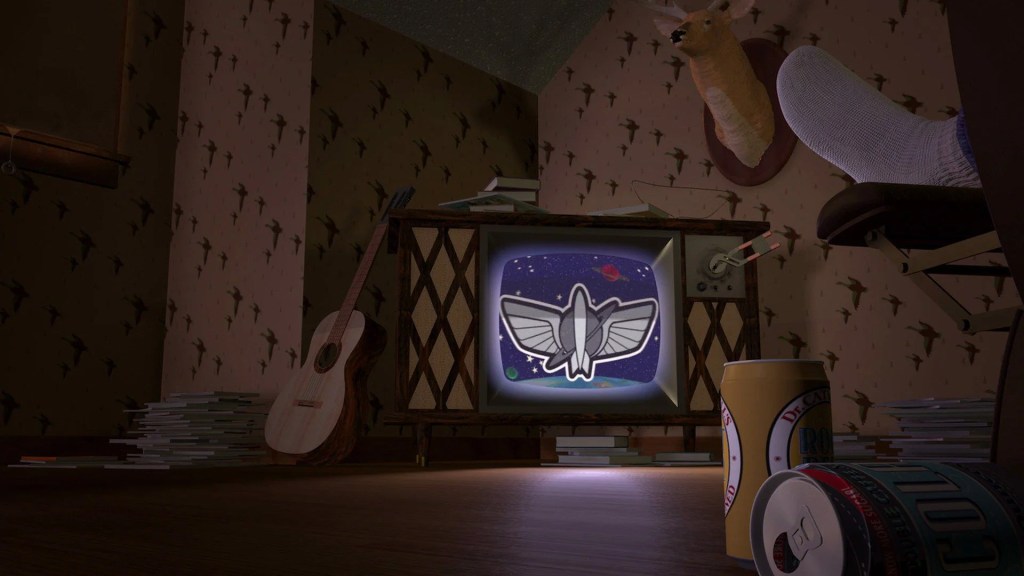
Is Sid abused? That would explain a lot about his behavior.
There’s also a fair bit of classism in his portrayal. His bedroom has wood panelling and a very 70s carpet — the house hasn’t been renovated in a long time, suggesting Sid’s family doesn’t have much money. And he’s into punk and metal — the skull on his t-shirt isn’t really a symbol of horror, but of marginalization and rebellion.
All this contributes to casting him as one of the “bad kids” from the wrong side of the tracks, and sets him apart from Andy, the good boy who lives in a nice home. When we see the grown-up Sid as a sanitation worker in Toy Story 3, this confirms his working-class status (Andy’s headed to college at this time).
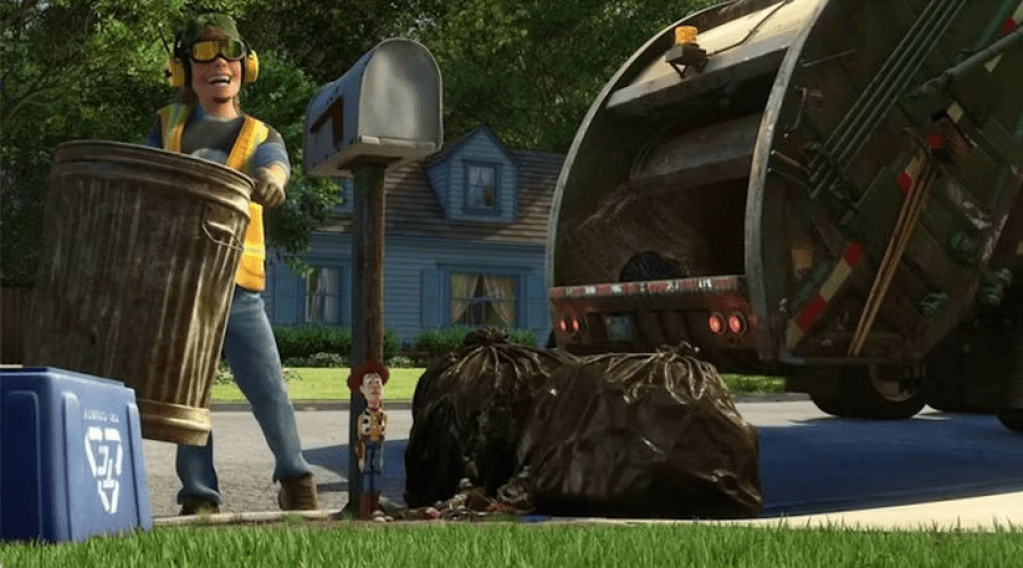
So yeah, Sid is a neglected, confused, working-class metalhead loner kid, with a beautiful but undeveloped artistic streak. For this Woody engineers a nightmare for him that’s likely to damage him for life.
Think about what this boy goes through: there’s a reason the toy society has those very strict taboos on never letting humans see them move or know they’re sentient. Sid has seen something no other human has consciously seen, as far as we know — inanimate objects moving and talking, calling him by name and frightening him — and he has to process this with an undeveloped brain. If he were to tell an adult about it he would be ignored, ridiculed, or gaslit; but I think it’s more likely he’ll bottle it up and remain permanently traumatized.
It’s even uglier when you consider the extratextual dynamic of an 11-year-old character having this done to him by 39-year-old Tom Hanks.
Let’s remember that Sid is an unwitting villain — more a monster than an evil baddie (is it fair to compare him to the Cyclops in The Odyssey?), and the toys should have been able to see that. They can see that the preschoolers at Sunnyside don’t mean any harm in Toy Story 3, despite their “abuse” of the toys; why can’t they grant Sid the same grace?

I’ve even started wondering whether the perception of Sid as a final boss — his sadistic tone, his maniacal laughter, his predilection for violence — is actually subjective on the part of the toys. Maybe they see him as cruel and violent, a mad scientist, a master of unspeakable horrors, because of the harm he unknowingly causes them. Maybe that’s the only way they can process it. Maybe if we could see Sid through human eyes he would just seem like an ordinary child, if slightly troubled.
This is not a fully formed fan theory, more of a thought exercise (I hate fan theories in general), but it does amuse me to imagine that it’s the toys who are actually the villains of Toy Story, and Sid their victim, much like the protagonists are actually the villains of Starship Troopers if you’re paying attention; or the way T’Challa can be read as the villain of Black Panther if you believe Erik Killmonger’s militant anticolonialism is morally justified.
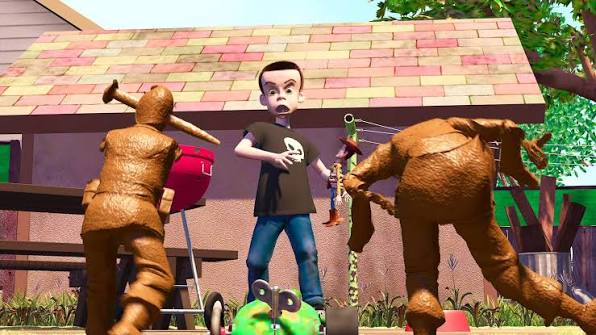
I want to emphasize that I’m not suggesting Toy Story be cancelled because of this one unfortunate story point. I still love the film, and I will continue to rewatch it for years to come. It’s just an interesting thing to pause and consider.
I can almost understand why Lasseter et al. wrote it this way. It’s mean to a child, sure, but almost in a classic sense, the way old fairy tales often feature children suffering horrible fates in order to teach moral lessons. There’s an anti-saccharine quality to it, a cutting against the smarminess of most kids’ entertainment that certainly enlivens the back half of the film.
But I think this is also the exact reason you probably won’t find something like this in a family movie anymore. The trend in childrearing is gentle parenting and acceptance of divergent behavior; society has moved on from punishment and other fear-based parenting strategies, and 1995 starts to feel like a long time ago in this light.
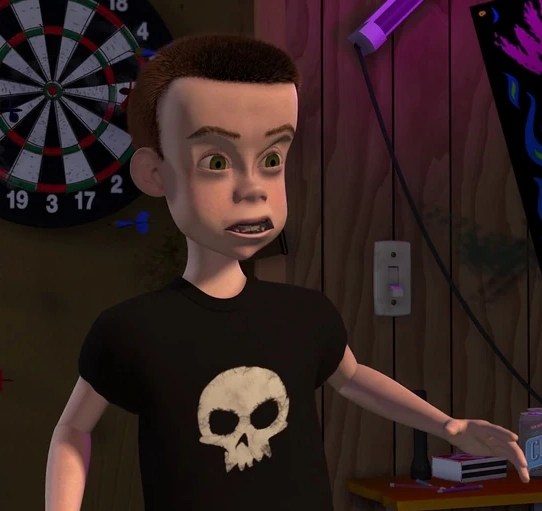
If I could script-doctor Toy Story in order to right this wrong, I would leave Sid in place as the toys’ nemesis for most of the film, but remove their punishment of him. Their complicated conspiracy to teach him a lesson (which is very entertaining in its own right) could be thwarted at the last minute, as Woody suddenly comes to his senses and remembers Sid is a child and doesn’t deserve this.
Or perhaps Sid learns the lesson about being more gentle to the toys without being made aware of who did it; perhaps the toys engineer a moment of reflection for him, sneakily presenting him with the sad spectacle of a broken or dismembered toy, after which he makes up his own mind to change his ways. Through this process we could see another side of Sid, and realize he’s actually a good kid.
Wouldn’t that actually improve the story? The idea that Woody, Buzz, and the other toys could be tormented by Sid, desperate to escape him, all the while bearing in mind that Sid bears no blame at all, would add another layer of complexity and richness.
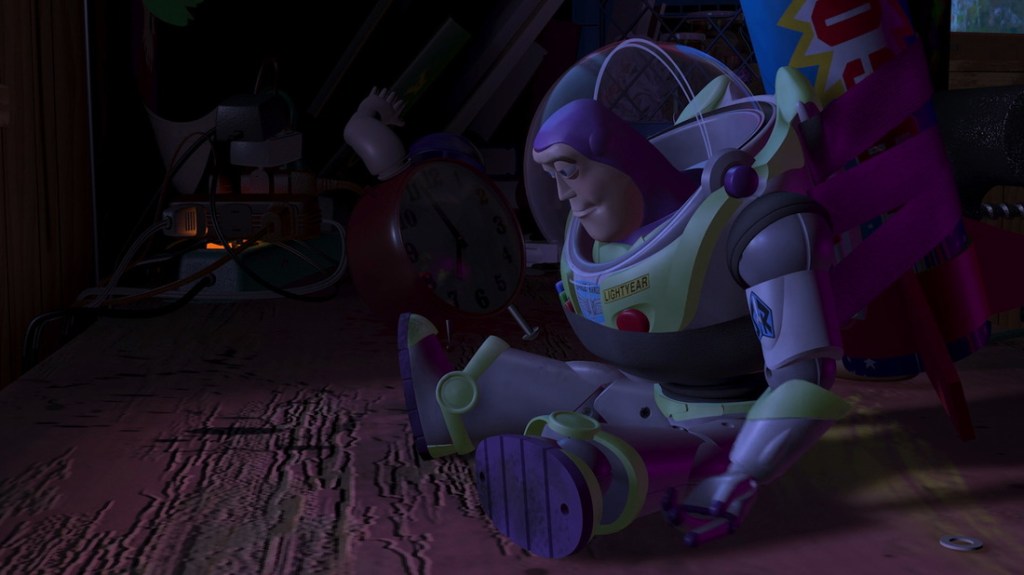
The thing about Toy Story is that it could bear this complexity. The way the franchise continually presents us with the suffering, alienation, and existential dread of being a toy is so remarkable, one of its great strengths. It’s as beautiful as it is sad — honestly worthy of any grownup fiction about artificial beings, from Frankenstein to Blade Runner.
It’s just very clear to me that none of that suffering is Sid’s fault.
Note: I’m far from the first to come up with this take. I did think of all this independently watching Toy Story with my kid a few years ago, but when I searched around to see if anyone else was as troubled as I was, I discovered that sympathy for Sid has circulated in online fan forums for years, and at least a couple of other articles have been published about it. Here’s a recent one from Collider that’s pretty good, though it doesn’t mention class at all.
Like what you read and want to support? Consider buying me a coffee! You can also subscribe below, and be sure to share this article!
 Under the Paving Stones