Massive Attack’s sold-out show in Sydney in August was my first time seeing them — long overdue, as I’ve been a fan for over 30 years. As if I were being rewarded for waiting all that time, it was absolutely stunning, unlike anything I’ve seen before.
Twenty-thousand of us at the unfortunately named Afterpay Arena were treated to a feast of the Bristol crew’s deep, dark, thumping trip-hop classics, along with a spectacular giant-screen visual show. The visuals combined trippy, high-tech, text-heavy graphics designed by United Visual Artists (UVA) and bandleader Robert Del Naja along with documentary filmmaker Adam Curtis’s confronting, dystopian agitprop montages. Appropriately enough, Curtis actually had equal billing with the band on one of the official tour shirts.
Picture a cross between a rave, Pink Floyd’s The Wall, and an immersive cyberpunk art installation. Was it always successful? No, but they deserve all the credit for innovation and for using their platform to educate and mobilize their audience. I’ve never witnessed a more elaborate, more impactful, more massive fusion of music, cinema, and politics.
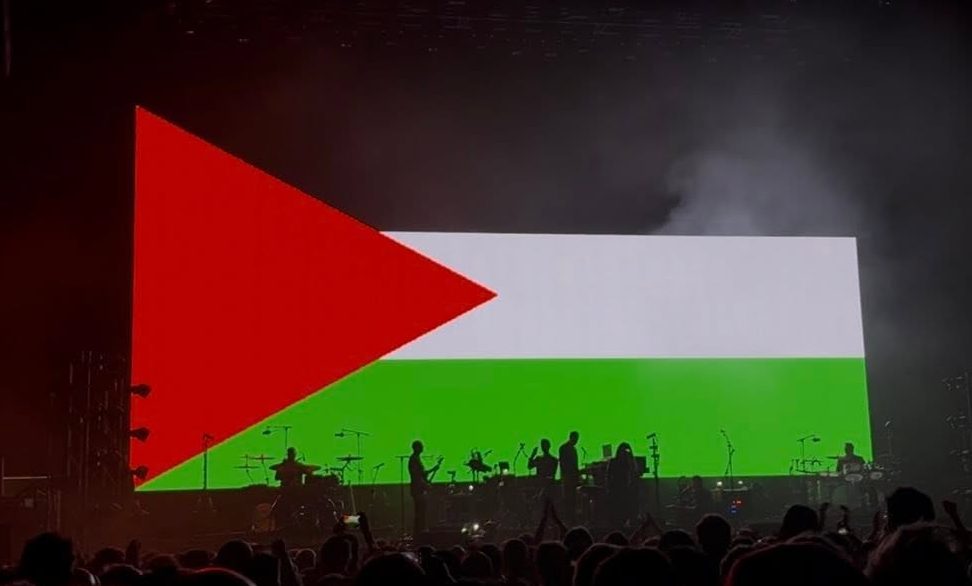
And brave politics at that. True to form, Massive Attack were very vocal in their support for Palestine on the night, at one point projecting an enormous Palestinian flag onto the main screen, and featuring lots of messaging about the Gaza genocide in the text art and montages throughout the evening. This advocacy met with broad support from the crowd, and occasional cheers of “Palestine will be free!”
It felt even more brave because just days before, members of Massive Attack had been detained and harassed by the authorities in Singapore for their onstage Palestine advocacy — and ultimately banned from the city-state.
It would have been foolish to assume there was no chance they’d face similar harassment in Australia. Repression of the Palestine movement has been especially harsh in several states, including New South Wales where I live. I was at the infamous rally against visiting Israeli president Isaac Herzog at Sydney Town Hall in February that featured shocking scenes of cops brutalizing peaceful protesters.
Fortunately nothing of the like happened during or after the Massive Attack gig, so we must still have some semblance of freedom of speech, for the time being.
I’m publishing this review weeks late, which is less than ideal of course, but it sure is interesting to be working on it in the wake of Ed Sheeran’s cowardly dismissal of Macklemore from his US tour for speaking out for Palestine onstage. Sheeran, very suddenly the poster boy for spineless sellouts as well as for vanilla corporate pop, has found out the hard way that a significant majority of the public is now firmly opposed to the genocide three years in.
Massive Attack were among the many artists who vocally supported Macklemore last month (see their statement above). They’ve been supporting Palestine for years, long before it was at all acceptable in the mainstream, and their courage has set an example for other artists.
For example, in 2014, they played a festival in Lebanon and dedicated it to the children of Gaza, which was then under attack from Israel (not for the first or last time). Over two thousand Gazans were killed by the IDF in that bombing campaign, including an estimated 500 children.
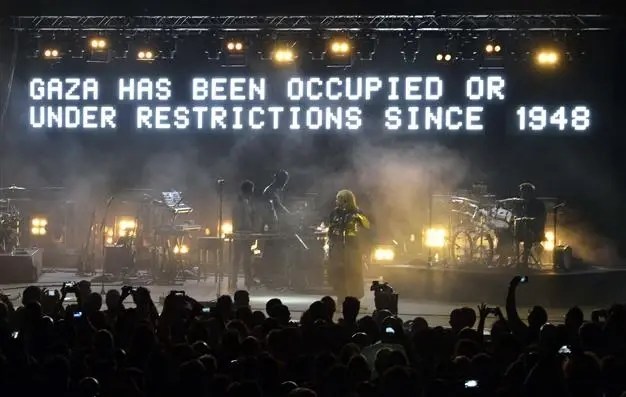
Del Naja called out the bombing of Gaza from the stage at that Lebanese festival 12 years ago: “This bombardment of an area that is one of the most densely populated on earth, where civilians aren’t allowed to leave, is just beyond belief.” Of course his words seem even more resonant as the current genocide enters its fourth year.
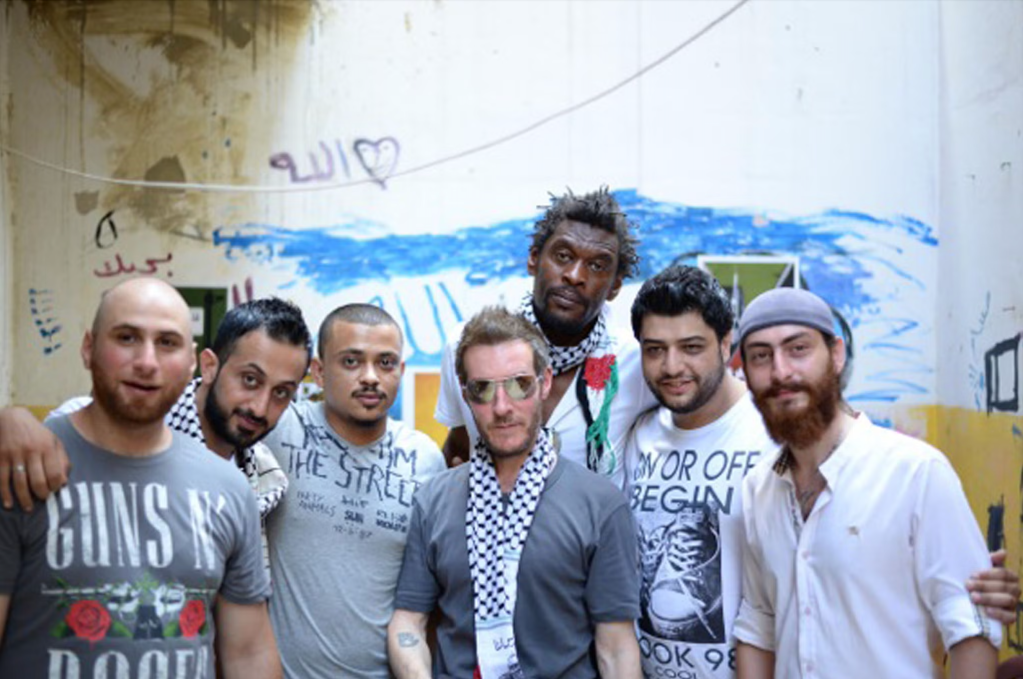
They also took time to visit Palestinian refugees on that trip to Lebanon. Just so you know they’ve been walking this walk for a long time, and it was a lonely one at first. Now they’re considered heroes and icons of a worldwide movement of millions.
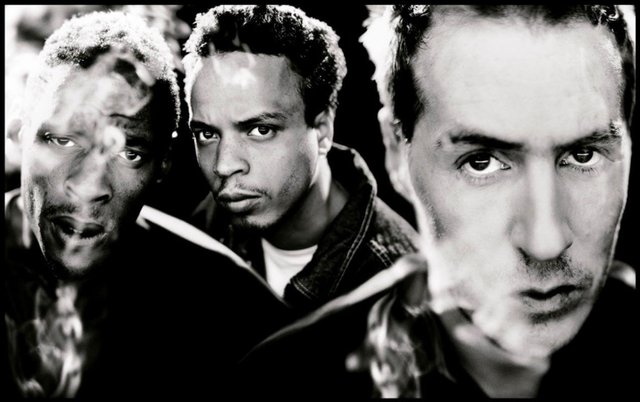
As I was taking in the August show, it was such a trip to think about how far Massive Attack have come: from a hip-hop crew getting their start making beats in Neneh Cherry’s spare room in London in the 80s to the kings of 90s trip hop to this huge audiovisual extravaganza touring the world and making headlines for their vital political advocacy.
Massive Attack’s fusion of hip hop, soul, reggae, and electronic beats shifted the paradigm years before the term trip hop was even coined, and was essential listening for ravers and party people of my generation before and after the club throughout that era. I first fell in love with them thanks to 1995’s No Protection, British dub-reggae maestro Mad Professor’s full-album remix of the group’s 1994 Protection LP.
A Roland 303 on a downtempo hip-hop-soul track! As a DJ who had come to acid house and rave music through hip hop and R&B, it was like my wildest crossover dreams had been pressed onto a CD.
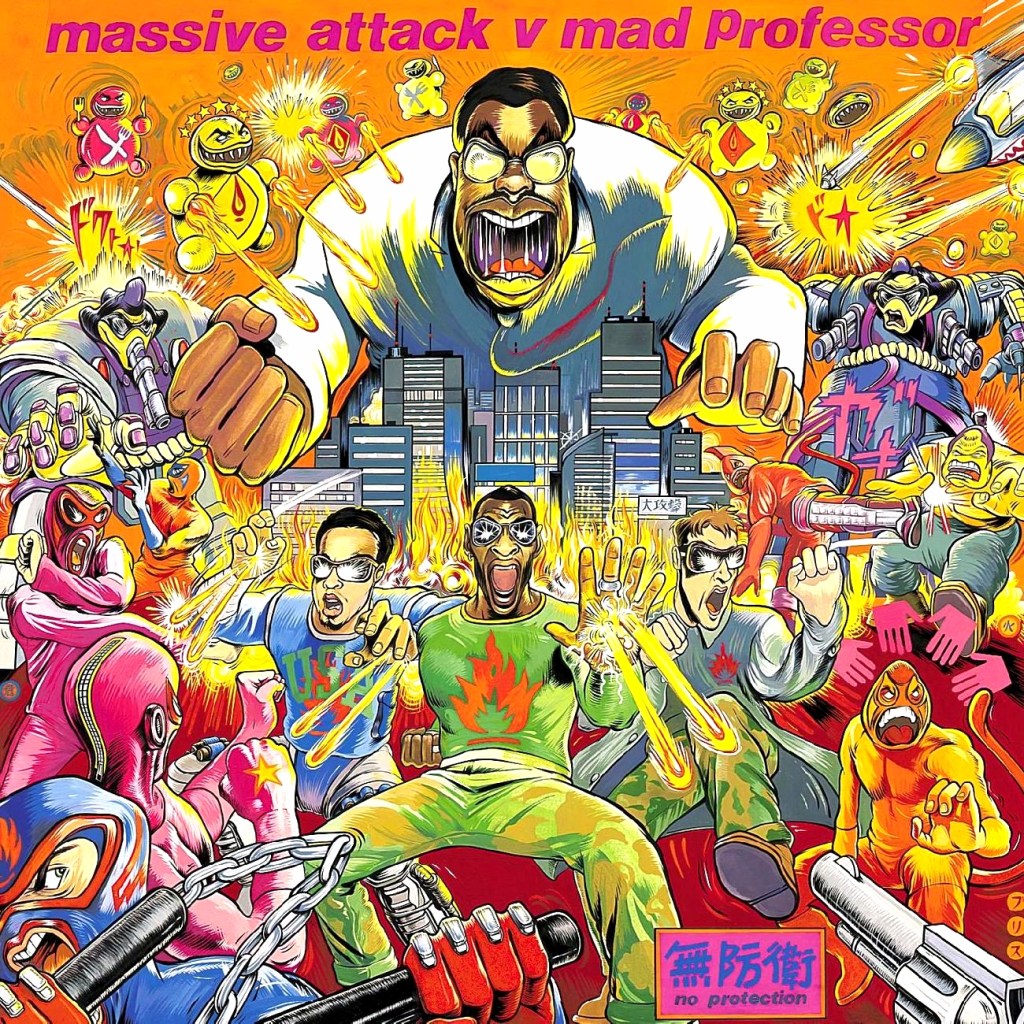
It didn’t take long to I realize that what made No Protection so fantastically trippy and heavy and beautiful had more to do with the source material than with Mad Professor’s tweaking (as brilliant as his work is). Soon Massive Attack were ranked among my heroes and classics cuts like “Karmacoma” and “Daydreaming” were permanent fixtures in my DJ bag.
I loved the holistic way they approached their eclectic stew of influences. That era of multicultural interchange in electronic music, also including drum & bass, house, and Detroit techno, changed the world for a reason, and Massive Attack executed it as well as anyone. Listen to the way the different styles and genres flow into and out of each other on their 1991 debut, Blue Lines, and the way the bandmembers, at that time including Tricky, Daddy G, Mushroom, and 3D (Del Naja’s MC moniker), so generously shared the spotlight with their collaborators including soul diva Shara Nelson, Everything but the Girl’s Tracey Thorn, and reggae legend Horace Andy.
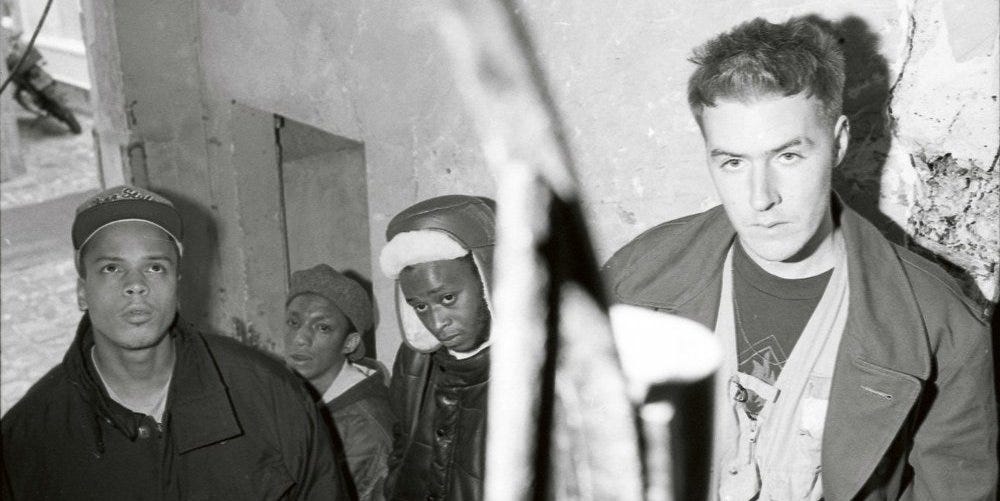
I especially loved the music’s cinematic quality, the unusually substantial themes, and the social conscience apparent in tracks like “Safe from Harm” and “Hymn of the Big Wheel,” a refreshing antidote to the empty hedonism of so much of the culture. The world turns on its axis / One man struggles while another relaxes
That social conscience has, of course, taken center stage in Massive Attack’s work in recent years. It’s arguably as much an explanation for their ongoing relevance as their phenomenal discography. It honestly felt like the point of it all as I made my way to the arena that night: especially after what had happened in Singapore that week, I felt like I was attending a political rally as much as a concert by a beloved band.
Massive Attack could not have been a better fit for such a chilly, rainy winter’s night in Sydney — my friend and I joked that the band had brought the weather with them from England. Their show was also perfect in a depressingly ironic way for Afterpay Arena — a deeply alienating steel and concrete behemoth in Sydney’s Olympic Park. I had to actually talk my friend into coming along because she hates the place so much.
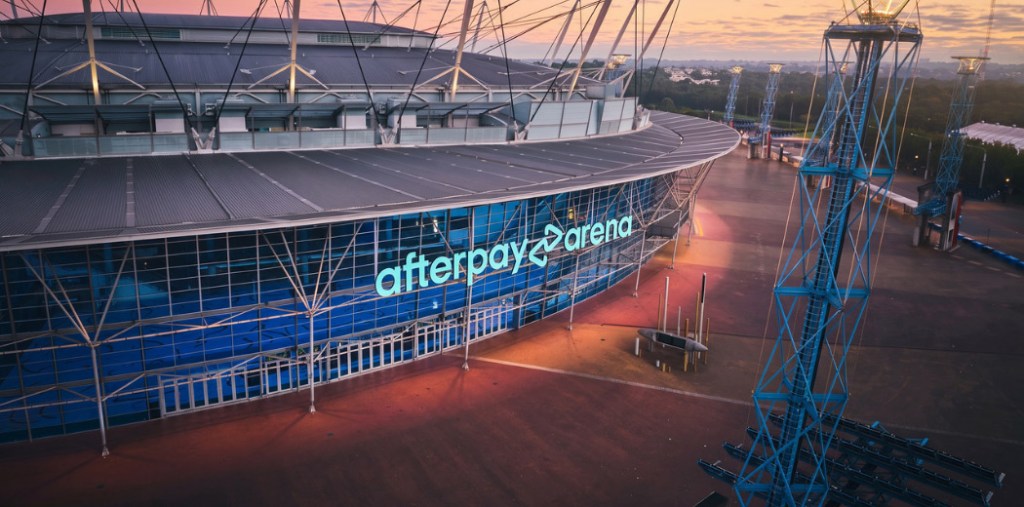
I’ve written about this venue before, in my review of Tame Impala’s incredible show there in 2022, and the joy and pain of arena rock in such a generic urban space. At the time it was called Qudos Bank Arena; before that it was Allphones Arena. These naming shenanigans, and what they say about the real power in our society, never cease to amuse me; as I wrote in my Tame Impala review, I just call it Corporate Sponsorship Arena. From its soulless exterior to the drab fluorescent-lit concourse that feels like an airport terminal, from the generic food and drink to the heavyhanded security, on that gloomy night it seemed an exemplar of the very dystopia Massive Attack were trying to warn us about.
The thing is, Corporate Sponsorship Arena is actually capable of hosting a great show. Three of the best live shows I’ve seen in my life have happened in that space: Prince in 2012 (so grateful and relieved I got to see him before he died!), the aforementioned Tame Impala gig, and Massive Attack.
Yes, they joined that short list of greatness on that Sunday night; they were that good.
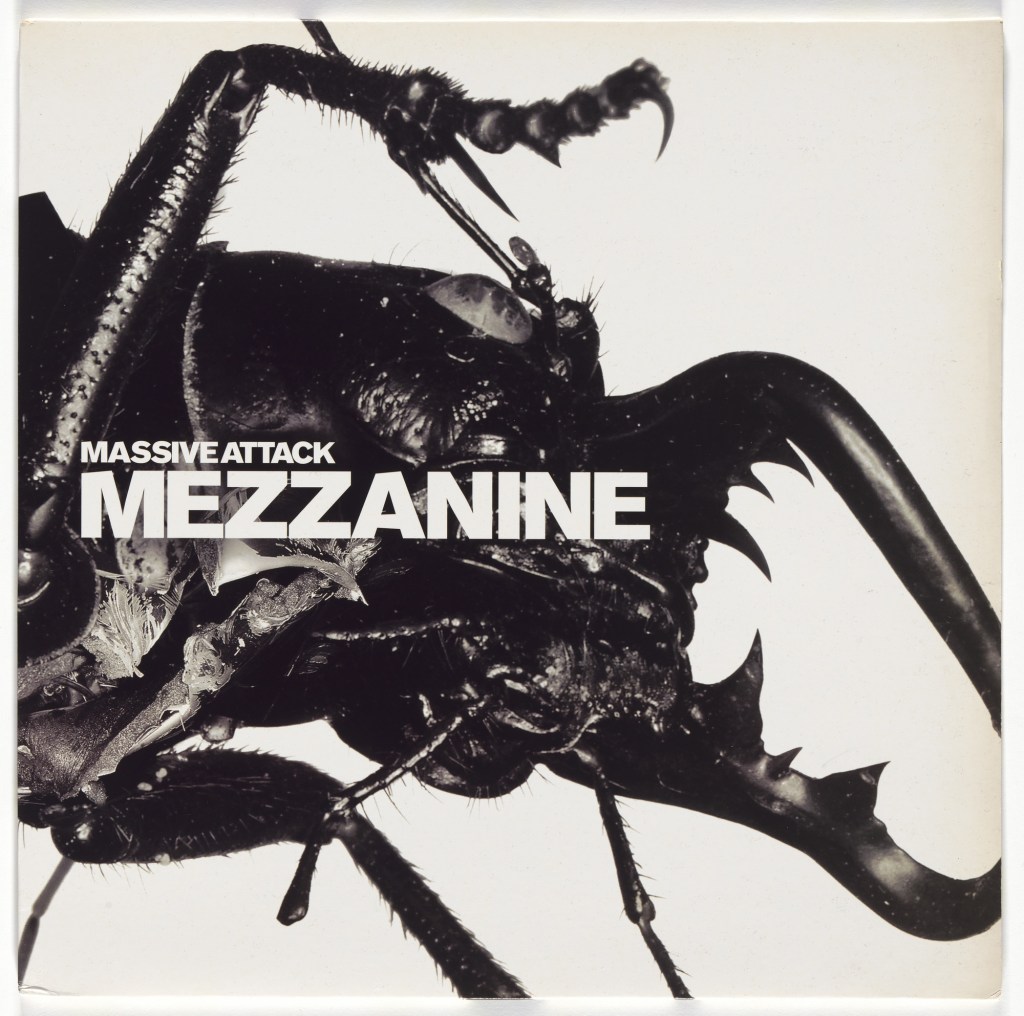
The setlist heavily featured 1998’s Mezzanine, Massive Attack’s masterpiece and one of the greatest albums ever made. Mezzanine was their pivot from that soulful, reggae-infused trip hop to something much darker and more expansive, yet somehow still so lush and soulful in its own right, fusing towering dubby rhythms with Goth or even industrial atmosphere and abrasive postpunk guitars — complete with guest vocals from the Cocteau Twins’ Elizabeth Fraser.
The live band, who were absolutely in the pocket, translated the sound of Mezzanine so well on the night. It felt like I was living inside the album, living inside that bass on songs like “Risingson” and “Inertia Creeps.” It was huge, breathtaking — especially looking around and seeing 20,000 heads nodding to the rolling hypnotic rhythms. Nothing about the night felt like 90s nostalgia — Mezzanine still sounds as fresh and relevant as ever.
When Mezzanine came out, I felt it perfectly embodied the pervasive feeling of dread in that fin-de-siècle era — what former member Tricky termed Pre-Millenium Tension in a 1996 solo album title — down to the horror-movie cyber-beetle on the cover. In fact it captured that angst so well I didn’t even want to listen to it at first — why add to the real-life dread and angst and paranoia? This is why 90s nostalgia has always seemed so limited or shallow to me; it was actually a messed-up time to live through, characterized as much by recession, domestic terror, Balkanization, and genocide as it was by grunge and hip hop and classic sitcoms.
Within a couple of years, once the millennium actually turned and I decided I needed to lean into that dark mood, Mezzanine became one of my favorite albums.
Such were my thoughts on the night as I felt completely enveloped by the Goth-soul vibe. Now, of course, those feelings of dread and doom that I felt in the 90s have spilled out into the mainstream and broadly characterize this age of creeping fascism, AI, and even more genocide (but live-streamed this time!). Mezzanine is still with us, still helping us deal with it all.
Massive Attack has always functioned more as a collective than as a band as such, and this was evident during the show. With Del Naja and Daddy G, the official faces of the group, fading into the copious shadows for entire numbers, ceding the stage to a rotating succession of collaborators and guests, you got the sense of a travelling revue in which no one individual is the star.
You also got the sense of a project with a purpose — with the graphics and montages taking most of our visual attention, and the bandmembers often shrouded in darkness, the message seemed more important than the people giving it. It was the most egoless show I can recall seeing in some time.
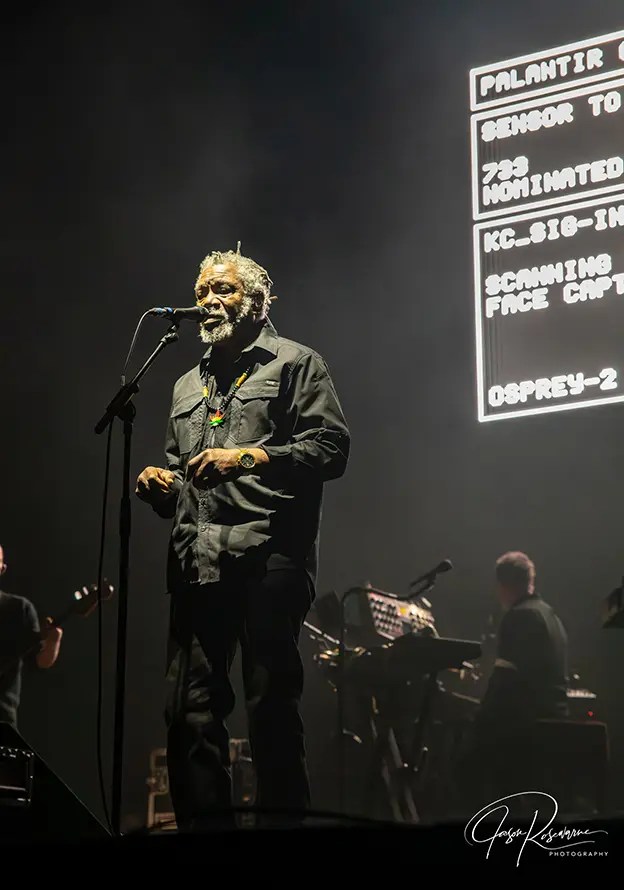
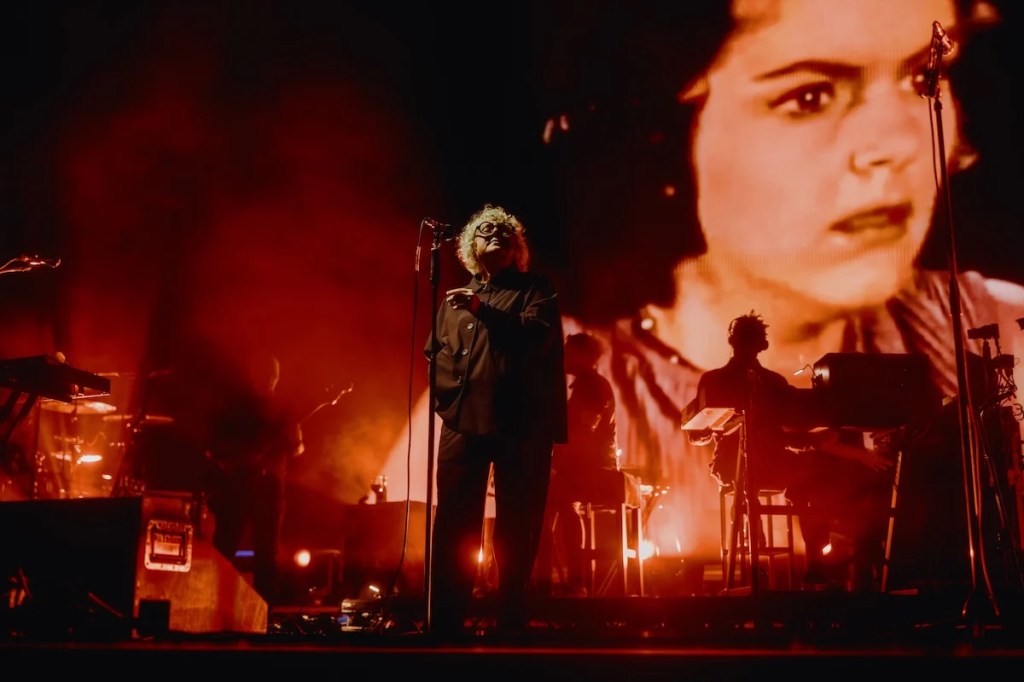
I could not believe I was seeing Elizabeth Fraser and Horace Andy with my own eyes. Neither of Massive Attack’s longtime collaborators seemed overwhelmed by the spectacle, and they were both so badass. White-haired Fraser looked like a librarian fronting the coolest band in the world at the age of 63, her vocals as spine-tinglingly ethereal as you expect (her presence seeming even more miraculous because she’s known to suffer acutely from anxiety and stage fright, one reason the Cocteau Twins don’t exist anymore). Andy’s voice was still devastatingly sweet and piercing at 75 on classics like “Angel” and “Hymn of the Big Wheel.” Both of them seemed so into it — Fraser grooving along with the band as “Group Four” reached its abrasive crescendo; Andy skanking in frail but joyous fashion during the outro of “Big Wheel.”
A lyric from “Big Wheel” that I’d either forgotten about or never noticed before provides a poignant summary of the night’s themes:
As a child’s silent prayer my hope hides in disguise
While satellites and cameras watch from the skies
Now let’s talk about the show’s visuals, its most distinctive element and, not to take away from the music at all, arguably its most memorable — so forgive me if I talk about it more than the music.
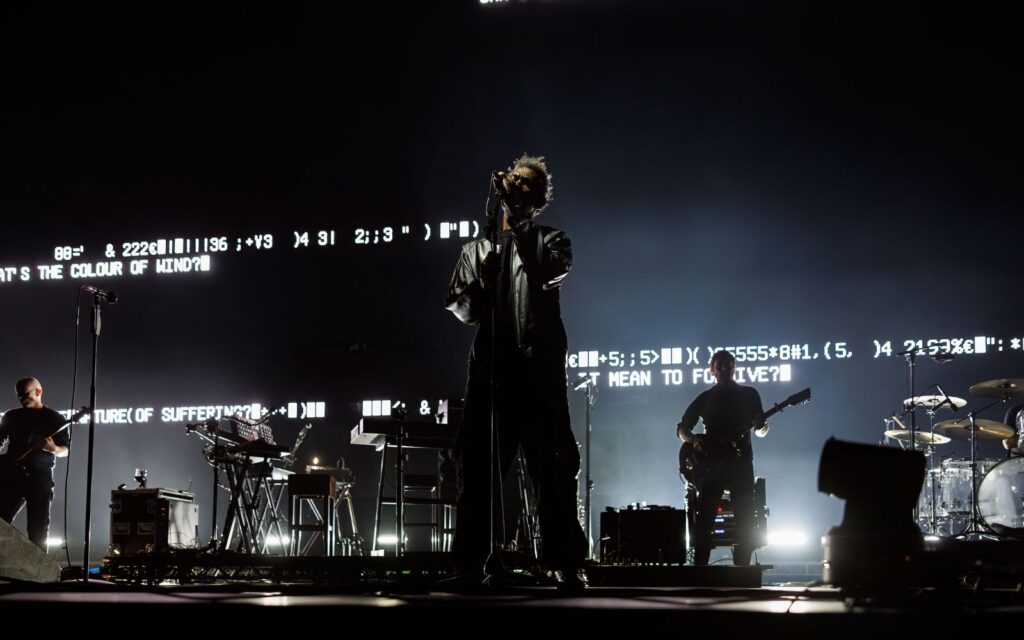
I honestly can’t say enough about how powerful and indeed overwhelming the visuals were. The sensory overload was real, and intended. Over a huge triple-screen setup, Curtis’s video montages were intercut with and overlapped with UVA and Del Naja’s LED text art in flickering, mindbending, nerve-fraying fashion. At times it seemed the screen contained multiple physical layers, with different projections on each layer; either that or it was an optical illusion created by the graphics. At other times the screen was translucent, creating an effect of text and images floating in the air. This was all further intercut with livestreamed footage of the band.
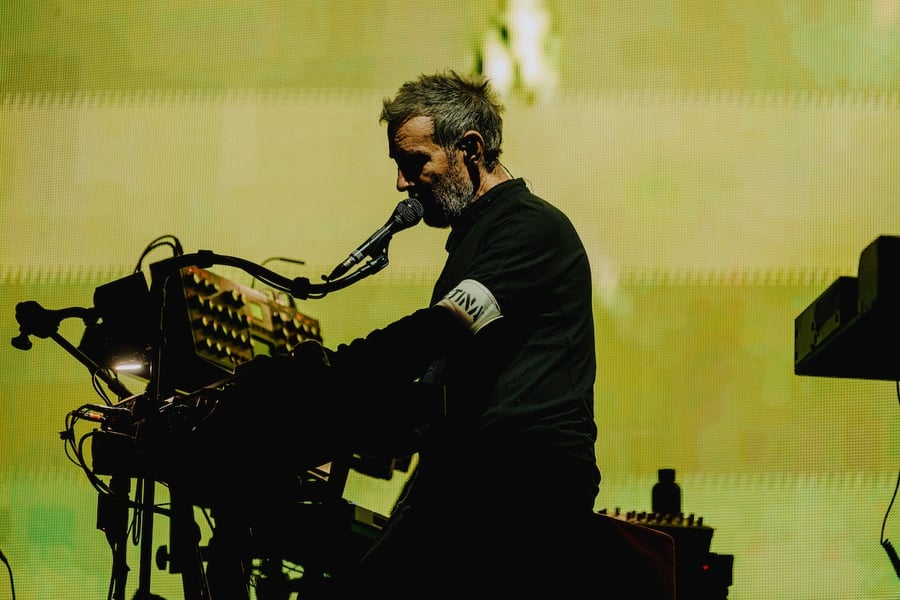
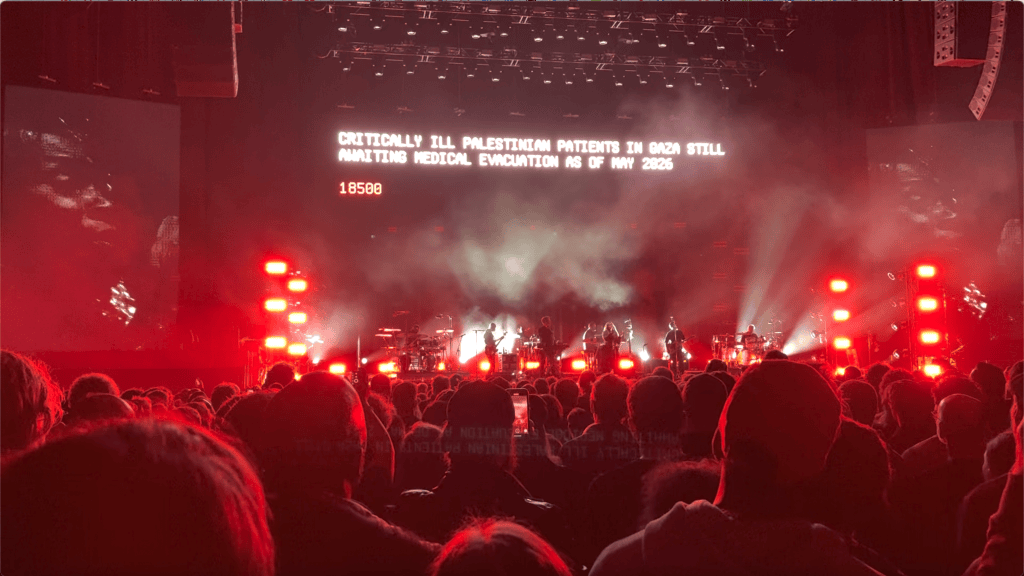
I studied film production, I’ve made retro-style film loops on Super 8, I have at times handled lights and visuals for raves and clubs, I’ve edited digital video. Nothing very sophisticated, but just to say I have some clue about cinema and about visual shows for events. I have to admit that the gear and software it takes to design and run a show of this scope is quite beyond my understanding. They were doing things I couldn’t figure out — like the moment when the screen featured floating live projections of a dozen different audience members’ faces in close-up (see the lead image, and the one below), as part of the band’s commentary on facial recognition and mass surveillance. How did they do this — did UVA have a dozen different cameras trained on the crowd? Or was it one camera and twelve shots cut up and synced with the graphics? How was it all managed by the crew? How was it fed into the animation software live?
(This bit of the show has proven controversial and Massive Attack had to issue a statement that it was satire and that they weren’t really recording people’s data. It’s not clear from the wording of the statement, but I do think live footage of audience members was included in the fictional “mass surveillance” — projecting images of the crowd on the video screen is pretty standard at big shows.)
I felt like an old man transported into a future of sound and vision I couln’t comprehend (but could sure as hell vibe with).
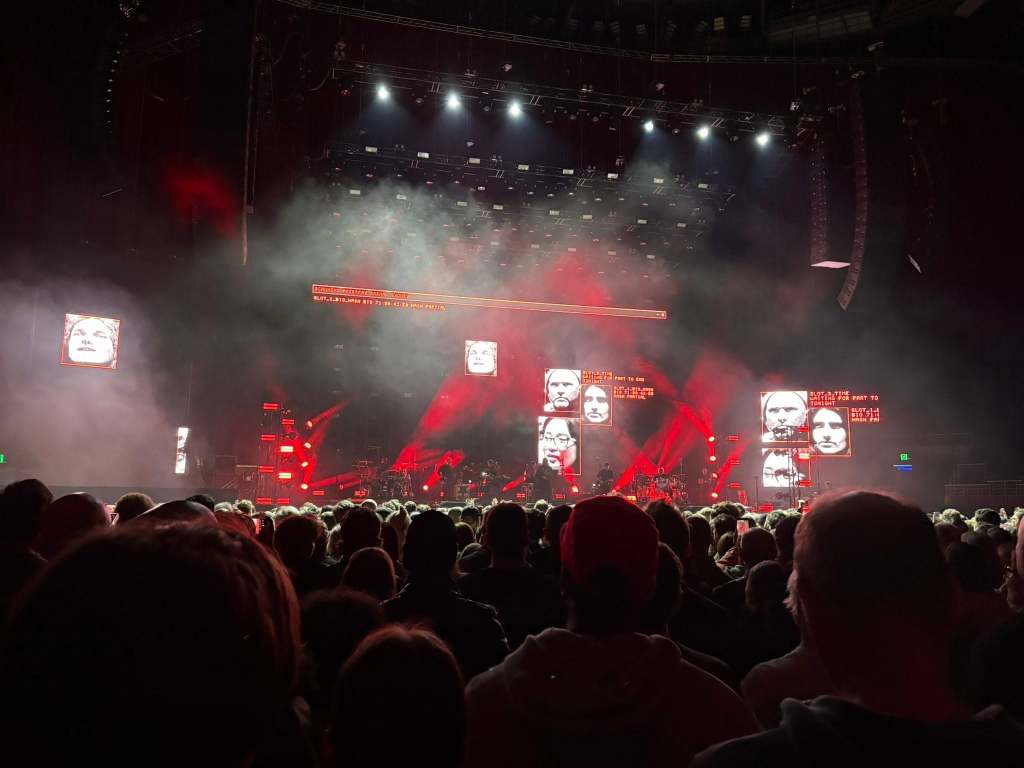
Curtis’s video montages reminded me a little of a high-tech, big-budget version of the projections at a Skinny Puppy show back in the day, in that they were intended to provoke and disturb. I remember seeing Skinny Puppy at the Hollywood Palladium in 1990; they were great (their caustic industrial-dance was a formative influence on my taste in electronic music), but the thing I always remember is the moment during a climactic number when horrible uncut footage of Pennsylvania state treasurer R. Budd Grant shooting and killing himself at a press confrence in 1987 was projected onto the screen behind the stage (please don’t look this up). This is why we have trigger warnings now!
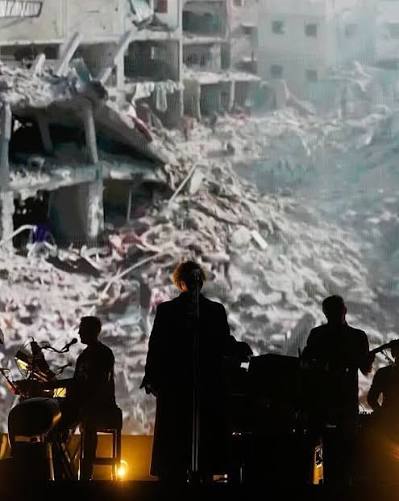
There was thankfully nothing quite so graphic or traumatic in Curtis’s work, but it did feature real footage of violence in Gaza and Ukraine that was shocking enough.
I think the certain knowledge that much worse is happening than what we were shown (all of us have seen so much horror on our phones every day for the past three years) gave it a stomach-churning impact that extended far beyond the minimal bloodshed onscreen. How many other music gigs immerse you in the rubble of Gaza on a giant screen?
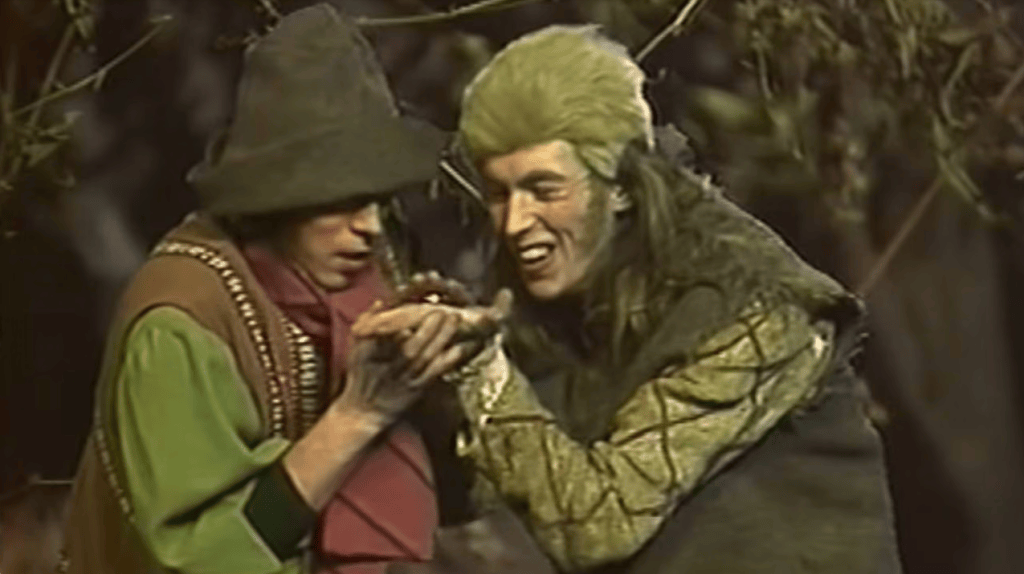
The disturbing stuff was cut up psychedelically with more playful dada archive clips from vintage ads, cartoons, corporate training videos and the like. My favorite in this vein were the clips from an amazingly kitschy 1991 Soviet TV adaptation of The Lord of the Rings, which I recognized because I’d read about it before. This was combined with the text “ONE RING TO RULE THEM ALL,” one of many bits that provided commentary on Palantir (whose name comes from LotR, of course, like some kind of sick joking acknowledgement of their own evil).
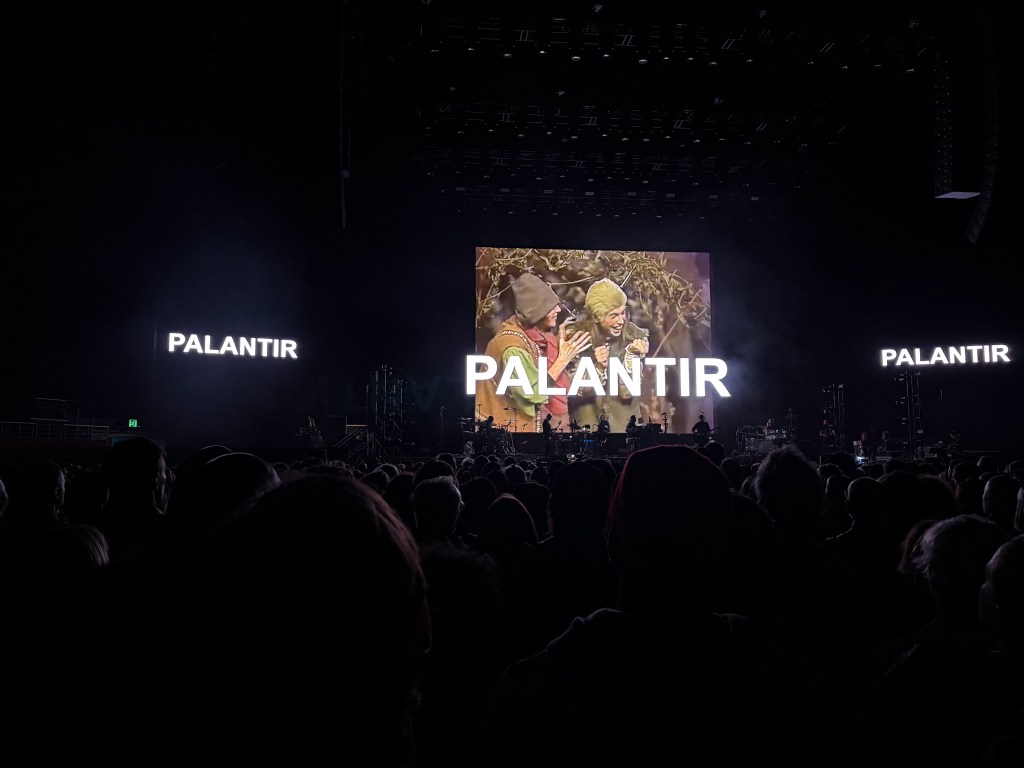
The editing was terrific — at one point an onscreen Donald Trump danced in perfect time with the boom bap of the live trip-hop beat. Again, no idea how they synced Trump’s movements with the live drumming of bandmembers Damon Reece and Julien Brown. Does a VJ live-sync the footage to match the drums? Or do the drums trigger the video somehow? No idea, but it was amazing, and funny, and disturbing.
I have to say that at times the relentless flickering and strobing, and the horror and dread of it all, threatened to overwhelm the music, and my eyes just wanted a break. As I said, it was supposed to be overwhelming, and I was mostly on board for the politics, but there were also some jarring and straight-up unpleasant moments that I could have done without. When I’m seeing Elizabeth Fraser live for the first time in my life, and I’m utterly hypnotized by the legendary beauty and mystery of her vocals, I don’t really want to look up and see footage of a Ku Klux Klan rally behind her on the screen. They should have thought that through a bit more.
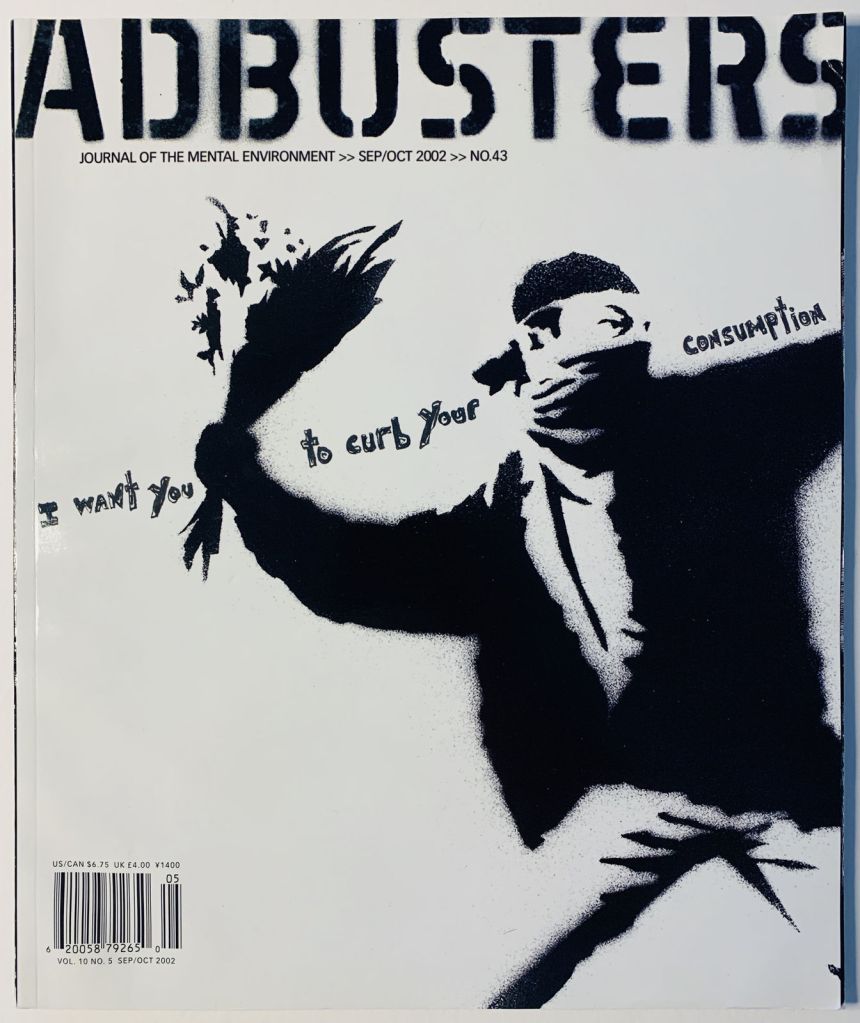
In some ways the visual show was like an issue of Adbusters come to life, and I mean that in good and bad ways. The messaging-via-mashup was strident, clever, and funny, and I especially appreciated how it respected the intelligence of the audience. But it was also, politically speaking, messy and all over the place in a very late 90s/early 2000s way.
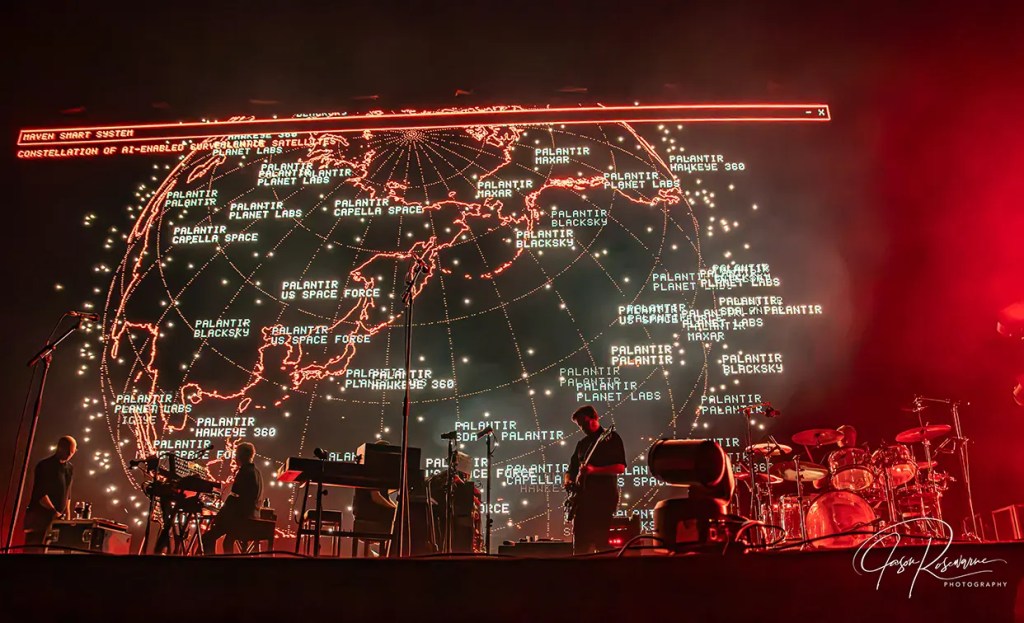
Obviously it’s laudable for a band to use such a huge platform to raise awareness of Gaza, the invasion of Ukraine, and the horrific exploitation of the child workers mining high-tech metals in Congo; and to tie these disasters in with the rise of AI and mass surveillance. The textual displays included some truly disturbing facts about the horrifying reach of Palantir and how that company is implicated in everything from the destruction of public healthcare in the UK to the Gaza genocide — the show was nothing if not educational. The humanism and genuine activism behind the messaging was very evident and that goes a long way. I don’t hold artists to exacting political standards when they speak out, nor do I expect they propose the way forward.
However the politics of this show were so extensive and demanded to be taken seriously, so take them seriously I will.
Much of the focus was on anticonsumerism — you know, the idea that we’re all distracted, staring at our phones and shopping, amid genocide and techno-fascism. Bread and circuses! While you’re shopping bombs are dropping!
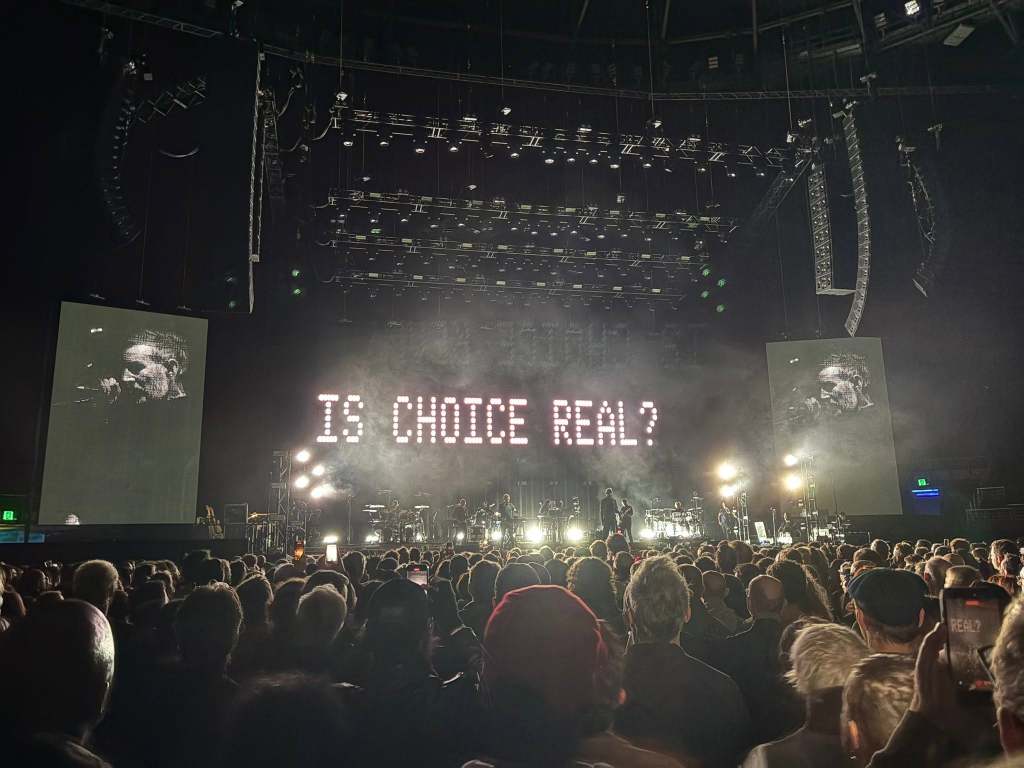
The problem here is that putting imperialism and authoritarianism down to individual choice is politically very unhelpful and leads to demobilization. No ethical consumption under capitalism is a leftist cliché, but it’s also true. The laptop I’m typing this on was manufactured by an evil company, and the web browser I’m using to access WordPress is maintained by another. We can try to buy food or clothing from small companies run by nice people using sustainable ingredients and materials, but not only is that inherently problematic (does that mean poor people who can’t afford sustainably grown cotton and chocolate are bad people? What if the nice small business owners don’t pay their workers benefits?), if you think it through you realize it’s just a drop in the bucket, because the entire supply chain is still dependent on fossil fuels and low wages. We live in an interconnected web of exploitation, violence, and climate collapse ruled by a handful of billionaires. Everything is enshittified, and it’s not our fault — it’s not on us. We’re not going to ethically shop our way out of this mess.
Nor are we going to solve it by deleting our social media, as this Australian critic apparently decided to do after the Melbourne show. This is pure individualism: the idea that one person’s actions can make a difference in systemic problems. The Gaza genocide is not happening because you are distracted by your Instagram algorithm. Thinking this way has a moralistic, almost religious quality to it: If I could just absolve myself, that would solve the problem. It also ignores that social media has given ordinary people unprecedented access to independent journalism and protest — one reason the ruling class hasn’t been able hide or to distort the truth of the Gaza genocide, as they always have before when it comes to Palestine.
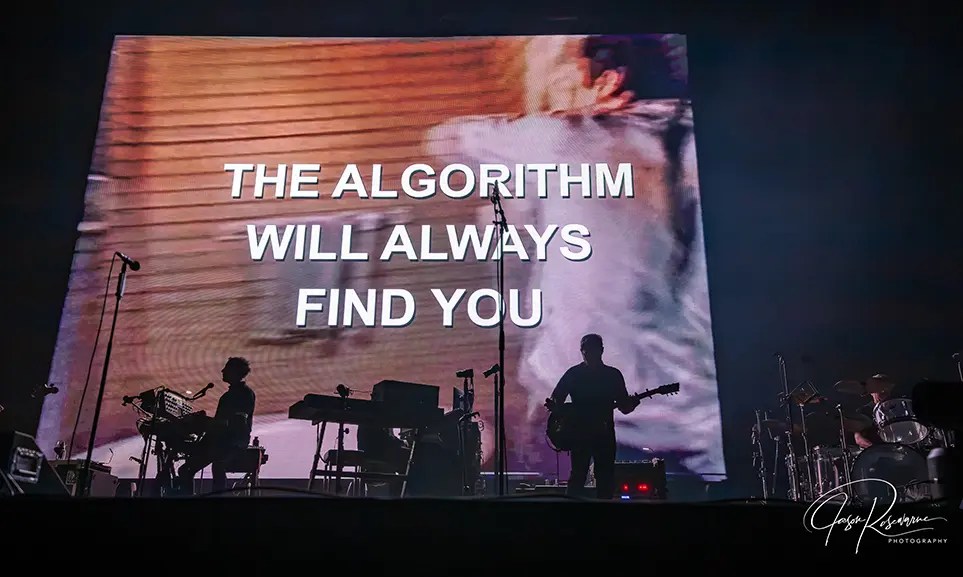
There were hints of swampier politics in the show too. One factoid seemed to reference the myth of overpopulation (yes it’s a myth, and a racist one too), and another sequence showed images of hypodermic needles with the text “ONE JAB OR TWO?” To be fair it was referring to weight-loss drug Ozempic, but “jab” as a slang word is now associated with the antivaxx movement, and it was uncomfortable to think that any COVID denialists in the audience (they are overrepresented in the electronic music scene, as I know from painful experience) might have felt validated.
And Massive Attack seemed to implicate Taylor Swift in this anticonsumerist rhetoric. There was a suggestion that the Eras Tour was an arch example of bread and circuses, and at another point the screen flashed the message “TAYLOR SWIFT IS A PSYOP.” The latter was at least partially intended as satire — it was included in a montage that was prefaced by the statement, “SOME OF THESE ARE CONSPIRACY THEORIES AND SOME ARE TRUE.” I appreciated the mocking of conspiracy thinking, truly a destructive tendency on the left — and that made me feel slightly better about the earlier “jab” reference. But the ambiguity also seemed to leave the question open, and associating Swift and her fans with Palantir and Western imperialism seems unfair and mean-spirited either way.
This is too much to get into here — I am planning a longer article about becoming a Swiftie late in life and the social impact of her music, just so you know I’m very much going to get into it soon! — but I find this irritating. Vilifying Swift, singling her out to blame for our social ills, as many people like to do lately, is fraught with condescending attitudes towards pop music and this society’s pathological hatred of anything that brings young women and girls joy.
If a Taylor Swift show is a spectacle to distract us, isn’t a Massive Attack show a spectacle too? Or is it “ethical consumption” because there are political messages included with the more “serious” trip-hop beats? It was weird to be presented with that contrast at such an expensively priced gig in a giant corporate arena selling us $12.50 beers.
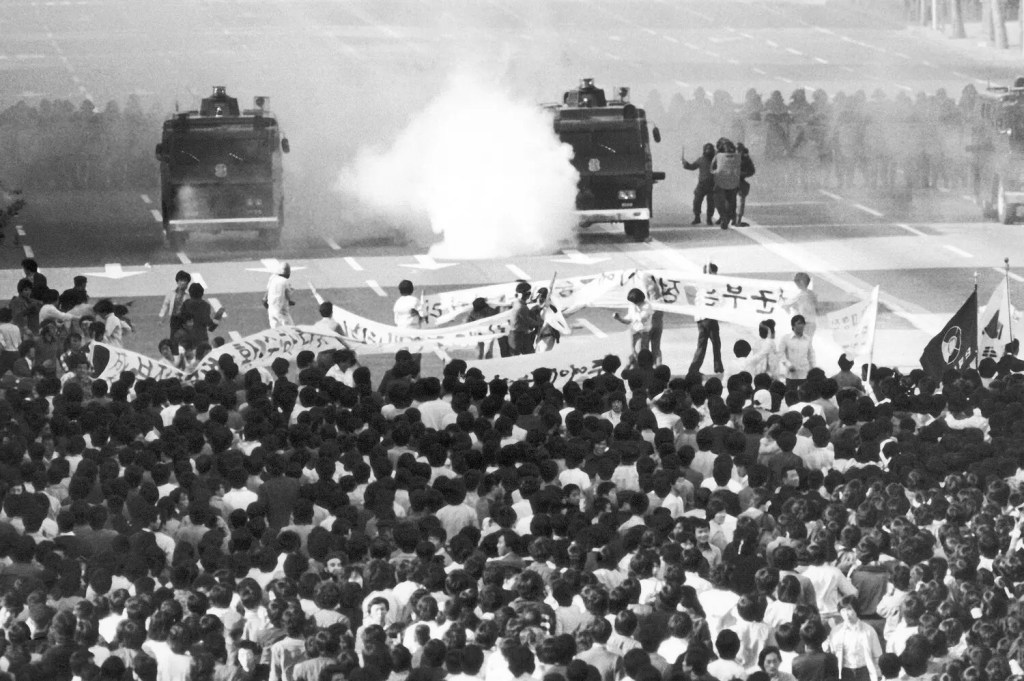
On the other hand, by far my favorite political bit was the montage of the 1980 Gwangju pro-democracy protests in South Korea during the band’s cover of the 1995 hit “Regret of the Times” by K-pop progenitors Seo Taiji and the Boys. The rhythmic editing of young Koreans fighting cops and burning US flags in tandem with the guitar-heavy, punk-inflected cover of the protest anthem was jaw-dropping (and by the way, I was impressed with Del Naja’s rock vocal mode, heretofore unknown to me!).
I was fascinated by the accompanying text talking about how the birth of K-pop was tied to the history of protest in South Korea, with the controversy over “Regret of the Times” a threshold moment. As detailed in this ABC Asia article, South Korean authorities’ attempt to censor “Regret of the Times” was defeated by a petition started by Seo Teiji and the Boys fans, which led to broader cultural freedom in the country.

As a fan of pop music, I felt vindicated to have such a vivid reminder that pop indeed has social significance (although text on the screen suggested that’s been lost, asking rather heavy-handedly, “WHERE IS THE NEW MUSIC THAT WILL GALVANISE THE RESISTANCE”).
As a socialist, to me it was telling that the show’s most viscerally powerful moment showed us a mass movement — millions of people shaping the future of their society by fighting the government in the streets — in contrast to all the individualism and despair.
Another very successful synthesis of music and image was when the screen showed us appalling facts about Israel’s war on healthcare in Gaza (the hundreds of healthcare and emergency workers targeted and killed; the total destruction of every hospital facility) during the band’s performance of the 1991 classic “Safe from Harm.” You can free the world, you can free my mind / Just as long as my baby’s safe from harm tonight.
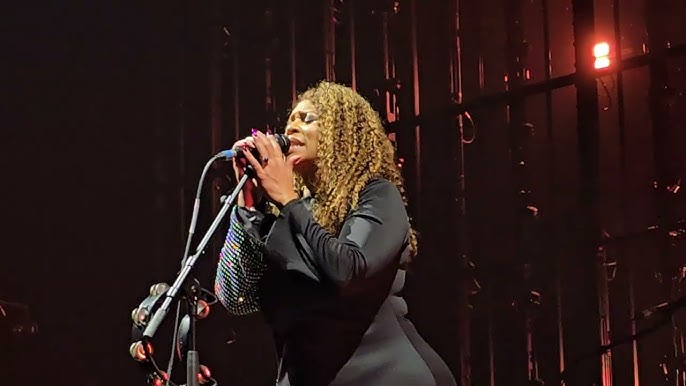
My friend I had ourselves momentarily convinced that the vocalist on “Safe from Harm” was their old collaborator Shara Nelson (we joked, “Next thing, Tricky’s going to come out,”), but afterwards we came to our senses and found out it was a singer named Deborah Miller, who’s been touring with Massive Attack for years. She did a great job in Nelson’s place.
The barrage of visuals eased off for Miller’s climactic rendition of the 1991 anthem “Unfinished Sympathy” and the last number, Fraser’s magnificent performance of “Teardrop.” It was as if, at the very end, the band wanted to give us a break from thinking about all the terrible things happening in the world and just give in to the groove and the melodies. Even for a radical like me that was a welcome comedown.
After “Teardrop,” the show was over, and there was no encore. The huge ovation that shook the arena all the way to its upper tiers showed how much the crowd appreciated being challenged to this degree while taking in the timeless tunes.
Despite my quibbles with some of the content of the show, it was without question thrilling and inspiring. Seeing that an audience of thousands was right there with me made me feel like the big wheel is going to keep turning after all.
Like what you read and want to support? Consider buying me a coffee! You can also subscribe below, and be sure to share this article!
Feature image credit: Horace Andy onstage with Massive Attack in Sydney, August 9, 2026. Ashley Mar/Rolling Stone AU/NZ

